
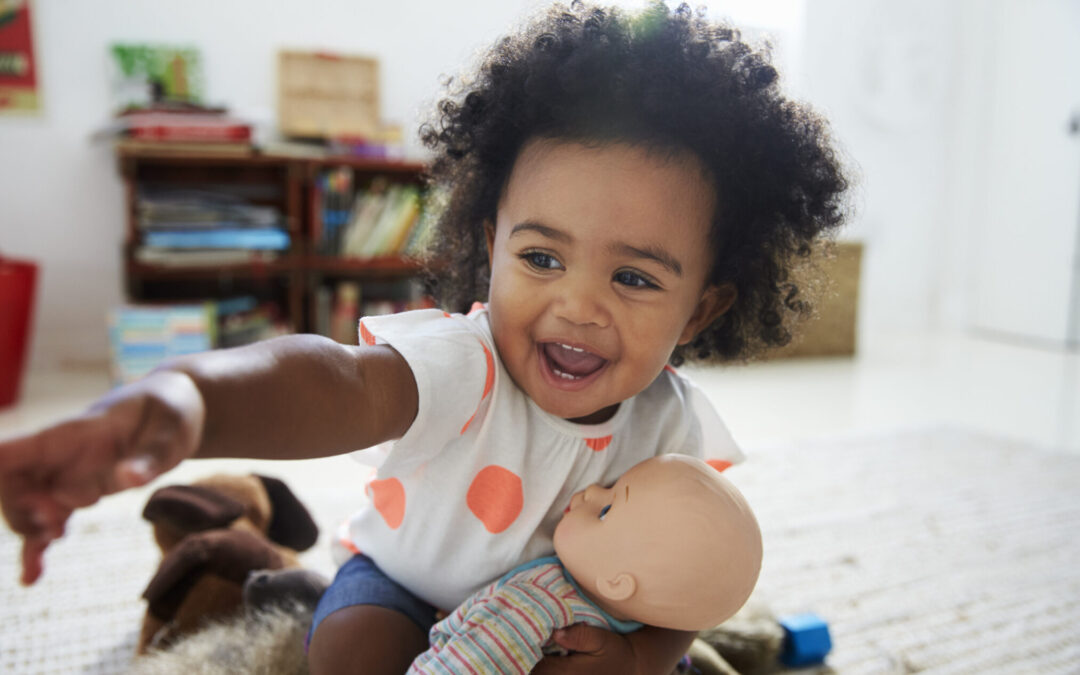
Choosing Toys Begins with Understanding the Brain
Picture this: You’re shopping for holiday gifts and staring at shelves packed with toys that flash, sing, buzz, and promise to “teach” your child something incredible. But what if the most powerful toys aren’t the loudest or the trendiest? When we understand how a child’s brain develops, gift-giving becomes less overwhelming and far more meaningful. Children don’t just play, they build neural pathways, practice emotional regulation, and strengthen their understanding of the world. The right toys support them where they are developmentally, not where the box says they “should” be.
According to early childhood brain science, children grow through predictable stages:
- Infants → the survival state, where safety and regulation matter most
- Toddlers → the emotional state, where big feelings take center stage
- Preschoolers → the executive state, where they begin to problem-solve and think critically
When parents choose materials that align with these stages, play becomes powerful, not just entertaining.
Why This Matters Now
In a world filled with overstimulation, busy schedules, and constant digital noise, children need grounding experiences more than ever. Holiday gifts shouldn’t just entertain for a moment; they should nurture connection, skill-building, and emotional growth. Hands-on, open-ended toys support cognitive development in ways passive entertainment never will. They help children explore cause and effect, practice social skills, and strengthen emotional understanding. The American Academy of Pediatrics shares, when toys meet a child where they are developmentally, parents see fewer meltdowns, more engagement, and deeper learning. So before adding another flashing gadget to your cart, consider what your child’s brain is truly ready for, and how simple, purposeful toys can make an enormous impact.
The Power of Play and Connection
Children learn best through relationships. The toy matters, yes, but it’s your presence, your attention, and your willingness to join in the play that bring the toy to life. A simple doll becomes a lesson in empathy when a parent models nurturing. A set of blocks becomes an engineering challenge when you build together. A sensory bin becomes an emotional regulation practice when you sit and explore textures side by side.
Try saying things like:
- “I see you figured out how to stack those bricks, you worked hard on that!”
- “Let’s explore these blocks together. What should we build?”
- “Show me how your doll feels today.”
These small moments strengthen connection, communication, and confidence, the real foundations of learning.
Understanding Development by Age (and What to Buy)
Development dictates behavior and it should also dictate the gifts we choose. Here’s how to support each stage with toys that match where your child’s brain is right now.
Infants (0–12 months): Safety, Regulation & Sensory Discovery
- Infants live in the survival state of the brain. Their primary goal is to feel safe and connected.
- Recommended Toys:
- Reflective Sensory Balls – Support visual tracking, cause-and-effect exploration, and self-recognition.
- International Dolls – Soft, plush, and comforting; help babies feel secure while also introducing diversity.
- These toys promote regulation, tactile exploration, and early bonding, the building blocks for all future learning.
Toddlers & Twos (1–3 years): Big Feelings, Predictability & Pretend Play
- Toddlers operate in the emotional state, which means tantrums, impulsivity, and huge feelings are all developmentally normal. Toys at this stage should help them process emotions and build routine through play.
- Recommended Toys:
- Small World Sets (vehicles, homes, figurines) – Allow toddlers to act out routines and emotions.
- Elements of Nature Block Set – Supports open-ended creativity, exploration, and independence.
- Rosa/Clive Book Sets – Help toddlers understand and name emotions.
- Swaddle Dolls – Teach nurturing, predictability, and emotional connection through caregiving play.
- These materials help toddlers process their world and express feelings in healthy, age-appropriate ways.
Preschoolers (3–5 years): Problem-Solving, Independence & Early Academics
- Preschoolers are stepping into the executive state, where early reasoning, planning, and problem-solving begin to flourish.
- Recommended Toys:
- Sensory Play People – Boost imaginative play and social-emotional learning conversations.
- Ladybug or Honeybee Counting Sets – Build foundations for math through hands-on sorting and counting.
- Worry Stones – Support emotional regulation and calming strategies.
- Sandpaper Letters – Blend sensory and early literacy learning in a developmentally appropriate way.
- Tinker Tub – Encourage active engagement and discovery.
- Silishapes Soft Bricks – Strengthen fine motor skills, collaboration, and problem-solving.
- These toys help children stretch their cognitive skills while staying grounded in play-based learning.
When the “Perfect Toy” Doesn’t Land
Every parent has experienced it, you give a beautifully wrapped gift, and your child shows little to no interest. It’s not misbehavior; it’s development. A toddler who ignores a puzzle may simply not be ready for multi-step problem-solving. A preschooler who pushes away a doll may be signaling the need for more active, engineering-type play. An infant who’s overstimulated may turn away from a flashy toy because their brain is seeking calm, not excitement.
Instead of frustration, try curiosity:
- “What are you wanting to play with right now?”
- “Let’s find something your brain is ready for today.”
When we match materials to developmental needs, engagement skyrockets.
The Social-Emotional Side of Play
At its core, play is a social-emotional experience. It teaches children how to:
- Regulate emotions
- Build resilience
- Communicate needs
- Take turns
- Show empathy
- Solve problems collaboratively
The right toys help, but it’s the shared experiences, the conversations, and the gentle guidance that build these lifelong skills. When we are present, children learn not just how to play, but how to understand themselves and others.
Choosing Toys That Help Children Grow
Developmentally aligned toys don’t need to be expensive or complicated. They need to be thoughtful, open-ended, and rooted in what your child’s brain is ready to learn right now. At Celebree School, we believe in supporting the whole child, mind, heart, and spirit. When children feel safe, connected, and encouraged, every toy becomes a tool for growth. This holiday season, choose toys that build skills, spark joy, and strengthen connections. Because the most meaningful gifts aren’t the ones that make the most noise, they’re the ones that help our children thrive. Interested in what manipulatives and toys we have in each of our classrooms to enrich child development? Call us today to schedule a visit!