
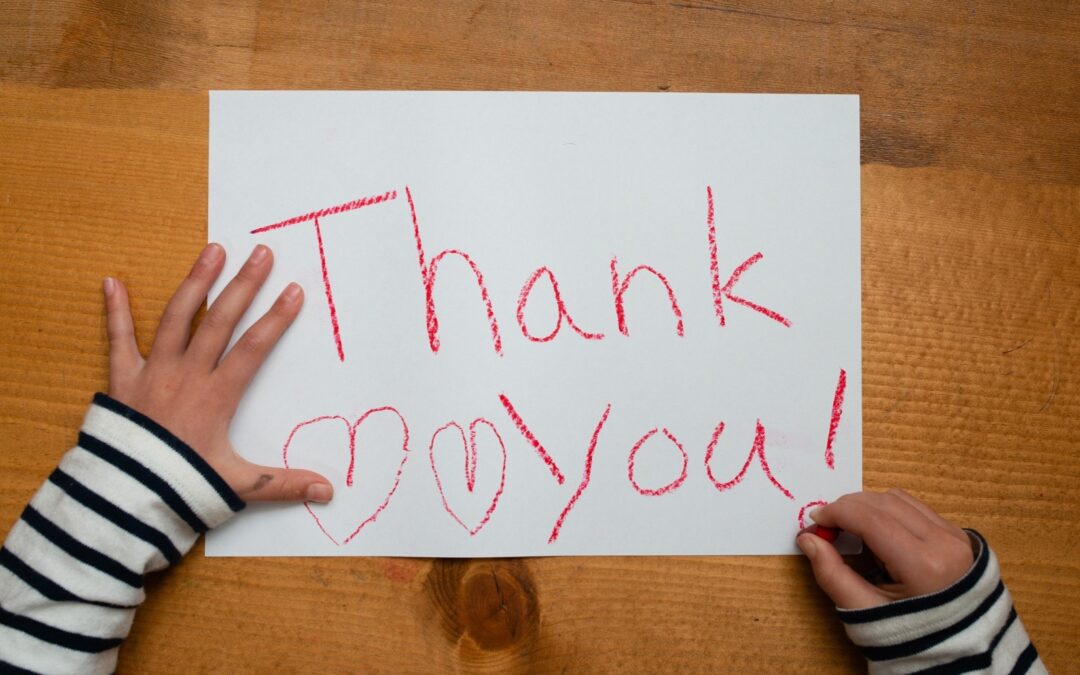
If you have ever handed your child a gift while a relative watches expectantly, you probably know the instinct.
“What do you say?”
Teaching children to say “thank you” matters. Manners help them learn how we acknowledge other people. But gratitude takes more than remembering the right words at the right time.
For parents wondering how to teach kids kindness, many of the best opportunities are already part of the day. They happen at home, with siblings, during errands, with friends, and at daycare.
Help Your Child Notice What Happened
Children do not always see the effort behind what happens for them. For example, your child might enjoy a plate of sliced strawberries without thinking about who washed and cut them.
Research summarized by the American Psychological Association suggests that helping children notice acts of care can be more useful than relying only on reminders to say thank you.
You do not need to make a speech about it.
“Grandma remembered that this is your favorite book.”
“Your brother brought your shoes over because he knew you were looking for them.”
“Ms. Taylor helped you zip your coat.”
A quick comment like that can draw your child’s attention to something they may not have noticed on their own.
Help Them Notice How Other People Feel
Young children spend a lot of time focused on what is happening to them. As they grow, they become better able to notice what someone else may be feeling or needing.
A friend cries because her block tower fell. A sibling cannot reach the crayons. Someone is trying to carry too many grocery bags.
Your child does not have to fix every situation. Sometimes the first step is simply noticing it.
You might ask, “Do you think she needs anything?” or “How do you think he feels?”
PBS KIDS recommends helping young children identify emotions and notice when another person may need help as part of learning kindness and compassion.
Celebree teachers work through situations like these every day. When children disagree over a toy or one child is upset, teachers can help them name what happened, listen to each other, and work toward a solution.
Give Kindness Somewhere to Go
Once your child starts noticing other people, give them opportunities to respond in ways they can understand.
A preschooler might:
- Carry napkins to the table
- Draw a picture for someone who is sick
- Help clean up a game everyone played
- Bring a tissue to a crying friend
- Invite another child into play
- Choose a box of pasta for a food drive
- Help pack items the family plans to donate
These acts of kindness for kids do not need to be elaborate.
A 3-year-old does not need a detailed explanation of food insecurity before helping choose something for a donation box. “We are bringing food because another family can use it” gives them enough context to understand why they are helping.
Use the Parts of the Day You Already Have
Gratitude does not need its own special activity every time.
You can practice it while setting the table, cleaning up toys, walking the dog, helping a sibling, or getting ready for school.
At Celebree School, everyday routines are part of how children practice social-emotional skills. Mealtimes, for example, give children opportunities to share, take turns, talk with friends, practice manners, and discuss feelings.
Kindness fits naturally into those routines because children are already interacting with other people.
The same is true at home.
If your child helps set the table, you might say, “You brought everyone a fork. That helped me finish dinner.”
If they make room for their sibling on the couch: “You scooted over so she could sit with you.”
Specific language helps children connect what they did with how it affected someone else.
Let Your Child Hear You Appreciate People
Children notice how adults speak to each other.
It’s beneficial for your child to hear you thank your partner when they handle bedtime. Tell your neighbor you appreciated the package they brought in from the rain. Mention that your child’s teacher took extra time to answer a question you asked.
The APA’s guidance on children’s gratitude also points to adult modeling as an important influence. When appreciation is part of normal family conversation, children hear what genuine gratitude sounds like.
It can be as simple as: “That was really kind of Aunt Jess to bring dinner. I was tired tonight, and it helped.”
Make Giving Back About the Person Being Helped
November often brings food drives, coat collections, donation boxes, and other opportunities to give. Children can take part in ways that make sense for their age.
Let your child help choose the canned goods. Have them carry a bag into the collection area. Explain where the winter coats are going.
HealthyChildren.org, from the American Academy of Pediatrics, encourages families to give children opportunities to contribute and learn about generosity. Its guidance on inspiring generosity also notes that children can become very aware of whether other people are watching them give.
Try to keep the focus on who is being helped.
“These pajamas are going to another child who needs them” gives your child something concrete to understand.
You can still tell them you appreciated their help. The point is to keep generosity from becoming something they do mainly for applause.
Describe What You Saw
It is easy to say, “You are such a kind girl,” or “You are such a generous boy.”
Sometimes it is more useful to describe the action.
“You noticed your friend did not have any blocks left and gave her some.”
“You carried that bag for Grandpa because his hands were full.”
“You made a picture because you knew she was feeling sad.”
Now your child knows exactly what you noticed.
And there will still be days when they refuse to share, forget the thank-you, or seem completely uninterested in how anyone else feels.
That is part of being young.
Empathy develops with practice. Children do not suddenly become generous and considerate in every situation because you had one good conversation about kindness. Trust that it will develop over time as you nurture that quality in your child.
How Celebree Practices Kindness in Daycare
At Celebree School, social-emotional learning is part of the day.
Children share materials, wait for turns, talk about feelings, listen to friends, work through disagreements, and help with classroom routines. Teachers use those situations to help children understand both their own needs and what someone else may be experiencing.
Our approach also includes Conscious Discipline, which gives children tools for recognizing emotions, communicating what they need, listening, and solving problems with others.
Families are part of this work, too. Classroom events, volunteer opportunities, family traditions, and school community activities give children a chance to see adults working together and contributing.
You can learn more about how Celebree supports children’s social, emotional, and developmental growth through our daycare programs.
Give Gratitude Somewhere to Go
Keep teaching “please” and “thank you.” Just keep an eye out for what else is happening.
You may start to notice your child being appreciative and helpful on their own. Maybe they carry something for Grandpa because his hands are full. Or they notice a friend crying and bring over a favorite toy. After Grandma sends a package, they decide she needs a picture for her refrigerator. At the food drive, they want to know who will eat the cereal they picked out.
You do not need to stop each moment and explain why it matters.
Sometimes it is enough to notice it, say something when it feels natural, and give your child another chance to practice tomorrow.
Over time, gratitude starts to become something they can do for other people, not just something they are reminded to say.