
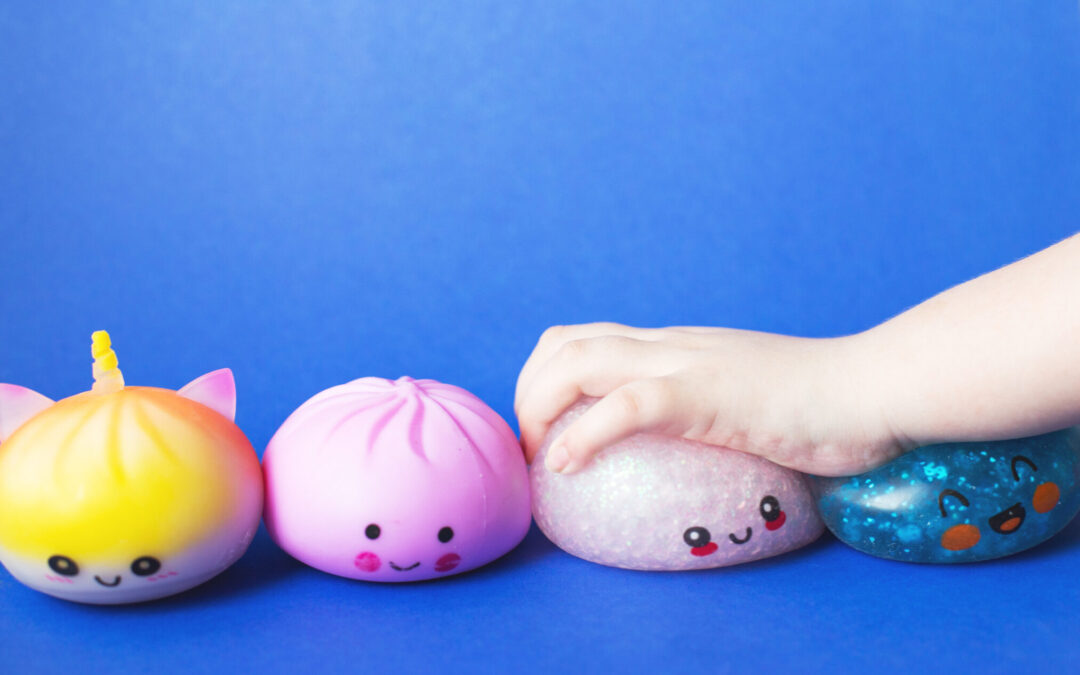
So your third grader is suddenly desperate for a particular squishy — those colorful, squeezable, shape-shifting riffs on the stress balls of yore. Or maybe they’re begging for another pack of Pokémon cards because “everyone else” has the newest set. Maybe they’ve spent weeks perfecting their Beyblade battle strategy, or they insist on wearing the exact same collectible boba tea keychain as half their class.
To adults, it can all feel a little baffling. Didn’t we already buy enough tiny toys?? But to kids, these possessions often carry far more weight than their (sometimes hefty) price tags suggest. They’re conversation starters, status symbols and trading currency. They’re sort of … membership cards that signal, hey, you’re in at a time when kids are just learning what that means. Adults may just not see it.
Every generation had its thing. Millennial kids swapped Tamagotchis, POGs and the original Pokémon cards. Gen X kids traded Garbage Pail Kids, Cabbage Patch Kids and friendship pins. What’s different today isn’t that kids become obsessed; it’s how quickly trends emerge, evolve and spread across schools because of social media.
Today’s playground crazes offer a surprisingly revealing window into children’s social development. The trends may be spreading faster than ever before, but the meaning kids attach to beloved childhood objects has, thankfully, remained remarkably durable.
Collectible, social and scarce
These days, a trend can explode almost overnight — it might start with something middle school kids see on YouTube or TikTok, but quickly reach second grade via sibling lines before many parents have even heard of it. Beneath the speedy surface of 2026 toy trends, the function hasn’t changed.
“When children trade Pokémon cards, compare collections or organize Beyblade battles, they’re engaging in real-world lessons about negotiation, problem-solving, perspective-taking and conflict resolution,” says Kristen Miller, an educator at Celebree School. “They’re learning how to advocate for themselves, compromise, handle disappointment and navigate group dynamics. While adults may focus on the toy itself, educators often see the social learning happening around it.”
In other words, these toys are helping your kids become real people — members of a community who must learn to live alongside one another. After all, elementary school is when children begin placing increasing importance on peer acceptance. Friendships become more stable, but also more emotionally intense. Kids start comparing themselves to classmates more frequently and become acutely aware of which trends are “in” vs. “out.”
Today’s biggest elementary school obsessions share several traits that make them almost perfectly engineered for playground culture.
- They’re collectible. Kids rarely stop at one. Whether it’s squishies, Pokémon cards, Labubus or Mini Brands (literally miniature replicas of real-world products), each purchase leads you on the path to another. Collecting taps into children’s desire for mastery and completion.
- They’re social. Most playground favorites aren’t passive toys. They’re meant to be traded or battled. A Beyblade isn’t much fun alone. Neither is a binder full of Pokémon cards if nobody’s around to admire or trade. The object creates the interaction.
- They involve scarcity. From limited editions to rare cards to special releases and mystery packaging, these collectibles have their own drama. Much like adult sneaker drops or Stanley Cup color launches, scarcity creates excitement — and social value.
Take squishies, for example. “It’s a total craze,” says Holly Ramey, an educator and mom in New York. “Because they are sold out everywhere and hard to find, they’re kind of like collectors’ items … The teachers have now banned them from school unless you have, like, a special note that says you have ADHD and you actually need one to fidget with — which they’re supposed to be for! They’re fidget toys.”
But for kids, a toy’s original purpose (fidgeting, playing a card game, what have you) morphs into something else if everyone at recess is battling, collecting or trading. At that point, participating isn’t just about owning the object; it’s about joining the conversation and learning to play and negotiate with other kids.
“I like Beyblades because it’s really fun to just watch them battle, and that some are powerful and some aren’t,” says my son Silas, who is 10. “The structure of the Beyblade influences how often they win. I’m trying to get ones that are powerful because then I can win more, and that feels fun.”
“All the kids like squishies because they’re really popular and kids want to be like, better than other kids.” – Ruby, 10
Ruby, 10, from New York, likes squishies “because they’re squishy OBVIOUSLY,” but she too has clocked their hidden currency. “All the kids like squishies because they’re really popular, and kids want to be like, better than other kids.”
The biggest pitfall, of course, is just as Ruby says: These systems can create exclusion. Only some children can afford new collectibles, so that playground hierarchies may emerge. Teachers witness kids arguing over unfair trades or excluding classmates who don’t own the “right” items.
But experts caution against assuming the toys themselves are the problem here. Instead, they reveal existing social dynamics. It can be an important teaching moment for parents.
“These trends highlight opportunities for adults to help children build inclusive communities,” says Miller. “We know that belonging is a fundamental need, and when certain toys become status symbols, they can unintentionally create barriers. That’s why it’s important for adults to help children learn that friendships are built on kindness, shared experiences and mutual respect — not possessions.”
Why does having the ‘right’ stuff feel so important?
Many parents are surprised by the emotional intensity these toys inspire. My kid doesn’t just want the toy; he feels devastated that he doesn’t have it. And developmentally, that makes sense.
Angela Narayan, PhD, associate professor of clinical child psychology at the University of Denver, says these trends help elementary-aged kids “develop their identities as separate from their parents or caregivers.” Part of the appeal, she says, is that parents don’t “get” them, as any adult who has tried to read a Pokémon card can attest. A shared language with other kids gives children a private life all their own.
And no, wanting what everyone else has for kids doesn’t mean they’re consumerist little twerps (yet); it means they’re craving social safety.
“For kids to have ‘the right stuff’ is not new,” explains Yolanda Carlos, professor of early childhood education at Pacific Oaks College. “When I taught preschool, children compared tennis shoes and formed friendships based on toys, shoes, lunchboxes, T-shirts. We all display our identities through our accessories.”
Ask kids why they love these trends, and they probably won’t mention rarity or value. Instead, they’ll say: “It’s my favorite.” “I’m really good at it.” My son says he’s “known” for his Beyblade strategy, while another kid designs elaborate squishy collections. These niches help even shy kids feel like they belong.
“I like NeeDohs because they’re squishy, heavy and satisfying,” says 8-year-old Zoya from North Carolina. “They have a good weight. I like butter stick squishies, and you can get different kinds of butter, like unsalted and salted!”
As Zoya says, there’s a physical, material aspect to these toys and games — and that can be a welcome relief for kids and parents alike in a world wildly overpopulated by screens. “They’re very tactile,” says Ramey of the toy trends. “We live in an increasingly technological world, so just having this tactile thing in your hand that you can squeeze … as a somatic teacher, I think that’s pretty chill.”
“The focus is on a shift of pace that intentionally creates a slowdown with intentional pauses,” agrees Carlos when it comes to kids playing with squishies or getting lost combing through a Pokémon binder. This is a means of true play, she argues, one that technology can’t replicate.
What parents can learn from playground trends
It’s tempting to dismiss each new obsession as another (expensive) phase. But these crazes offer opportunities for conversations that extend far beyond toys.
Parents can ask:
- What makes that item special to you?
- How did you decide this was worth saving your own money for?
- What happens if someone wants to trade?
- How do you know whether a trade is fair?
- What should you do if someone pressures you?
- How can you include classmates who don’t have these toys?
Those discussions naturally introduce lessons that, experts say, set a key foundation for kids later in life. “Delayed gratification is important for learning about the value of money,” says Carlos. So instead of automatically saying yes — or no — parents can help kids think through buying and collecting decisions.
“It’s forced me as a parent to give my daughter the opportunity to use her own money,” Ramey says. “I’ve witnessed her take $15 into the store and try to buy three squishies and then take two away because she doesn’t want to spend all her money at once.”
“Like how our parents didn’t understand why WE liked the things we did, there’s a sense of … Why are they excited about this? Like, it’s a blob.” – Holly Ramey, educator and mom
Ramey says this has been the most positive thing about the toy trends and has “forced me to have more strict boundaries with consumption. It’s like they want more and more because it’s competitive, so-and-so has this one … So it’s teaching her the difference between a want and a need, getting her to feel the tension of wanting something and not being able to get it.”
Silas’s obsession with Beyblades has motivated him to make his own money. He doesn’t get an allowance, but offers chore services around the block, like feeding the neighbor’s chickens or watering plants. “If I didn’t have any Beyblades, I would just use my savings to buy some,” Silas says nonchalantly. “Same with Pokémon cards. If I didn’t have any, I wouldn’t feel left out for long — because I would just earn money.”
What today’s toy crazes have in common with ours
Today’s elementary school crazes may seem a far cry from the Gogo’s Crazy Bones and Beanie Babies many parents remember. But underneath the surface, they’re the same — even the same as kids trading marbles in the early 1900s. Kids have always used shared fascinations to figure out who they are, where they belong and how to connect with one another.
“Like how our parents didn’t understand why WE liked the things we did, there’s a sense of … why are they excited about this? Like, it’s a blob,” laughs Ramey about her daughter’s squishy obsession. “But when I reflect on the sensation of getting something everybody else has, there’s this unifying energy to it; it defines their generation. It gives them a sense of belonging.”
“The object of the craze may change over time, but the pattern and meaning of it within society stays the same,” agrees Narayan. In fact, she argues, kid crazes are no different from our own: how adults behave and engage with their own interests and hobbies. “Romance novels, true crime docuseries and other hit shows and movies that adults have gone bananas over … all allow people to ‘be a part of the conversation.’ No one — adult or child — wants to feel left out.”
The toys may rotate every school year, but the developmental work stays remarkably consistent. And if parents can look past the clutter piling up in backpacks and bedrooms, they may find that squishies, Pokémon cards, Beyblades and more aren’t just playground distractions; they’re some of childhood’s earliest lessons in friendship, identity, negotiation and belonging. And hey, every hour my kid spends playing with these tchotchkes is an hour spent off screens and with peers — aka, living in the real world. So maybe the distraction isn’t so bad after all.
Published by AOL.com and featured on Yahoo Life.