
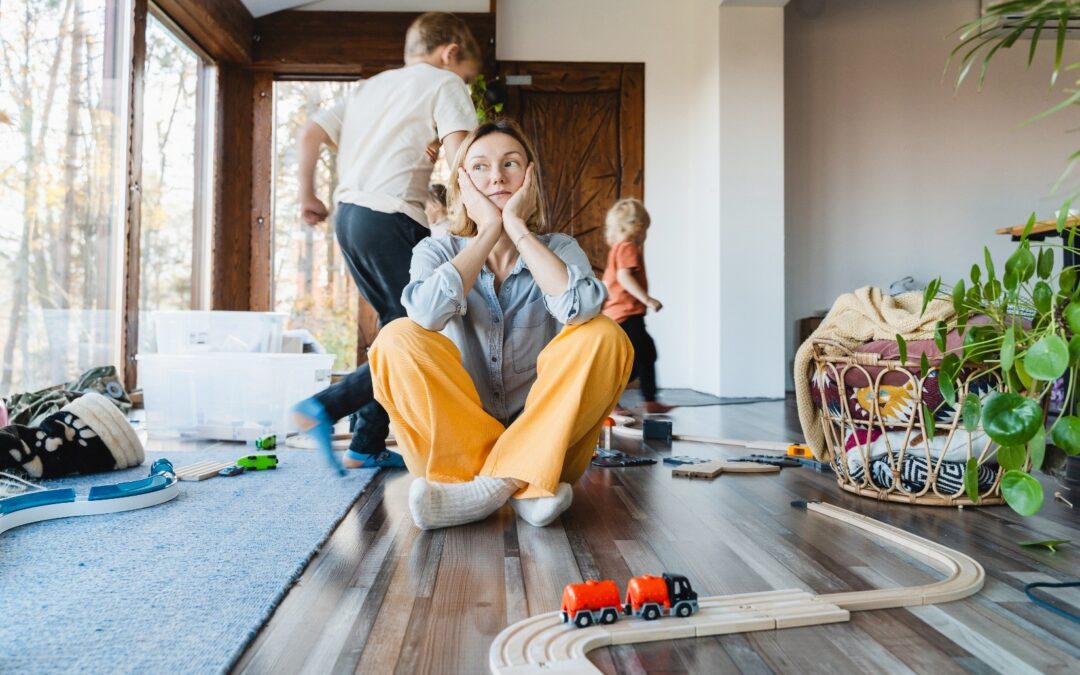
Understand the emotional load of parenting, how burnout shows up, and why support systems matter more than ever.
You wake up and the day starts moving almost immediately.
Get yourself ready. Get your child ready. Move through breakfast. Find the shoes. Find the other shoe. Get out the door. Drop-off. Work. Pick-up. Activities. Dinner. Bedtime.
Somewhere in there, you answer questions, manage emotions, make decisions, and try to stay patient through all of it.
By the time the house gets quiet, there’s not much left.
That pace has become normal for a lot of families. It’s full. It’s structured. It’s constant.
And over time, it can start to feel heavy.
What many parents are experiencing right now is often described as the emotional load of parenting. It’s not just about being busy. It’s the mental tracking, the emotional presence, and the steady responsibility that doesn’t really turn off.
It adds up.
When the Load Outweighs the Recharge
Parental burnout is what happens when the emotional load of parenting outweighs your capacity to recharge.
It shows up as constant fatigue, a shorter fuse, and the feeling that you’re always needed but rarely restored. It’s not a sign that you’re doing something wrong. More often, it’s a reflection of how much you’re carrying, often without enough support.
For many parents, this doesn’t happen all at once.
It builds slowly.
A few long days turn into a long week. A busy season stretches longer than expected. The small moments of rest that used to exist start to disappear.
Research from the Gottman Institute has pointed to a growing sense of parenting fatigue, where the exhaustion isn’t just physical. It’s emotional. It affects patience, connection, and the ability to stay present in the way you want to.
At the same time, expectations haven’t eased.
If anything, they’ve increased.
The Gap Between What You Expected and What It Is
Before becoming a parent, most people have some idea of what it might feel like.
There’s often a picture of connection, joy, and meaningful moments together.
That part is real.
What’s harder to anticipate is the constant nature of it. The decision-making. The responsibility. The feeling that there is always something that needs your attention.
Modern parenting also comes with a steady stream of input. Advice from experts. Opinions from friends and family. Information online that tells you what you should be doing, how you should be doing it, and why it matters.
It can quietly create a sense that there is a “right” way to handle everything. And when your real life doesn’t match that version, it’s easy to feel like you’re falling short.
The Talker Research study conducted on behalf of Celebree School found that parents question their parenting skills multiple times a week, and many feel like they’re getting it wrong more often than they’d like to admit.
That feeling is more common than most people realize.
It doesn’t mean it’s something you’re meant to live in.
The Part No One Really Sees
There’s also the layer of parenting that doesn’t always get acknowledged.
The planning. The remembering. The anticipating.
You’re not just getting through the day. You’re thinking ahead to the next one. Packing lunches. Keeping track of schedules. Noticing when something feels off. Making adjustments before anyone else even realizes they’re needed.
That kind of mental tracking doesn’t really stop.
In many families, one parent ends up carrying more of that invisible load. Sometimes it’s intentional. Sometimes it just happens over time. Either way, it adds up.
The Talker Research study found that many parents feel an imbalance in how responsibilities are shared, and a significant number admit to keeping their stress to themselves. Not because they want to, but because it feels easier than explaining everything they’re holding.
That’s a lot to carry quietly.
When that mental load stacks on top of an already full day, it can start to feel like there’s no real break, even when things are technically “done.”
Why It Feels So Heavy Right Now
Some of this comes down to the systems many families are navigating today.
Schedules are tight. Work expectations are high. Time feels limited. Support systems aren’t always built in the way they used to be.
Not every family has relatives nearby. Not everyone has flexible time or extra help. For many parents, the day is structured around responsibilities with very little space in between.
That creates a situation where you are constantly giving without many opportunities to reset.
At the same time, there’s more visibility into how other people are parenting than ever before. That can make it feel like you should be doing more, handling things differently, or somehow keeping everything running more smoothly.
It’s a lot of input, layered on top of a full day.
None of that means you’re doing something wrong.
It means you’re operating within a system that asks a lot of you.
Finding Small Ways to Recharge
This is where the conversation often turns to self-care.
That idea can feel frustrating, especially when your schedule already feels stretched. The thought of carving out large blocks of time for yourself may not feel realistic.
It doesn’t have to look like that.
Small moments still matter.
A few ways parents sometimes begin to create space:
- Taking ten quiet minutes before starting the next task, even if it means letting something else wait
- Stepping outside for a short walk, even if it’s just around the block
- Letting go of one expectation for the day instead of trying to meet all of them
- Sharing responsibility where possible, even in small ways
- Saying no to something that isn’t essential
These aren’t big resets. They’re small adjustments.
And while they don’t remove the demands of parenting, they can help create a little breathing room.
It’s also important to acknowledge that this is easier said than done. There will be days when none of this feels possible.
That doesn’t mean it isn’t worth returning to when it is.
You’re Not Meant to Carry This Alone
When the emotional load builds, support becomes more than just helpful. It becomes necessary.
That support doesn’t always show up in obvious ways.
Sometimes it’s a conversation with another parent who understands what your day looks like. Sometimes it’s a teacher who notices something about your child and shares it with you. Sometimes it’s simply being in a place where you feel comfortable asking a question or admitting that something feels hard.
Those moments matter.
They remind you that what you’re experiencing is shared. That you’re not the only one figuring things out as you go.
At Celebree, this idea of community is something we create space for. Throughout the year, schools host events that give families a chance to slow down, connect, and spend time together in a different way.
These aren’t meant to add to your to-do list. They’re an opportunity to step out of the daily routine, spend time with your child, and connect with other parents who are in a similar season of life.
Here’s a snapshot of how different Celebree schools are creating space for connection this May:
| Location | Event |
|---|---|
| Lutherville |
Mother’s Day Coffee Truck to help moms start the weekend Summer Kickoff Community Cookout |
| Hampstead |
Bloom & Blossom Brunch with DIY flower bar, crafts, and goodies Parent Breakfast |
| Middletown | Family celebration with arts, crafts, music, and outdoor games |
| Waverly Woods |
Garden Party Ladies Afternoon Tea (Mother’s Day + Tea with Grandma) |
| Severna Park | Mocktails with Moms Sip & Paint Event |
| Rock Spring | Floral-themed Mocktails with Mom + painting activity |
| Bel Air | Muffins with Mom, crafts, photos, and flower arrangements |
| Crofton |
Muffins with Mom + personalized photo frame activity Participation in Two Rivers Elementary Teacher Appreciation Week |
| Tech Court | Mother’s Day Tea Party with floral and gardening activities |
These kinds of moments may seem small, but they create space for something many parents are missing: connection.
Over time, those interactions can turn into real support systems.
If this resonates, you might find it helpful to explore how connection shows up in your child’s school community and how those relationships can grow over time. It’s something we explore more in Finding Your Village Through Childcare, where the focus shifts from carrying everything yourself to building support around you.
A Different Way to Look at It
The emotional load of parenting is real. It’s shaped by how much you care, how much you’re responsible for, and the environment you’re operating in.
Feeling worn down doesn’t mean you’re failing.
It means you’ve been carrying a lot.
There’s space to adjust. To ask for support. To find small ways to restore your energy. To recognize that parenting isn’t meant to be handled in isolation.
Even a little more support can make things feel lighter. That shift can change how the entire experience feels, not just for you, but for your child as well
If parenting has been feeling heavier than usual, you’re not alone, and you don’t have to navigate it on your own.
Connect with a Celebree School near you to discover a supportive community that helps both you and your child feel more grounded each day.