
Simple, preschool-approved snacks that support learning, behavior, and real-life parenting.
We live in a time when food is always available. Drive-thrus. Snack aisles. Pouches with cartoon characters promising superpowers. It’s convenient. It’s fast. And sometimes it’s the only thing standing between you and a meltdown in the carpool line.
At the same time, many of those options are loaded with sugar and very little actual nutrition. Add in the fact that preschoolers can change their minds about food overnight—apples with peanut butter are the favorite for two weeks, and then suddenly they’re disgusting—and it can feel exhausting.
You want your child to eat food that fuels their brain and helps them grow. But the harder you push, the harder they resist.
There’s a psychology to it.
Before we get into snack ideas, let’s define what “healthy” actually means.
What Does “Healthy” Really Mean?
Healthy does not mean elaborate. It does not mean organic everything. And it certainly does not mean cutting sandwiches into ladybug shapes (unless you genuinely enjoy that sort of thing).
Healthy means balance.
For preschoolers, that usually looks like:
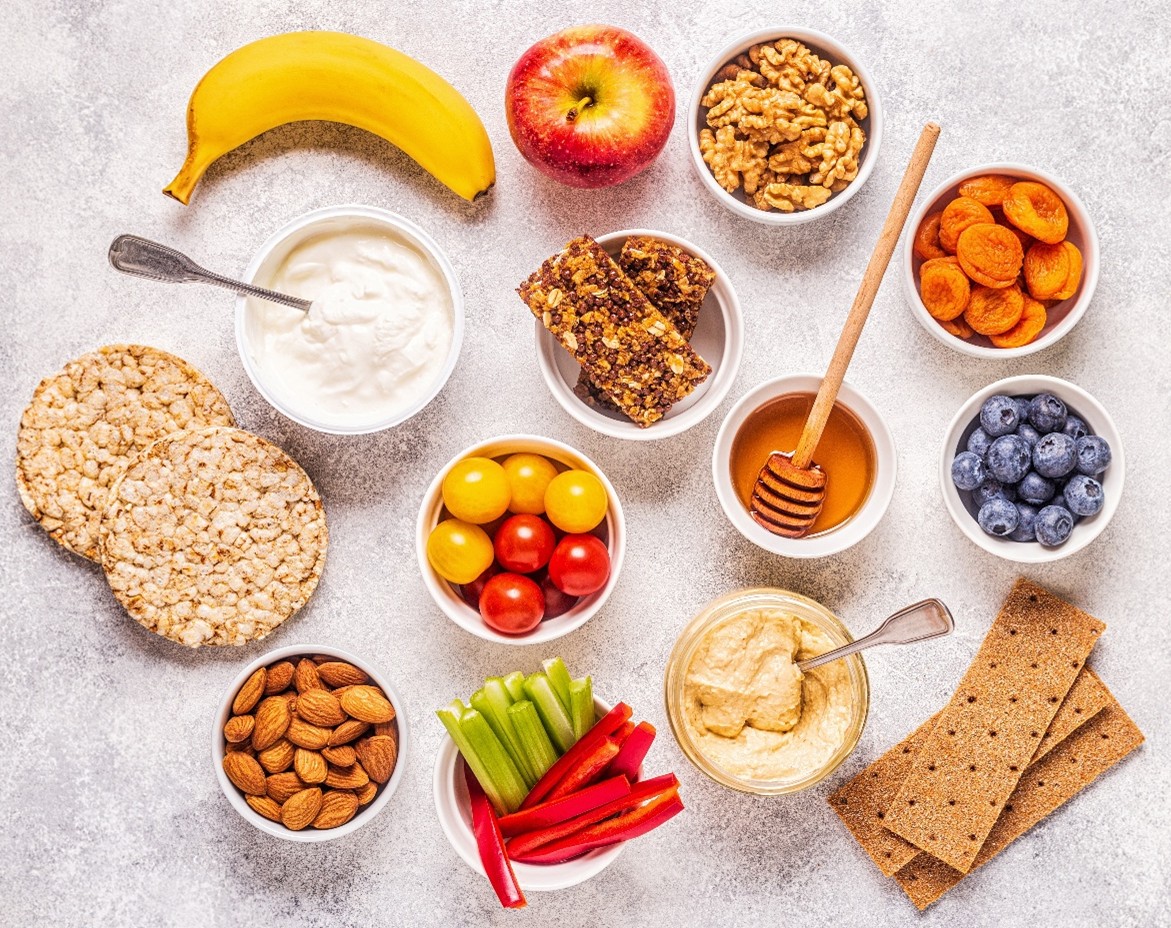
- Protein for growth
- Complex carbohydrates for fuel
- Fiber for digestion and fullness
Opt for whole foods whenever possible. This means unprocessed foods in their simplest form.
When snacks include a combination of these elements, they help stabilize energy levels. Stable energy supports better focus, fewer crashes, and smoother behavior.
As Kristen Miller, Director of Education at Celebree School, often emphasizes, early childhood is about building foundations. That includes healthy habits. Balanced nutrition plays a meaningful role in supporting children’s ability to learn, regulate, and engage throughout the day.
Now let’s get practical.
10 Healthy, Preschool-Approved Snacks
5 Easy Lunchbox Snacks
- Apple slices and sunflower seed butter (Nut-free, Dairy-free)
- Whole wheat crackers and hummus (Nut-free, Dairy-free)
- Turkey roll-ups and cucumber slices (Nut-free, Dairy-free)
- Sliced peaches, Greek yogurt, and a drizzle of honey (Contains dairy)
- Mini whole wheat pita and guacamole (Nut-free, Dairy-free)
These are simple and balanced.
5 Snacks Kids Can Help Prepare
- DIY yogurt parfait: yogurt, berries, sprinkle of granola (Contains dairy)
- Banana sushi: banana spread with seed butter, rolled in hemp seeds (Nut-free option available)
- Red bell pepper strips + ranch or hummus (Dairy or Dairy-free option)
- Whole wheat toast + mashed avocado + lemon squeeze (Nut-free, Dairy-free)
- Strawberry slices on whole wheat bread + thin layer of Nutella + hemp seeds (Contains dairy & nuts)
Preschoolers love independence. Giving them a toddler-safe knife to slice a bell pepper may require patience, but it also builds confidence. Plus, children are often more willing to eat something they helped prepare.
5 Better-For-You Packaged Swaps
Full transparency here: sometimes as parents we just have to go with what is the most convenient. That’s okay. If prepackaged snacks are part of your routine, consider simple swaps:
- Annie’s Cheddar Bunnies instead of Goldfish
- Veggie Straws instead of potato chips
- Chocolate-covered raisins instead of M&Ms
- Simple Mills crackers instead of Ritz Crackers
- That’s It fruit bars instead of fruit snacks
These options are fun and get the job done, but typically contain fewer artificial ingredients and less added sugar.
Helping Picky Eaters Without Power Struggles
Here’s where things get real.
The more pressure children feel around food, the more resistant they often become. Encouraging healthy snacks for kids requires patience and strategy.
A few approaches that will help set you up for success:
Lean Into What They Already Like
If your child consistently eats apples and bananas, start there. You can build around familiar foods rather than fighting them.
Offer Choices Within Boundaries
When your child says they’re hungry and you know they’re after a brownie or bag of chips, tell them, “Ok! I have an apple of a banana, which would you prefer?”
Maintain a degree of nonchalance here. If they respond that they do not want either, hold the boundary. There is a way to stay kind but firm. Draw on your inner Mary Poppins.
Introduce New Foods Calmly
When offering something new, pair it with something familiar. Add a few edamame beans next to the apple slices and sunflower butter. Don’t announce it dramatically. Don’t insist they try it. If they ask, explain what it is. If they say it’s gross, respond neutrally.
Keep offering it occasionally. Exposure builds familiarity.
There’s a helpful Daniel Tiger episode with the song, “You should try new foods ‘cause it might taste good.” Watch this with your kid and experience how beneficial guidance from this tiger can be.
Let Peer Influence Work For You
Children are natural observers. If they see a friend or older cousin eating black beans or roasted carrots, curiosity often follows. Social modeling can be powerful, in both directions, so it’s worth paying attention.
Involve Them in Preparation
When children participate in making their snack, ownership increases. Let them:
- Slice strawberries
- Spread seed or nut butter
- Scoop yogurt
- Sprinkle hemp seeds
Yes, it might get messy. Yes, it takes longer. But it builds independence and comfort with new foods.
The 80/20 Reality
No one eats perfectly. And they shouldn’t have to.
A big component of cultivating a healthy relationship with food is understanding moderation. An 80/20 approach works well for many families:
- 80% balanced, whole-food focused choices
- 20% fun foods that we all crave
Balance is the goal. Not restriction. Not perfection.
Healthy snacks for kids should create steady energy, support learning and behavior, and help your child build confidence around food.
When children feel good physically, that shows up emotionally and academically, too.
Curious how nutrition and whole-child development come together in a preschool setting? Connect with a Celebree School near you to learn more.