
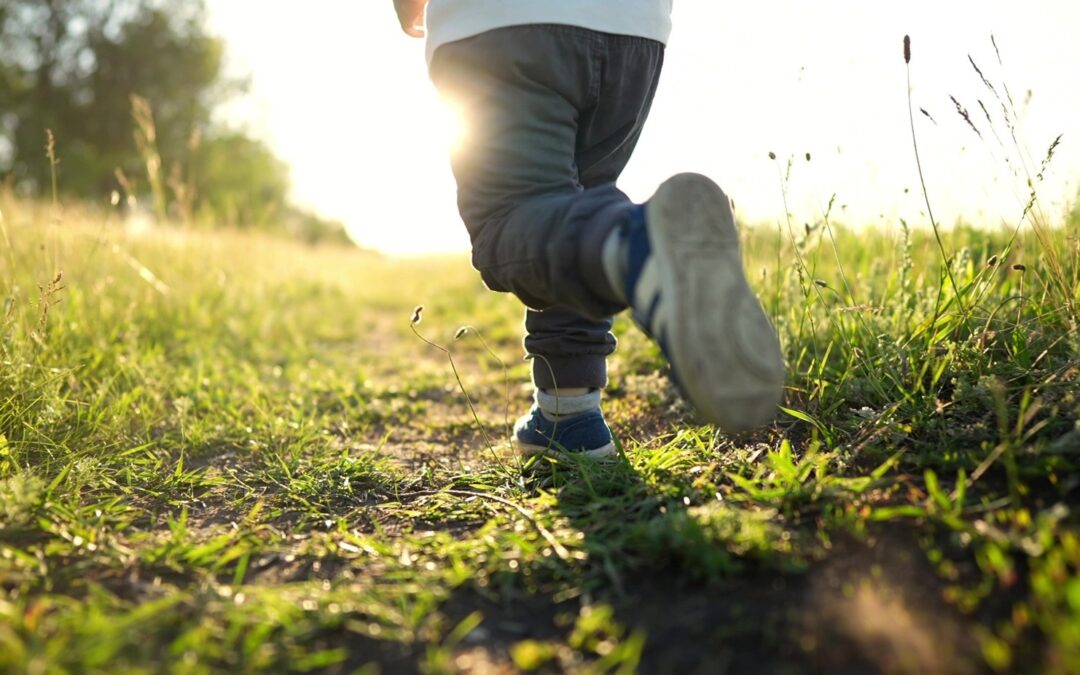
Why the movements that look like “just play” are building gross motor skills in preschool.
When your child plays outside, it probably just looks like movement. Running. Jumping. Climbing. Testing balance on something that may or may not have been designed for it.
It is definitely an excellent outlet for burning energy. But there is more at play here than just play.
While your child is moving, their body is building strength and coordination. Those big movements are developing the gross motor skills in preschool that support balance, control, and confidence long before organized activities begin.
And that early movement matters more than many people realize. As Kristen Miller, Director of Education at Celebree School, explains, “90% of a child’s brain develops before the age of 5.”
When children are given regular opportunities for outdoor exploration and healthy activity during those early years, they are building habits and skills that last well beyond preschool.
Outdoor space gives your child room to move freely, and that freedom supports early physical development in meaningful ways.
Outdoor Play and Physical Development in Early Childhood
Physical development in early childhood happens when your child moves, experiments, and adjusts. Every time they run across uneven ground or figure out how to stop without falling, their body is learning.
Your child is practicing how to:
- Shift weight and stay balanced
- Control speed and direction
- Coordinate arms, legs, and core muscles
- Recover after a stumble
Gross motor skills in preschool develop through repetition. Outdoor environments make repetition easier because there is more space and fewer limits on movement. Your child can move continuously instead of stopping every few minutes.
Longer stretches of movement build strength and endurance naturally.
Water play, for example, is one simple way families see this in action. In an interview with Franchise Dictionary Magazine, Miller notes that, “activities like jumping, splashing, and swimming are excellent for building gross motor skills.” The key isn’t the activity itself. It’s that your child is moving their whole body in ways that challenge balance, coordination, and control.
Movement Supports More Than Muscles
When your child climbs carefully, they are concentrating.
When they wait for space before running, they are practicing awareness.
When they fall and stand back up, they are building resilience.
Movement strengthens the body and supports emotional growth at the same time.
Regular outdoor play helps your child:
- Release energy in healthy ways
- Manage frustration
- Build confidence through effort
- Feel secure in their physical abilities
Exposing children to new environments and experiences also expands how they think and engage. As Miller explains, “Children learn from their surroundings and activities they are exposed to. By providing them with new facets to explore, you open the opportunity for future development.”
As your child gains control over their movements, they often become more comfortable participating in group activities and trying new challenges.
What Are Gross Motor Skills in Preschool?
Gross motor skills are the large body movements your child uses every day. These movements involve the arms, legs, and core working together.
You see these skills when your child:
- Runs and stops safely
- Jumps and lands with balance
- Climbs with coordination
- Navigates around other children without bumping into them
These abilities strengthen over time through repeated outdoor play. Each experience builds more body awareness and control.
When your child feels steady and capable physically, everyday routines become easier. Sitting during group time, transitioning between activities, and engaging with peers often feel less frustrating.
Movement supports learning by making children more comfortable in their own bodies.
Outdoor Play Doesn’t Require a Playground
You don’t need elaborate equipment for your child to build gross motor skills in preschool.
Some of the most valuable movement happens in simple spaces. Your child develops strength and control when they:
- Run across uneven grass
- Step over puddles
- Walk along a curb
- Carry sticks or rocks
- Follow a chalk line they helped draw
The American Academy of Pediatrics has long emphasized that child-led play supports motor skills and resilience because children are making their own decisions about how to move and adjust. That independence matters.
When your child chooses to try balancing again or decides how fast to run, they are strengthening both coordination and confidence.
How Movement Builds Confidence and Regulation
Movement supports more than muscles.
When your child runs hard and then slows down, they are learning to recognize their body’s signals. When they fall and try again, they are practicing persistence. Over time, regular physical activity has been linked to improved attention and emotional regulation in young children.
Outdoor play gives your child a safe place to release energy and work through small frustrations. That combination supports:
- Better energy control
- Greater tolerance for setbacks
- Increased willingness to try something new
- More engagement during structured activities
As your child becomes more physically steady, you often see growth in confidence alongside it.
What You Can Look For
You don’t need to measure progress. Just notice changes.
You might see your child:
- Running with fewer stumbles
- Landing jumps more steadily
- Balancing longer
- Recovering from frustration more quickly
- Trying a new movement without as much hesitation
Those everyday improvements show that gross motor skills are strengthening.
Regular outdoor play builds coordination, stamina, and confidence over time. It also supports independence in ways that show up far beyond the playground.
When choosing a preschool, it’s worth looking at how movement is supported throughout the day, not just how academics are structured. If you’d like to see how outdoor play is integrated into daily learning at Celebree, we invite you to connect with a school near you.