
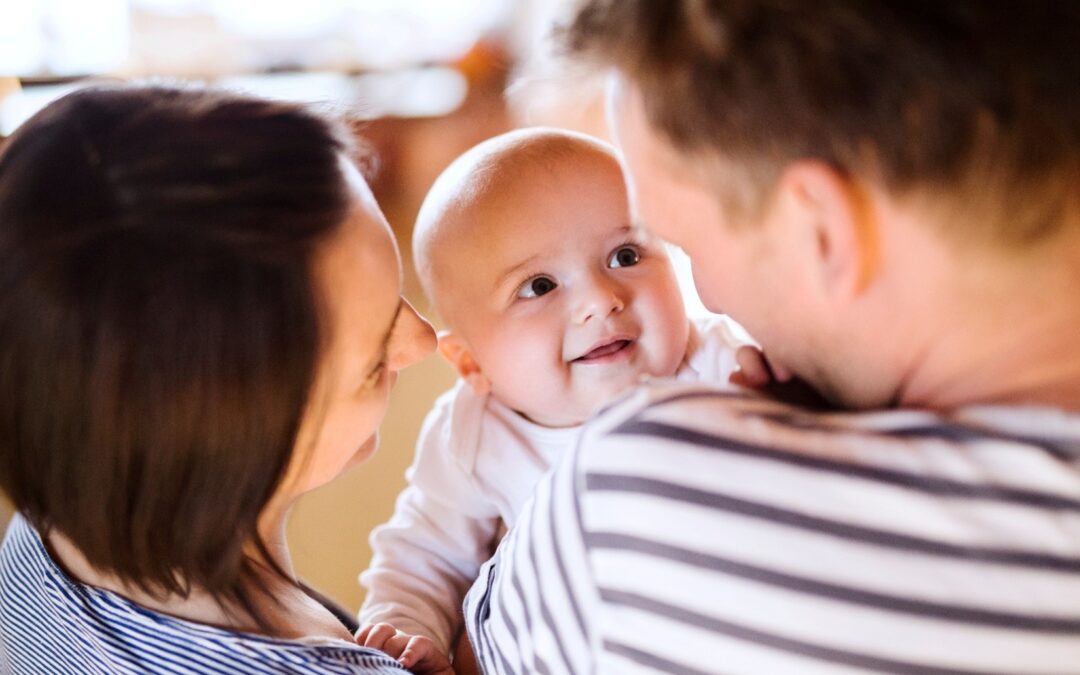
A baby who once explored mostly from your arms or the floor may soon be sitting up to play, turning when they hear their name, reaching for a favorite toy, or figuring out how to get closer to something interesting.
Those changes do not happen all at once, and 6 months is not a switch that suddenly flips. Still, the second half of the first year often brings new ways for babies to move, communicate, explore, and participate in what is happening around them.
Baby milestones can help you understand that progression. They are useful guideposts, not deadlines, and every baby develops a little differently.
Baby Milestones Include More Than Movement
It is easy to notice physical skills such as sitting, crawling, or pulling up, but development during the first year happens across several areas at once.
You may see changes in:
- Movement and physical control
- Communication and early sounds
- Social interaction
- Thinking, attention, and exploration
The CDC uses developmental milestone checkpoints at 2, 4, 6, 9, and 12 months. During the months in between, new abilities may gradually emerge as your baby builds on earlier skills.
Birth Through 3 Months: Building the Earliest Skills
During the newborn stage, much of your baby’s movement is reflexive. Head control is limited, and many early responses center on sound, touch, comfort, feeding, and close interaction.
Around 1 month, you may notice longer periods of alertness. Your baby might study your face more closely, respond to familiar voices, or move their arms and legs more actively.
By about 2 months, common milestones include:
- Looking at your face
- Smiling when you talk or smile
- Making sounds other than crying
- Reacting to loud noises
- Watching you move
- Holding the head up briefly during tummy time
Around 3 months, head and upper-body control may become steadier. Your baby may coo more often, open their hands more, and begin swiping or reaching toward nearby objects.
These early skills lay the groundwork for the more active exploration that often becomes noticeable later in the year.
4 Through 6 Months: The World Becomes Easier to Reach
By 4 months, many babies are better able to act on what interests them.
They may hold their head more steadily, bring their hands to their mouth, reach toward toys, and push up on their forearms during tummy time. Socially, you may hear more sounds made in response to you and see more frequent smiles or early laughter.
Around 5 months, reaching and grasping may become more deliberate. Your baby may spend more time holding, mouthing, shaking, or examining toys. Some babies begin rolling during this period or spend more time sitting with support.
By 6 months, common milestones include:
- Reaching for a toy they want
- Rolling from tummy to back
- Pushing up with straight arms
- Leaning on the hands for support while sitting
- Laughing
- Taking turns making sounds
- Recognizing familiar people
At this point, your baby has more control over where they look, what they touch, and how they interact. During the months ahead, those abilities often begin working together in new ways.
7 Through 9 Months: Sitting Opens Up More Possibilities
The second half of the first year can feel especially different once sitting becomes steadier.
Around 7 months, your baby may be able to spend more time upright while using both hands to explore. They may transfer a toy from one hand to the other, reach in different directions, or examine an object more closely.
By about 8 months, getting somewhere may become part of the fun. Some babies roll, scoot, creep on their stomach, rock on hands and knees, or begin crawling. Others take more time before becoming interested in moving from place to place.
At 9 months, common milestones include:
- Sitting without support
- Getting into a sitting position
- Moving objects from one hand to the other
- Looking when you call their name
- Making repeated sounds such as “mamama” or “bababa”
- Looking for an object that disappears from view
- Showing clear reactions when you leave or return
Why Is Sitting Such a Noticeable Change?
Sitting does more than change your baby’s posture.
When a baby can stay upright with their hands free, they gain a different view of the room and more opportunities to reach, hold, turn, and explore objects. They may also interact with you differently while sitting face-to-face or playing with something placed in front of them.
That does not mean sitting causes every other skill that follows. It simply gives babies another way to experience their surroundings.
Mobility Can Look Different From Baby to Baby
Not every baby becomes mobile in exactly the same way.
Some crawl on hands and knees. Others scoot on their bottom, belly-creep, roll repeatedly, or find another way to get where they want to go. Some babies spend relatively little time crawling before pulling up and cruising.
There is no single correct path. What matters more is how your baby’s overall movement and development are progressing over time.
10 Through 12 Months: More Purpose Behind What Babies Do
As the first birthday approaches, many babies become increasingly intentional in the way they move, communicate, and explore.
Around 10 months, you may notice more imitation, gestures, and purposeful movement toward a person or object. Your baby may also use their hands more precisely when playing.
At about 11 months, familiar words and routines may seem more meaningful. Babbling may become more varied, and some babies begin pulling themselves up or moving along furniture while holding on.
By 12 months, common milestones include:
- Waving goodbye
- Playing simple interactive games
- Understanding “no”
- Looking for hidden objects
- Putting objects into containers
- Pulling up to stand
- Walking while holding furniture
- Picking up small objects between the thumb and finger
Independent walking is not required by the first birthday. Some babies begin earlier, while others need more time.
Different Skills Begin Working Together
One of the most interesting changes in the second half of the first year is how several abilities can start showing up at the same time.
Your baby may hear their name, turn toward you, smile, then crawl closer. They may spot a toy, move toward it, pick it up, and babble while looking back at you.
Those are simple everyday moments, but they involve movement, attention, communication, and social interaction all at once.
That is why it can be more useful to look at development as a whole instead of focusing too heavily on a single milestone.
Give Your Baby Room to Explore Without Rushing the Next Skill
You do not need to turn the second half of the first year into a series of milestone exercises.
Safe, ordinary experiences can give your baby plenty of opportunities to practice emerging abilities. That may include supervised floor time, tummy time for younger babies, age-appropriate toys placed within reach, books, conversation, songs, and simple back-and-forth games.
The goal is not to teach your baby to crawl, stand, or walk on a schedule. It is to give them room to move, interact, and explore in ways that fit their current abilities.
Supporting Emerging Skills in Daycare
If your baby spends part of the week in daycare in Arlington, VA, familiar routines, sensory exploration, responsive interaction, and opportunities to move can continue throughout the day.
At Celebree School of National Landing, infant care focuses on nurturing relationships, predictable routines, sensory experiences, movement, and developmentally appropriate opportunities to explore.
For one baby, that may mean reaching toward a toy during floor play. For another, it may mean practicing sitting, listening to songs, responding to a familiar caregiver, or exploring an object with both hands.
The emphasis is on meeting babies where they are rather than expecting every child to work on the same skill at the same time.
When to Ask About Development
A wide range of developmental timing is expected, but questions are still worth bringing to your pediatrician.
Talk with them if your baby is not meeting expected milestones, loses a skill they previously had, or if something about their movement, communication, social interaction, or overall development concerns you.
You do not need to determine on your own whether something is a delay before asking.
The second half of the first year can bring a noticeable shift in how babies experience the world. Sitting, moving, babbling, reaching, gesturing, and exploring begin to give them more ways to take part in what is happening around them. Milestones can help you notice those changes while leaving room for your baby to develop in their own way.