
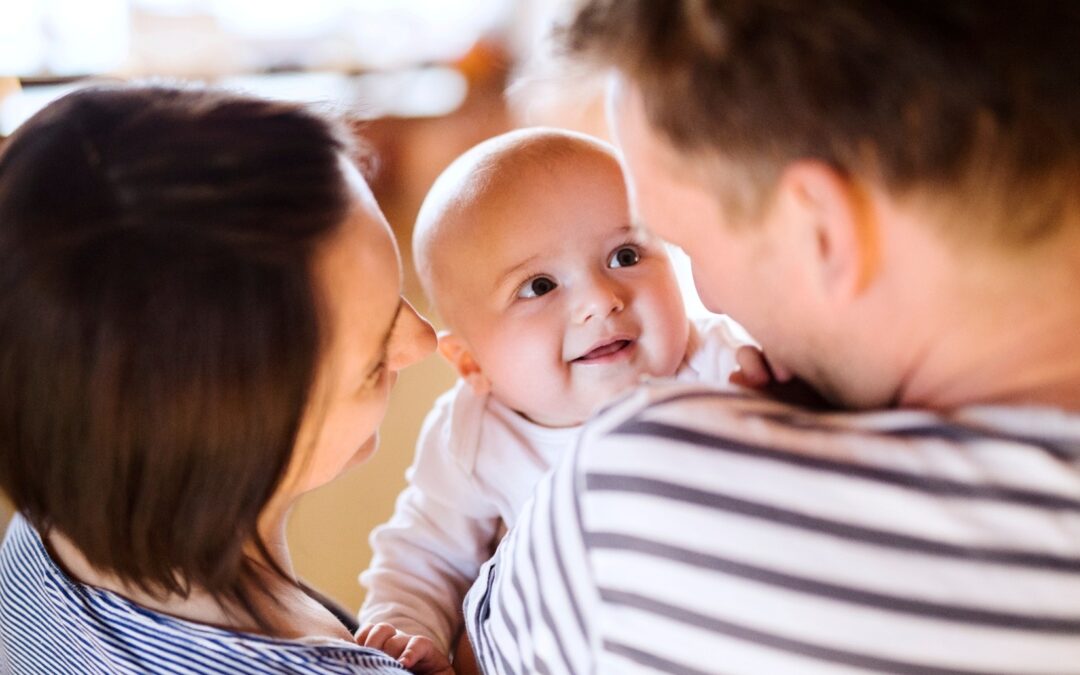
Around 2 months, some of the earliest changes in your baby may start becoming easier to notice.
You might catch a smile while you are talking, hear a sound that is clearly different from crying, or notice your baby watching your face for a little longer than before. During tummy time, they may lift their head briefly before settling back down.
These moments can seem small, but they are part of the baby milestones that show how quickly development begins during the first year.
Two Months Brings More Interaction
The newborn weeks are filled with feeding, sleeping, crying, and adjusting to life outside the womb.
By around 2 months, many babies begin showing more obvious interest in the people and activity around them.
They may spend longer looking at a face, react more clearly when someone speaks, or become more alert during short periods of play.
The changes are still subtle, but you may begin to feel like your baby is participating in the interaction instead of simply taking it all in.
Smiles Start Feeling More Social
One of the most memorable changes around this age is the social smile. By about 2 months, many babies smile when someone talks or smiles at them.
That is different from the fleeting expressions you may have seen during the newborn stage. Now, the smile may appear during a face-to-face interaction and feel much more intentional.
You may smile, say something, and get a little grin in return. It is one of the first signs that social interaction is becoming more noticeable.
Babies Begin Making New Sounds
Crying is still an important way babies communicate, but it may no longer be the only sound you hear.
Around 2 months, many babies begin making sounds besides crying. You might hear a quiet coo or another short vocal sound during a calm moment.
These early noises are simple compared with the babbling that comes later, but they are an early step in the long progression toward back-and-forth communication.
Faces Become More Interesting
Young babies are often especially interested in faces.
By around 2 months, many look closely at a caregiver’s face. They may also watch someone moving nearby or look at a toy for several seconds.
You may notice your baby holding their gaze a little longer or following movement with more interest. They are still easily distracted and their attention may shift quickly, but the world around them is becoming more engaging.
Tummy Time Starts Showing Early Head Control
During the first weeks, babies need plenty of help supporting their head and neck. By about 2 months, many can briefly hold their head up during tummy time.
That may mean lifting it for only a short stretch before resting again. You may also notice your baby turning their head from side to side while on their tummy.
Head control is still developing at this stage, so there is no need to expect a steady upright head yet. That comes later.
Arms and Hands Are Changing Too
Movements at 2 months are still fairly early and may look uncoordinated. Many babies move both arms and legs and may briefly open their hands.
You may see stretches, kicks, or quick arm movements that seem almost random.
Over the next several months, those movements become much more purposeful as babies begin reaching, holding toys, rolling, and using their hands to explore.
What Comes Next After 2 Months?
The changes around 2 months are just the beginning.
By around 4 months, many babies have steadier head control, make sounds back during interaction, bring their hands to their mouth, and show more interest in toys.
By 6 months, laughter, rolling, reaching, and early supported sitting may be part of the picture.
The first year builds gradually. A small skill that appears now may become the foundation for something much more noticeable a few months later.
Baby Milestones From Birth to 12 Months
Here is a general look at how development may change throughout the first year:
- 1 month: Relies heavily on caregivers for support and communicates mostly through crying
- 2 months: Many smile during interaction, make sounds besides crying, watch faces and movement, and briefly lift their head
- 3 months: Head control and social responses may become easier to notice
- 4 months: Many hold their head more steadily, make sounds back, and show growing interest in hands and toys
- 5 months: Reaching, vocal play, and rolling attempts may increase
- 6 months: Many laugh, reach for toys, roll from tummy to back, and begin supporting themselves while sitting
- 7 months: Sitting and object play may become steadier
- 8 months: Movement and interaction may become more active
- 9 months: Many sit without support, respond to their name, and make repeated babbling sounds
- 10 months: Gestures, movement, and object play may become more deliberate
- 11 months: Some first-birthday abilities may begin appearing
- 12 months: Many wave goodbye, pull to stand, move while holding furniture, and use “mama,” “dada,” or another special name meaningfully
The months between official developmental checkpoints describe common patterns rather than milestones every baby needs to reach at that exact age.
Early Interaction at Daycare in Cockeysville
At 2 months, development is less about complicated activities and more about simple, repeated interaction.
At daycare in Cockeysville, MD, babies experience familiar voices, responsive care, and everyday opportunities to look, listen, move, and interact.
For a young infant, that may mean watching a caregiver’s face, listening during a routine, or spending a little time on their tummy. Those ordinary moments change as babies become more alert and engaged.
What If a 2-Month Milestone Hasn’t Appeared Yet?
A milestone list is meant to help you notice development, not make you feel like every skill has to appear on schedule.
Some changes may be easy to spot, while others are more subtle.
Pay attention to the broader pattern of how your baby is becoming more alert, interactive, and physically capable over time.
Talk with your child’s pediatrician if your baby is not meeting expected milestones, loses a skill they previously used, or if you have concerns about movement, hearing, vision, communication, or development.
Two months is still very early, but it is often when some of the first little signs of personality and interaction begin to shine through.