
Learning to recognize letters and numbers is an important part of preschool. So is figuring out how to join a game, listen to someone else’s idea, or ask for help when something gets frustrating.
At Celebree School of Fallston, these skills develop together. Our preschool curriculum includes early literacy, math, science, creative expression, physical development, and social-emotional learning. Through guided play and hands-on activities, children explore new ideas while learning how to interact with others.
Here’s how we bring these different areas of learning together.
What Does a Preschool Curriculum Teach?
A preschool curriculum helps children develop early academic skills while supporting their social, emotional, and physical growth.
At Celebree, we incorporate the Seven Domains of Learning: personal and social development, scientific thinking, mathematical thinking, language and literacy, social studies, the arts, and physical development and health.
These areas connect naturally throughout the day.
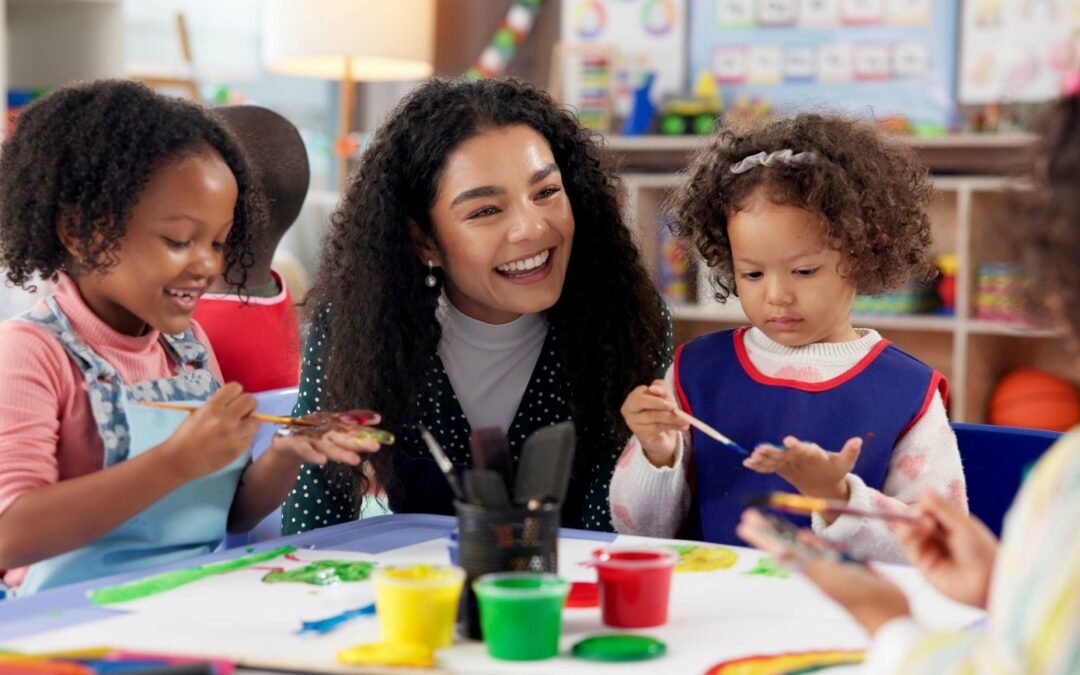
For example, children working on an art project may practice describing their ideas, sharing materials, and experimenting with different shapes. They’re developing language, creativity, and social skills through the same experience.
Our teachers plan activities with learning goals in mind while making room for children’s curiosity and interests.
What Can Children Learn by Working Together?
Much of preschool learning happens through interactions with classmates.
Imagine a few children in the dramatic play area deciding to put on a puppet show. One makes up characters, another suggests what should happen in the story, and someone else wants to create scenery.
As they work together, they’re practicing storytelling, expanding their vocabulary, and expressing themselves creatively.
They also have to listen to one another. What if two children want to play the same character or disagree about how the story should end?
A teacher can help them explain their ideas, consider another perspective, and work toward a solution. This kind of play connects early academic learning with communication and cooperation.
At Celebree School of Fallston, our classroom Interest Areas give children opportunities to explore their ideas independently and with others. Teachers ask questions, offer guidance, and introduce new challenges as children play.
What Does Social-Emotional Learning Look Like in Preschool?
Preschoolers are still learning how to recognize their feelings, communicate what they need, and manage disagreements with friends.
At Celebree, Conscious Discipline is part of how we support those developing skills throughout the day.
Our Morning Connection routine gives children time to connect with their teachers and classmates. They also review classroom jobs and the daily visual schedule, helping them become familiar with routines and responsibilities.
Social-emotional learning continues during classroom activities.
For example, a child who wants to join a game may not know how to ask. A teacher can help them find the words, approach their classmates, and become more comfortable participating.
Children also need support when things don’t go their way. With guidance and practice, they gradually learn to express frustration, listen to others, and work through everyday challenges.
These experiences are just as much a part of preschool learning as recognizing letters or counting objects.
How Do Reading, Math, Science, and Movement Fit In?
Our preschool curriculum gives children opportunities to explore academic subjects in ways that make sense for their age.
- Language and literacy are part of conversations, storytelling, books, songs, and rhymes. Children build vocabulary, begin recognizing letters and sounds, and learn that words and pictures communicate ideas.
- Math and science encourage children to ask questions and investigate. They might sort materials by shape, recognize patterns, or explore how toy cars move down ramps of different heights. Activities like these introduce counting, comparison, prediction, and problem-solving.
- Creative expression includes art, music, and imaginative play. Children experiment with materials, explore rhythms, and discover different ways to share their ideas.
- Physical development is supported through outdoor play, movement activities, and hands-on experiences that strengthen coordination and fine motor skills.
Children also begin learning about the people and communities around them through conversations, stories, and pretend play.
Teachers connect these subjects to children’s interests, so an activity can involve several areas of learning without feeling like a series of separate lessons.
How Do Teachers Plan for Different Learners?
Even children who are the same age may have different interests and abilities.
At Celebree School of Fallston, our teachers use Creative Curriculum to plan activities around developmental learning goals. They also observe how children participate, what captures their attention, and where they may need additional support.
For example, during a group activity, one child might be practicing how to explain an idea, while another is ready to answer more complex questions about what they’re exploring.
Teachers can adjust their guidance to help both children continue learning.
Children’s interests also influence what happens in the classroom. When a topic sparks their curiosity, teachers can introduce related activities that encourage them to investigate further.
This combination of planning and observation helps us build on children’s existing skills while introducing new challenges.
How Will You Know What Your Child Is Learning?
Your child might tell you all about a game they played with friends, but you’ll probably want to know more about how they’re developing.
At Celebree School of Fallston, our teachers observe and document children’s progress during classroom activities. This helps us understand their growth and plan future learning experiences.
We also keep families informed through daily reports and communication about their child’s day.
Twice a year, family-teacher conferences provide time to talk about your child’s progress, share observations, and discuss areas where they’re developing new skills.
We welcome what you’re seeing at home, too. Maybe your child has started telling more detailed stories or is finding new ways to work through disagreements with siblings.
These conversations help us stay connected and better understand your child’s growth.
Explore Preschool at Celebree School of Fallston
At Celebree School of Fallston, children learn through exploration, shared activities, and caring relationships with their teachers and classmates. Our curriculum brings early academic learning and social-emotional development together throughout the day.
We’d love to show you how that looks in our classrooms.
Explore our preschool program in Fallston, MD, or schedule a tour to meet our educators and see our approach to learning in action.