
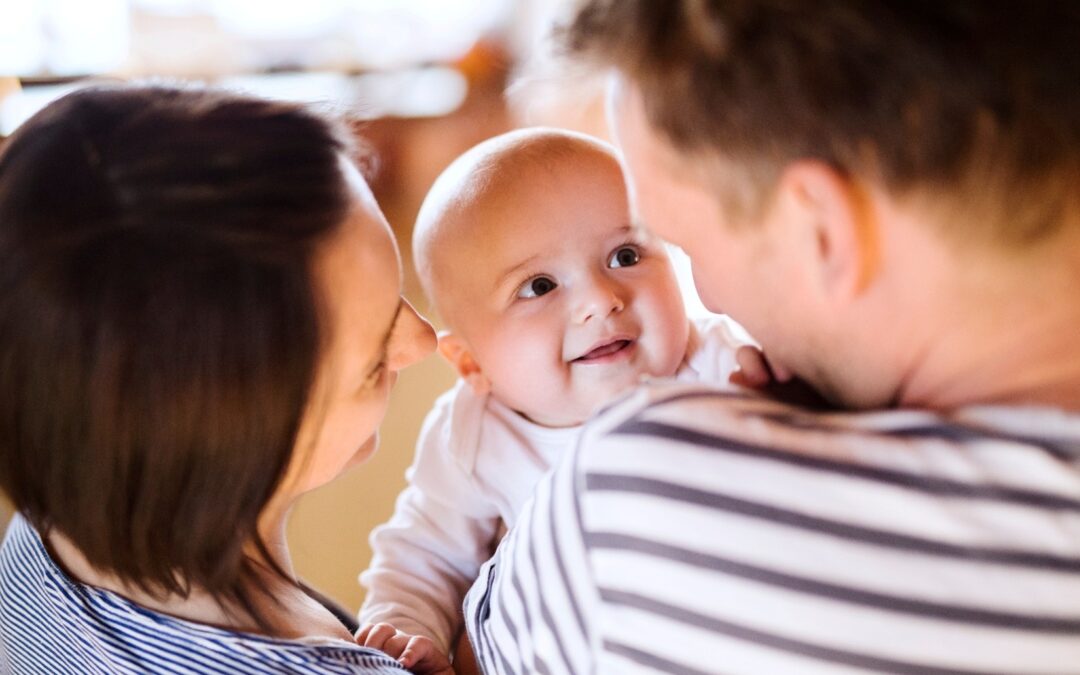
Few sounds are quite as memorable as your baby’s first real laugh.
You may have already seen plenty of smiles. Then one day, a funny face, playful sound, or familiar interaction brings a completely different reaction. What starts as a tiny chuckle can eventually turn into full laughter as babies become more socially engaged.
That progression is one of many baby milestones that unfold during the first year.
Smiling Comes Before Laughter
Early social interaction often begins with looking and smiling.
By around 2 months, many babies smile when someone talks or smiles at them. Those early smiles may be brief, but they are an important change from the newborn weeks.
Around 3 months, you may notice your baby staying engaged for longer or reacting more clearly to a familiar face or voice.
By 4 months, many babies smile on their own to get attention. They may look toward you, move excitedly, or make sounds to keep an interaction going.
When Do Babies Start Laughing?
The first hints of laughter may appear around 4 months.
At this stage, many babies chuckle when someone tries to make them laugh. A chuckle may be short and quiet rather than the full belly laugh parents often picture.
By around 6 months, laughter is a common developmental milestone.
The timing will not be identical for every baby. Some laugh often once they discover how, while others are much more reserved.
What Makes Babies Laugh?
There is no guaranteed formula.
A baby might laugh at a playful expression, an unexpected sound, a familiar game, or simply the excitement of interacting with someone they know.
Sometimes the response seems completely unpredictable. The same silly noise that brought a big laugh yesterday may get nothing more than a serious stare today.
That is part of what makes early social interaction so interesting. Babies are gradually becoming more expressive, but their reactions are still very much their own.
What If My Baby Smiles but Hasn’t Laughed Yet?
Smiling and laughing are connected, but they do not have to appear on the same schedule.
A baby may smile frequently, enjoy face-to-face interaction, and make plenty of sounds before full laughter becomes common.
Rather than focusing on one missing laugh, look at the broader pattern. Is your baby becoming more engaged with familiar people? Smiling more often? Making new sounds or responding during interaction?
Those changes also matter.
Around 6 Months, Babies Have More Ways to Join In
Laughter is only one part of what may be changing around the middle of the first year.
Many 6-month-olds recognize familiar people and take turns making sounds. Squeals and raspberries may join the coos and other vocal play you heard earlier.
Reaching is becoming more purposeful too. A baby may stretch toward a toy they want instead of simply watching it.
Together, these changes can make play feel much more interactive than it did a few months earlier.
Familiar Games Become More Fun
Later in infancy, babies may begin recognizing the pattern of a game before it is finished.
Peekaboo is a good example.
By around 9 months, many babies smile or laugh during peekaboo. They may begin anticipating when your face will reappear or reacting as soon as they recognize what you are about to do.
At this age, many babies also respond to their name and show clearer reactions to familiar and unfamiliar people. Their social world is becoming easier to read.
Baby Milestones From Birth to 12 Months
Here is a general look at how social interaction and other development may change throughout the first year:
- 1 month: Reacts to nearby voices, touch, and faces
- 2 months: Looks at faces and smiles during interaction
- 3 months: Social responses and vocal play may become more noticeable
- 4 months: Many smile for attention, chuckle, and make sounds back
- 5 months: Smiles, sounds, and playful responses may become easier to recognize
- 6 months: Many laugh, recognize familiar people, and take turns making sounds
- 7 months: Familiar interactions may get stronger responses
- 8 months: Babies may become more active during familiar games and routines
- 9 months: Many respond to their name and smile or laugh during peekaboo
- 10 months: Gestures and sounds may become more deliberate during interaction
- 11 months: Familiar games and people may bring clearer anticipation
- 12 months: Many wave goodbye, join simple games, and use “mama,” “dada,” or another special name meaningfully
The months between official developmental checkpoints describe common patterns rather than milestones every baby needs to meet at that exact age.
Movement Is Changing Too
While smiles and laughter may get plenty of attention, babies are also gaining new physical abilities.
By around 4 months, head control is usually much steadier. Around 6 months, many babies roll from tummy to back and lean on their hands while sitting.
By 9 months, many sit without support. Near the first birthday, pulling to stand and moving while holding onto furniture may appear.
A baby may seem especially focused on movement for a while before another burst of social or communication changes becomes noticeable.
Everyday Interaction at Daycare in Fallston
Many of the social moments babies experience happen during ordinary parts of the day: hearing a familiar voice, watching someone’s face, listening to a song, or joining a playful exchange.
At daycare in Fallston, MD, babies hear familiar voices and take part in everyday interactions as their smiles, sounds, and social responses continue to change.
For a younger infant, that may be a quiet smile or coo. A few months later, the response may be a squeal, chuckle, or full laugh.
First Laughs Arrive on Their Own Timeline
A baby’s first laugh may follow weeks of little chuckles, or it may seem to come out of nowhere. Either way, one memorable laugh is only part of the story.
What matters more is how your baby’s social interaction is changing over time. Smiles, sounds, attention, and reactions to familiar people all help show that broader progression.
Talk with your child’s pediatrician if your baby is not meeting expected milestones, loses a skill they previously used, or if you have concerns about hearing, communication, interaction, or development.
The first laugh is exciting, but it grows out of months of smaller moments in which babies are learning how much fun connecting with other people can be.