
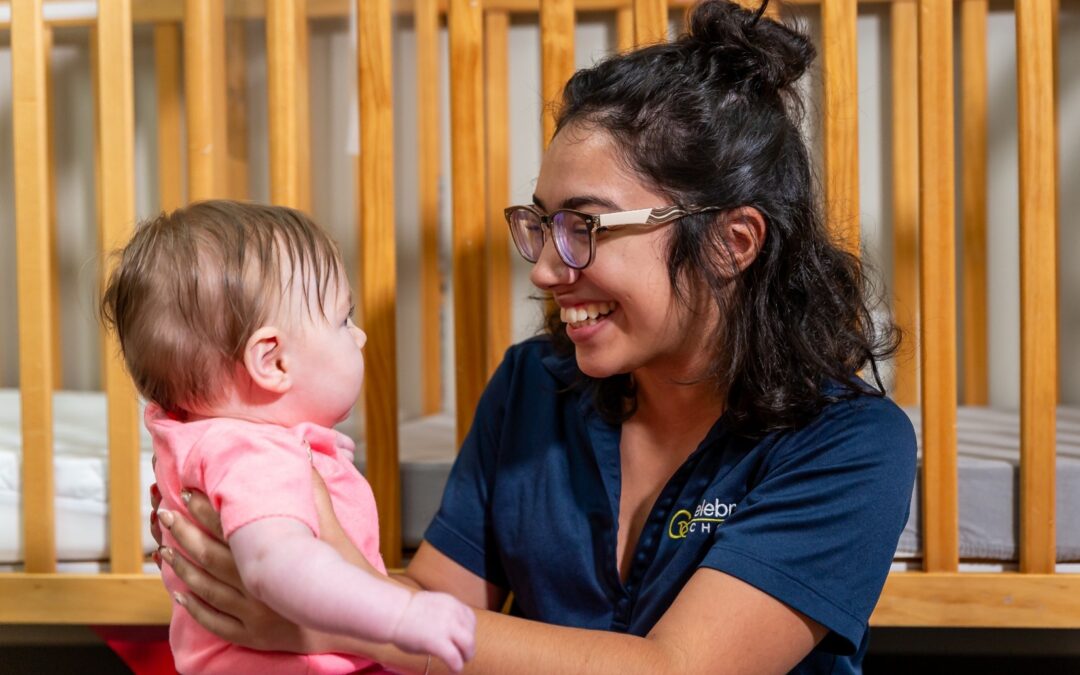
A 6-week-old baby and a 10-month-old baby can have very different days.
One may spend more time feeding, sleeping, and being comforted. The other may be crawling, pulling up, reaching for toys, and staying awake long enough to explore much more of the room.
That is one reason infant daycare needs to be flexible.
At Celebree School of Cockeysville, infant care begins as early as 6 weeks and grows with your baby. Daily routines, movement, play, early learning, and communication all shift as your child’s needs change.
When Can Your Baby Start Infant Daycare?
Celebree welcomes babies into our infant care program as early as 6 weeks.
From there, the infant experience changes considerably as your child grows.
A very young baby may need frequent feedings, more sleep, and plenty of close interaction. As your baby becomes more alert and mobile, the day may include longer stretches of floor play, books, music, exploration, and interaction with teachers.
Reach out to Celebree School of Cockeysville to ask about our current infant enrollment ages and classroom transitions.
What Does a Typical Infant Day Include?
There is a rhythm to the infant classroom, but that rhythm leaves room for individual needs.
Your baby’s day may include:
- Feedings
- Naps
- Diaper changes
- Floor play and movement
- Books and songs
- Sensory exploration
- Interaction with teachers
- Time to watch, listen, and explore
Not every child moves through those parts of the day in the same order.
Your baby may be ready to sleep while another child is wide awake. One infant may be finishing a bottle while someone else is busy exploring on the floor.
That flexibility is part of responsive infant care.
Will Your Baby Follow Their Own Feeding and Nap Routine?
Babies do not arrive with identical schedules.
Your child may have their own feeding times, nap patterns, sleepy cues, awake periods, and preferred ways to settle.
Before care begins, share what you are seeing at home.
Let your baby’s teachers know:
- When your child usually eats
- How they show they are getting tired
- What tends to calm them
- Whether naps have recently shifted
- Any changes in feeding
- New skills or routines you have noticed
You do not need to change your baby’s entire routine before daycare begins. Start by sharing what currently works, then keep the conversation going as those patterns change.
What Happens When Your Baby Is Awake?
Awake time can look very different depending on your baby’s stage of development.
Your child may spend time:
- Reaching toward toys
- Moving on the floor
- Looking at books
- Listening to songs
- Exploring safe textures and materials
- Watching and responding to teachers
- Practicing sounds and gestures
- Repeating an action that interests them
Infant activities do not need to be elaborate.
Sometimes your baby may be actively moving toward something they want to explore. Other times, they may be quietly listening, watching a teacher, or trying the same movement over and over.
All of those experiences can be part of the day.
What Does Curriculum Mean for a Baby?
Infant curriculum looks very different from the learning you may picture in a preschool classroom.
At Celebree, teachers use observation and developmental assessment to help guide experiences based on what children are already doing.
That means learning can happen naturally throughout the day.
A teacher may talk with your baby during a diaper change, read a book during awake time, sing songs, give your child room to practice movement, or offer safe materials to explore.
If your baby becomes especially interested in reaching and grasping, teachers can provide more opportunities to explore objects.
If your child is experimenting with sounds and gestures, teachers can respond with conversation and language. The goal is to build on what your baby is already showing rather than expect every infant to follow the same lesson.
How Do Teachers Learn Your Baby’s Cues?
You already recognize many of the ways your baby communicates without words.
Maybe they rub their eyes when they are tired. Maybe they kick their legs when they are excited. Maybe a particular cry usually means they are hungry.
Share those details with your child’s teachers.
As they spend more time with your baby, they can begin recognizing things like:
- Signs of tiredness
- Hunger cues
- What tends to soothe your child
- Which toys or sounds hold their attention
- How they respond to new experiences
- Which movements they are practicing
That familiarity develops over time through everyday care and repeated interaction.
How Does the Day Change as Your Baby Grows?
The schedule and activities that work for your baby early in infancy will not necessarily stay the same. As your child grows, you may notice:
- Longer awake periods
- Changing nap patterns
- More movement
- More active exploration
- New sounds and gestures
- Greater interest in people and materials
Those changes affect the daycare experience too.
A younger infant may spend more of the day feeding, resting, and observing. Later, your baby may spend much more time crawling, pulling up, manipulating objects, listening to books, and interacting with teachers.
The classroom experience should be able to grow along with your child.
How Will You Know What Happened During the Day?
You will naturally want to know how your baby ate, slept, played, and responded to the day. Celebree uses Tadpoles to help you stay connected through daily information, photos, and messages.
You may receive updates about:
- Feedings
- Naps
- Diaper changes
- Activities
- New interests
- Notable moments from the day
You can also keep teachers informed about changes happening at home.
If your baby slept differently, changed feeding patterns, or started practicing a new skill, that information can help teachers understand what they are seeing during the school day.
What Should You Expect During the First Days?
Your baby does not need to have daycare completely figured out on day one. The first few days are a learning period for everyone.
Your child is getting familiar with new people, sounds, and surroundings. Teachers are learning your baby’s cues and routine. You are learning what information is helpful to share and what questions you want to ask.
Some parts of the day may become familiar quickly. Others may take more time.
The goal is not a perfect routine right away. It is to build familiarity as everyone gets to know one another.
Visit Celebree School of Cockeysville
Seeing the infant classroom can make many of these questions easier to answer.
During a tour, ask about care beginning at 6 weeks, feeding and nap routines, curriculum, daily communication, what you should bring from home, and how classroom transitions work.
If you are considering infant daycare at Celebree School of Cockeysville, schedule a tour to see the classroom and talk with us about your baby’s current routine and what their day could look like.