
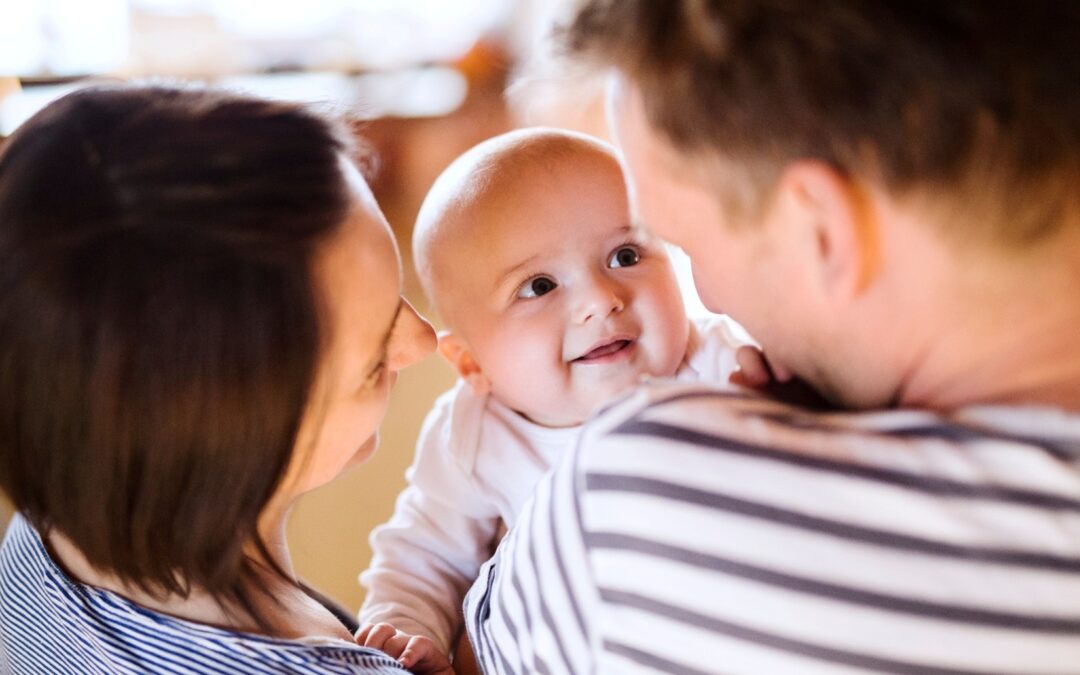
In the beginning, most interaction with a newborn feels one-sided. You talk, smile, sing, or make a funny sound, and your baby mainly watches or listens.
That changes over the first year.
Little by little, babies begin responding in ways that make those moments feel shared. A smile comes back. A sound follows your voice. A familiar game gets a laugh. Eventually, your baby may join in with gestures, sounds, or simple actions of their own.
These baby milestones offer a general sense of how that back-and-forth develops.
Early Interaction Starts With Looking and Responding
By around 2 months, many babies spend more time looking at faces, smile when someone talks or smiles at them, and make sounds besides crying.
Those responses are still simple, but they are some of the earliest signs that interaction is becoming more social.
Around 3 months, your baby may stay engaged with your face or voice for longer stretches. You might notice more cooing, more smiles, or a stronger reaction when someone familiar comes close.
By 4 Months, Babies May Try to Keep the Interaction Going
Around 4 months, back-and-forth communication often becomes easier to notice.
Many babies begin making sounds back when someone talks to them. They may also smile to get attention or move and vocalize when they want an interaction to continue.
You might say something, pause, and hear a coo in return. Or your baby may smile, wait for your reaction, and then respond again.
It is still very early communication, but the exchange can start to feel much more mutual.
Laughter Changes the Feel of Social Play
By around 6 months, many babies laugh and recognize familiar people.
A laugh is different from an early smile because it often happens in response to something shared. A playful sound, silly expression, or familiar game may get a reaction that is much easier to read.
At this age, babies are also becoming more expressive in other ways. A grin, squeal, wiggle, or excited movement may all be part of the same interaction.
Babies Begin Taking Turns With Sounds
Around 6 months, many babies also begin taking turns making sounds.
A caregiver talks, pauses, and the baby vocalizes back. Then the caregiver responds again.
These exchanges may be brief, but they are an important change from simply hearing sounds. Babies are beginning to take a more active role in the interaction.
By 7 or 8 months, some babies experiment with an even wider range of sounds and may become especially vocal with familiar people.
By 9 Months, Responses Are Often Easier to Read
Around 9 months, many babies look when their name is called and make repeated sounds such as “mamamama” or “babababa.”
They may also lift their arms when they want to be picked up or react when a familiar caregiver leaves.
At this stage, interaction can include sounds, facial expressions, and body movement all at once.
Your baby may look at you, make a sound, and lift their arms in the same moment. Even without words, the message may be quite clear.
Familiar Games Add Anticipation
Later in infancy, babies may begin recognizing the pattern of a familiar game.
Peekaboo is a good example. By around 9 months, many babies smile or laugh during the game.
What makes this stage interesting is the anticipation. Your baby may know something familiar is about to happen and react before it does.
The same thing can happen with songs, repeated phrases, or small routines you use often.
Near the First Birthday, Babies May Start Joining In
By around 12 months, many babies can take part in a simple game such as pat-a-cake.
They may also wave goodbye, understand a familiar word such as “no,” and use “mama,” “dada,” or another special name meaningfully.
That is a big change from the first few months, when interaction was mostly about watching and listening.
By the end of the first year, your baby may be contributing gestures, sounds, and actions that keep the exchange going.
Baby Milestones From Birth to 12 Months
Here is a quick look at how social interaction may change during the first year:
- 1 month: Reacts to nearby voices and faces
- 2 months: Smiles during interaction and makes sounds besides crying
- 3 months: May stay engaged with faces and voices for longer periods
- 4 months: Smiles for attention and makes sounds back
- 5 months: Familiar interactions may get stronger responses
- 6 months: Laughs and takes turns making sounds
- 7 months: Social responses may become more expressive
- 8 months: Familiar voices and games may get quicker reactions
- 9 months: Responds to their name, babbles, and reacts during familiar games
- 10 months: Sounds, gestures, and movement may work together more often
- 11 months: Familiar social routines may become easier to anticipate
- 12 months: Many babies join simple games and use familiar gestures or words
The months between official developmental checkpoints describe common patterns, not requirements every baby needs to meet at that exact age.
Other Skills Are Developing at the Same Time
Social growth is only one part of what changes during the first year.
By around 6 months, many babies reach for toys they want and begin supporting themselves while sitting.
By about 9 months, many sit without support and move objects from one hand to the other.
Near the first birthday, many pull to stand, move while holding furniture, and pick up small objects with their thumb and pointer finger.
A baby may make quick progress in one area while taking more time in another.
Everyday Interaction at Daycare in Carney
Babies have many chances to practice back-and-forth interaction during ordinary parts of the day.
At daycare in Carney, MD, babies spend time with familiar caregivers who respond to their sounds, expressions, and growing interest in interaction.
For a younger infant, that may be a quiet smile or coo. Later, it may look like laughter, babbling, or joining a familiar game.
Interaction Grows Differently for Every Baby
One baby may be very vocal early on. Another may communicate more through smiles, movement, or facial expressions.
Both can be making steady progress.
Milestones are most useful when they help you notice how your baby’s responses change over time.
Talk with your child’s pediatrician if your baby is not meeting expected milestones, loses a skill they previously used, or if you have concerns about hearing, communication, interaction, or development.
Over the first year, interaction gradually becomes less one-sided. What starts with watching and listening can grow into smiles, sounds, laughter, and simple games that feel increasingly shared.