
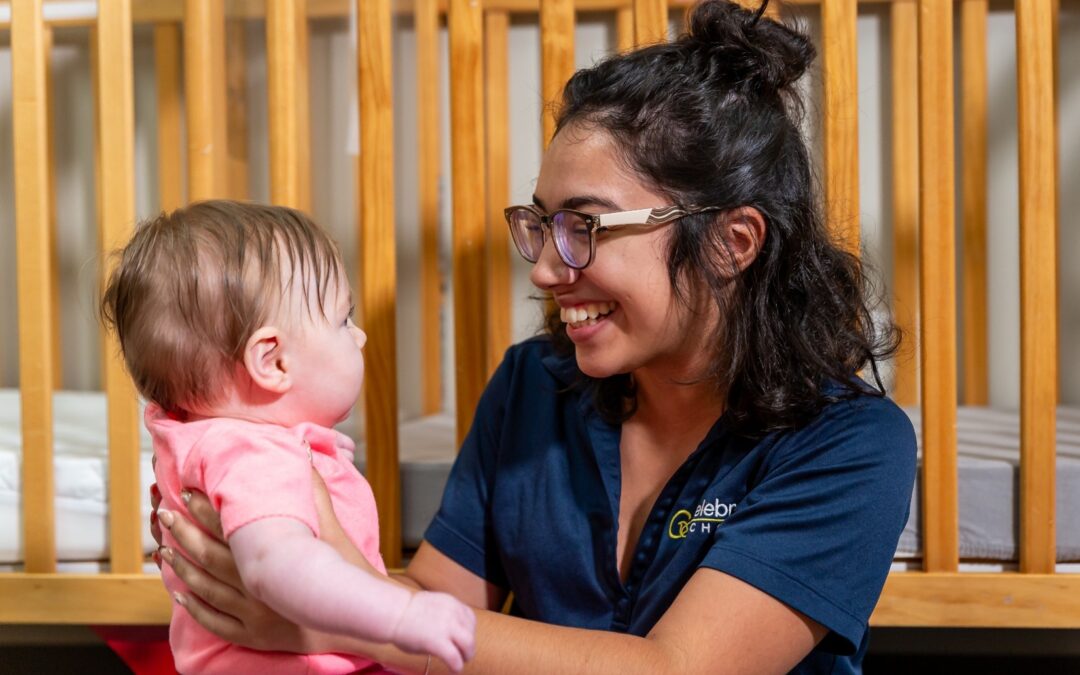
Babies communicate long before they can tell you what they need.
You may already know that one cry usually means hunger, that rubbing their eyes often comes before a nap, or that a certain kick or squeal means something has caught their attention.
Someone meeting your baby for the first time will not know all of those signals yet. Learning them takes time, observation, and repeated interaction.
At Celebree School of Rockville, infant care begins at 6 weeks. Primary caregivers, individual care plans, daily communication, and responsive learning experiences all help teachers get to know the child behind the routine.
What Counts as an Infant Cue?
Crying is one form of communication, but it is far from the only one. Your baby may communicate through:
- Facial expressions
- Body movement
- Reaching or turning away
- Rubbing their eyes
- Changes in activity level
- Sounds and babbling
- Becoming unusually quiet
- Showing excitement when something catches their interest
Some cues may signal hunger or tiredness. Others may show curiosity, discomfort, excitement, or a desire for interaction.
You probably recognize many of these signals without thinking much about them. For a teacher, understanding what they mean begins with watching how your baby responds in different situations.
How Do Teachers Learn What Your Baby’s Cues Mean?
There is no shortcut for getting to know a baby. Teachers learn through repetition.
Over time, they may notice that your baby consistently becomes quieter before sleep, turns away when they need a break, makes a particular sound before feeding, or brightens when a favorite song begins.
At Celebree School of Rockville, each infant has a primary caregiver. That gives one teacher repeated opportunities to become familiar with the child’s patterns, preferences, and ways of communicating.
Recognizing cues is not about correctly interpreting every signal on the first day. It is about building familiarity and learning what certain behaviors tend to mean for that particular baby.
Why Does What You Share From Home Matter?
You already have a head start.
You know what tiredness usually looks like, which cry tends to mean hunger, and what helps your baby settle when they are having a difficult moment.
Share that information with your child’s teachers. It may help to mention:
- How your baby usually shows hunger
- What you notice before they fall asleep
- What helps when they need comfort
- Changes in feeding or naps
- New sounds or gestures
- Something they have recently become interested in
Rockville’s infant program includes morning check-ins about eating, sleeping, and diapering.
That information does more than document the routine. It gives teachers context for the signals they may see throughout the day.
How Do Cues Affect Feeding and Sleep?
A schedule can tell a teacher when your baby usually eats or rests. Your baby can tell them something too.
Maybe a feeding normally happens around a certain time, but today your child begins showing familiar hunger cues earlier. Perhaps they usually nap after a particular part of the morning but seem especially alert.
Teachers can consider both the routine families have shared and what the baby is communicating in the moment.
At Rockville, infants are held during feedings and rocked to sleep. Those one-on-one moments also give caregivers more opportunities to notice how a child settles, responds, and communicates.
The schedule provides useful context. The baby in front of the teacher provides information too.
What Do Babies Communicate During Awake Time?
Not every cue is about meeting a basic care need. Your baby also communicates interest.
They may lean toward a sound, reach repeatedly for an object, light up when a song begins, study a book, or move their body excitedly when a teacher interacts with them.
They may also communicate that they have had enough by turning away, losing interest, or becoming quieter.
Those reactions can help teachers understand what is engaging your baby at that moment.
Awake time does not need to be a nonstop stream of activities. Part of responsive infant care is noticing when a child wants to interact and when they may benefit from a quieter pace.
How Can Infant Curriculum Respond to Those Signals?
For infants, observation can help connect everyday care with early learning.
If your baby repeatedly responds to music, teachers may offer more songs or rhythm.
If they are focused on reaching and grasping, safe objects can give them opportunities to explore with their hands.
If they begin experimenting with sounds or gestures, teachers can respond with language, conversation, and simple signs.
Rockville’s infant program incorporates language development, physical development, social development, fine and gross motor experiences, and simple sign language.
Celebree also uses observation and developmental assessment to help guide experiences based on what children are currently doing.
That makes infant curriculum less about following a predetermined lesson and more about noticing what a child is showing interest in and giving them meaningful opportunities to keep exploring it.
Do Your Baby’s Cues Change as They Grow?
They can.
Early in infancy, communication may rely heavily on crying, body movement, facial expressions, and changes in alertness.
As your baby grows, you may begin seeing more varied sounds, reaching, gestures, stronger preferences, and eventually simple signs or other increasingly intentional ways of communicating.
Celebree School of Rockville groups infant care into classrooms for babies from 6 weeks to 9 months and from 9 to 18 months.
Those age groups reflect how different the infant experience can become over time, but they do not mean every baby will communicate in the same way at the same age.
The useful question is not whether your child is following a particular communication timeline. It is whether the adults caring for them are paying attention to how they communicate now.
What Happens When a Teacher Notices Something New?
Teachers may sometimes spot a change during the school day.
Maybe your baby suddenly seems much more interested in a particular kind of movement. Perhaps they begin using a new sound, start staying awake longer, or react differently to a familiar soothing routine.
Those observations can become part of the conversation with you.
You may be seeing the same thing at home, or it may be something your child has just begun experimenting with.
Rockville’s evening check-ins include information about meals, diaper changes, naps, and play. Celebree also uses Tadpoles to share daily information, photos, and messages with families.
Together, those updates help you and your child’s teachers compare what you are each seeing and keep up with changes as they happen.
What Should You Notice When You Visit an Infant Classroom?
When you tour an infant classroom, watch the interactions as much as the environment.
Notice whether teachers give babies time to respond when they speak to them. Watch what happens when a child becomes tired or loses interest. Pay attention to whether adults seem to recognize different children’s ways of asking for comfort or interaction.
You might also look for moments when teachers:
- Respond to a baby’s sounds
- Notice signs of tiredness
- Adjust when a child turns away
- Follow a baby’s interest in an object or activity
- Comfort different children in different ways
- Give quieter babies attention too
Those small interactions can tell you a lot about how responsive infant care works in practice.
Learn More About Infant Daycare at Celebree School of Rockville
If you are considering infant daycare at Celebree School of Rockville, schedule a visit and tell the team about the cues you already recognize at home.
Ask how primary caregivers, feeding and sleep routines, infant learning, daily communication, and individual care plans help teachers continue getting to know your baby over time.