
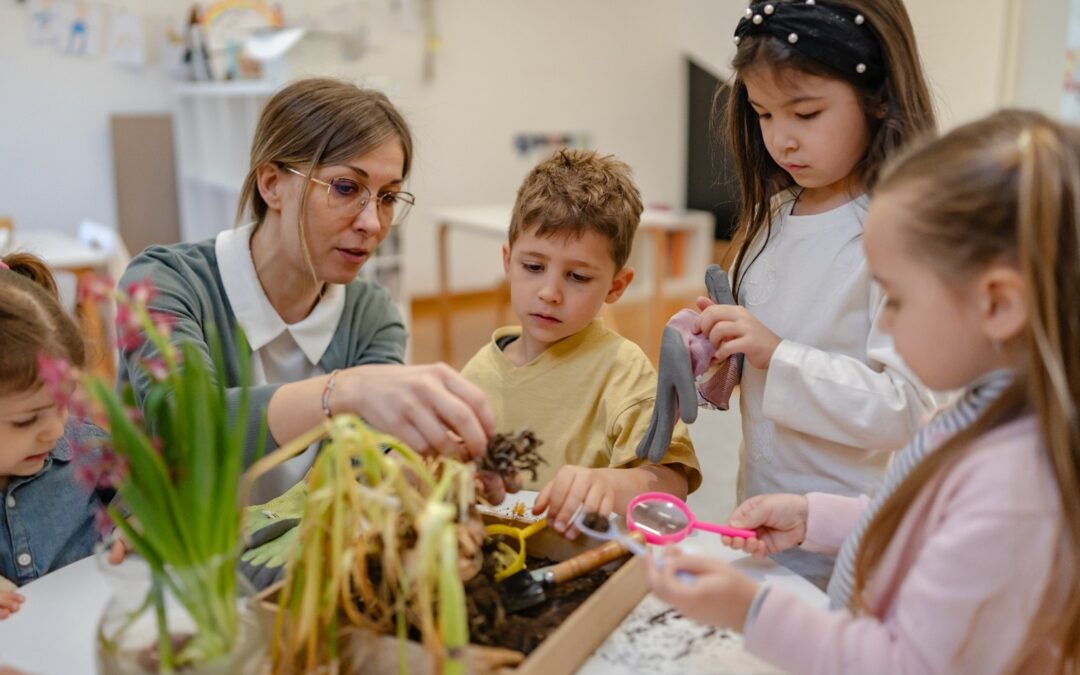
It’s easy to look at a classroom full of children playing and wonder what they’re actually taking away from it.
Blocks on the floor. Dress-up clothes. Art supplies. Movement and conversation happening all at once.
It can look unstructured from the outside.
If you’re exploring child care in Perry Hall, MD, it helps to understand that in a strong program, those moments are anything but random.
Play Is the Work of Early Childhood
Young children don’t separate play from learning. They learn by:
- Touching
- Moving
- Experimenting
- Repeating
Play gives them a way to explore ideas in a way that makes sense to them. It’s not about keeping them busy. It’s about helping them understand.
Learning Starts With What Captures Their Attention
Children are far more engaged when learning connects to something they’re already interested in. That’s where interest-based learning comes in. Teachers notice:
- What children are drawn to
- What they talk about
- What they return to again and again
Those observations become the starting point for deeper learning experiences.
How Play Turns Into Real Skill-Building
A simple activity can carry more depth than it appears.
- Mixing colors at an art table becomes an exploration of cause and effect
- Playing “restaurant” builds language, sequencing, and social interaction
- Lining up toys introduces patterns, sorting, and early math thinking
These aren’t separate lessons.
They’re layered into what the child is already doing.
The Teacher’s Role Is Key
This approach only works when teachers are actively engaged.
They are:
- Observing how children interact
- Asking thoughtful, open-ended questions
- Introducing new ideas at the right moment
- Supporting each child at their own level
At Celebree, this guidance is shaped through ongoing observation. Teachers learn about each child in real time and use that insight to guide instruction naturally, without interrupting play.
Why Children Learn More This Way
When children are engaged, they stay with an activity longer.
When they stay with it longer, they:
- Try different approaches
- Work through challenges
- Build confidence
That’s where real learning happens.
It’s not about getting the “right answer.” It’s about understanding how things work.
It Builds More Than Academic Skills
Learning through play supports development across the board. Children build:
- independence
- communication skills
- emotional awareness
- problem-solving abilities
These are the skills they rely on in school and in everyday life.
What You Might Notice Outside the Classroom
Children who learn this way often carry it with them.
You might see:
- More curiosity about everyday things
- More detailed pretend play
- More willingness to try things on their own
These are signs that learning is connecting in a meaningful way.
What to Look for When Choosing Child Care
If you’re evaluating child care in Perry Hall, MD, it’s worth looking beyond the phrase “learning through play” and asking:
- How do teachers guide learning during play?
- How do they respond to children’s interests?
- How do they support individual development?
Those details make the difference.
Learning Through Play in Perry Hall
At Celebree School of Perry Hall, learning through play is intentional and thoughtfully guided.
Teachers use what children are naturally interested in to introduce new concepts, support development, and encourage deeper thinking. Every part of the day is designed to feel engaging while building real understanding.
It may look like play.
It’s actually how children build the skills, confidence, and curiosity that support lifelong learning.