
You may know your baby’s routine at home down to the smallest details.
You know roughly when they will want to eat, what tiredness looks like, which sounds mean they are getting frustrated, and what usually helps them settle.
Infant daycare can be harder to picture.
Will your baby have to follow a completely different schedule? What happens when they are awake? Is there really a curriculum for a child who is only a few weeks or months old?
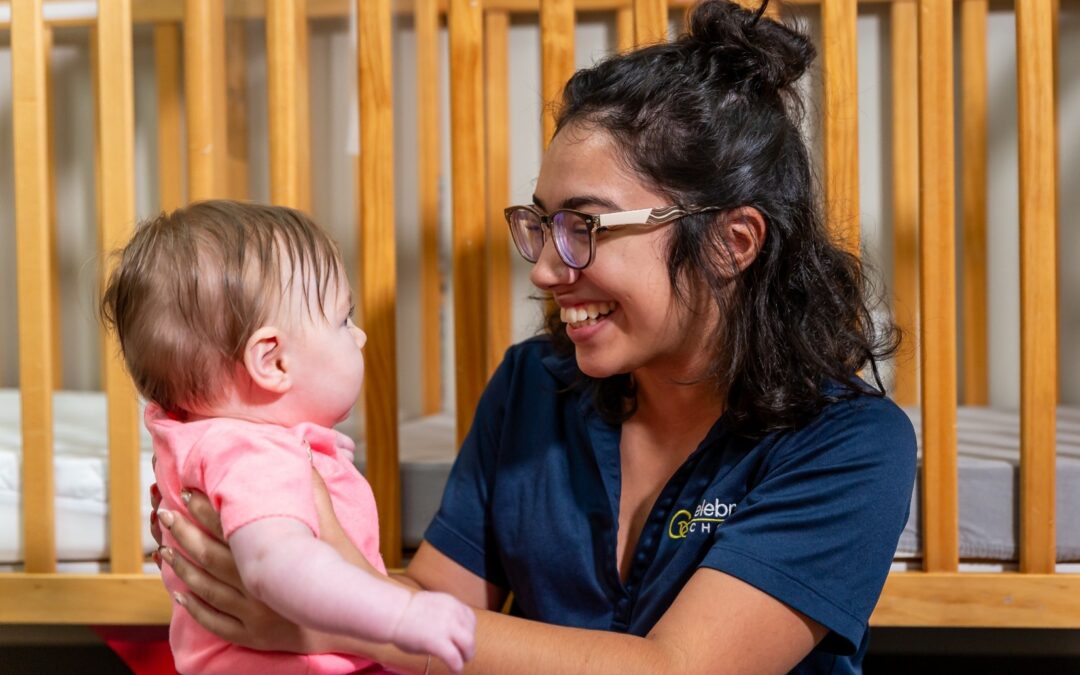
At Celebree School of Fishtown in Philadelphia, infant care begins as early as 6 weeks. Your baby’s day can include feeding, rest, one-on-one interaction, movement, exploration, and early learning, with routines that change as your child grows.
When Can Your Baby Start Infant Daycare?
Celebree welcomes babies into infant care as early as 6 weeks.
A baby beginning care at that age may spend much of the day feeding, sleeping, being comforted, and observing the people and sounds around them.
Several months later, that same child may be awake for longer stretches, moving more, reaching for objects, experimenting with sounds, and showing stronger interest in the classroom around them.
Infant daycare needs to leave room for those changes.
Reach out to Celebree School of Fishtown to ask about our current infant enrollment ages and classroom transitions.
Does Your Baby Have to Follow a Daycare Schedule?
No single schedule works for every infant.
Your baby may have their own:
- Feeding pattern
- Nap routine
- Awake periods
- Sleep cues
- Soothing preferences
Before care begins, share what your child’s day currently looks like at home.
You do not need to completely reshape your baby’s routine just because daycare is starting.
Instead, let teachers know when your baby usually eats, what tiredness looks like, what tends to help them settle, and whether anything has recently changed.
That gives teachers a useful starting point, and you can keep sharing updates as your baby’s needs change.
What Happens During Feeding, Naps, and Everyday Care?
Feeding, naps, and diaper changes make up a large part of an infant’s day. They are also more than just things to get through before the next activity.
A feeding can be a quiet one-on-one interaction. A diaper change can include conversation and eye contact. Settling for a nap gives teachers another opportunity to learn what helps your baby feel comfortable.
Your child’s day may naturally include:
- Bottles or feeding
- Naps
- Diaper changes
- Comforting
- Talking and singing
- One-on-one interaction
- Time to observe the classroom
These everyday routines help create familiarity while giving teachers repeated opportunities to understand your baby’s cues.
What Does Your Baby Do When They Are Awake?
Awake time can look very different depending on your baby’s age and development.
Your child may spend time:
- Moving on the floor
- Reaching and grasping
- Looking at books
- Listening to songs
- Exploring safe objects and textures
- Watching and responding to teachers
- Practicing early sounds and gestures
- Repeating movements or actions that interest them
Your baby does not need to be constantly entertained for the day to be meaningful. Sometimes learning looks active, like moving toward a toy or reaching for an object.
Other times, your baby may simply watch a teacher’s face, listen to a song, or try the same movement several times.
Babies also learn through observation, repetition, movement, and interaction.
Is There Really a Curriculum for Infants?
Yes, but infant curriculum should look very different from preschool academics. Your baby does not need worksheets or formal lessons for learning to happen.
At Celebree, teachers use observation and developmental assessment to help guide experiences based on what children are already doing.
Learning may happen when a teacher:
- Talks with your baby during a care routine
- Reads aloud
- Sings songs
- Gives them room to move
- Offers safe materials to explore
- Responds to sounds and gestures
- Gives your child time to repeat an emerging skill
If your baby becomes interested in reaching for objects, teachers can build on that interest. If your child starts experimenting with sounds, teachers can respond with language.
If movement becomes a bigger part of the day, your baby can have more opportunities to explore.
For infants, curriculum can be woven into ordinary parts of the day rather than delivered as a separate lesson.
How Do Teachers Learn What Your Baby Needs?
You already know details about your baby that someone else cannot know on the first morning.
Maybe they rub their eyes when tired. Maybe a particular cry usually means they are hungry. Maybe singing helps them calm down more quickly.
Share those details with your child’s teachers.
You may also want to mention:
- Changes in feeding
- Shifts in sleep
- What currently gets your baby’s attention
- New movements
- New sounds or gestures
- Anything that has recently changed at home
Over time, teachers can begin recognizing your baby’s cues, interests, and preferences through repeated care and observation.
That familiarity develops gradually.
How Does the Day Change as Your Baby Grows?
Your baby’s daycare experience will not look exactly the same month after month.
As your child grows, you may notice:
- Changing nap patterns
- Longer awake periods
- More movement
- More active exploration
- Greater interest in books and objects
- New ways of communicating
A younger infant may spend more of the day feeding, resting, and observing.
Later, your baby may spend more time crawling, pulling up, manipulating objects, interacting with teachers, and following their curiosity around the classroom.
The daily experience can evolve as those needs and interests change.
How Will You Know What Happened While You Were Apart?
When your baby cannot tell you how the day went, communication matters.
Celebree uses Tadpoles to help families stay connected through daily information, photos, and messages.
You may receive updates about:
- Feedings
- Naps
- Diaper changes
- Activities
- Interests
- Notable moments from the day
Communication also works in the other direction.
If your baby had a restless night, is eating differently, or has started doing something new at home, let the teachers know.
Even a small update can give useful context for the day ahead.
What Should You Expect When Infant Daycare Begins?
The first days are a period of adjustment for everyone.
Your baby is becoming familiar with new people, sounds, and surroundings. Teachers are learning your child’s cues. You are figuring out which details are most useful to share and which questions you want to ask.
Some parts of the routine may begin to feel familiar quickly. Others may take more time. There is no need to expect everything to fall into place immediately.
The beginning is part of learning what works for your baby in a new environment.
Visit Celebree School of Fishtown in Philadelphia
Seeing the infant classroom can make it easier to picture what your baby’s day could actually look like.
Ask about care beginning at 6 weeks, feeding and nap routines, awake-time experiences, infant curriculum, daily communication, what to bring from home, and classroom transitions.
If you are exploring infant daycare at Celebree School of Fishtown, schedule a tour to see the classroom and talk with us about your baby’s current routine.