
Babies can be close in age and still need very different things throughout the day.
Feeding schedules vary. Some babies take longer naps than others. The way they settle, play, communicate, and respond to new experiences can be different too.
At Celebree School of East Norriton, infant daycare begins at 6 weeks and continues through 18 months. The program includes feeding, sleep, diapering, comfort, play, movement, early learning, and regular communication with families, with room for each child’s own routines and needs.
Infant Daycare Begins as Early as 6 Weeks
Celebree School of East Norriton has infant classrooms for babies from 6 weeks to 9 months and from 9 to 18 months.
A 2-month-old and a 14-month-old experience the world in very different ways. Their feeding and sleep needs may differ, along with how they move, communicate, and spend time while awake.
The classroom groups provide helpful structure without expecting every child to follow the same pace or routine.
Your Baby’s Routine Gives Teachers a Starting Point
The morning does not begin with one schedule for the entire room.
Families can share when their baby last ate, slept, and was changed. Those details help teachers understand what happened before drop-off and what the child is likely to need next.
A shared infant room does not mean every child is hungry, tired, or ready to play at the same time. Feeding, rest, comfort, and awake time usually unfold differently from one baby to another.
Feeding, Sleep, and Comfort Are Personal Too
Much of infant daycare involves very practical care.
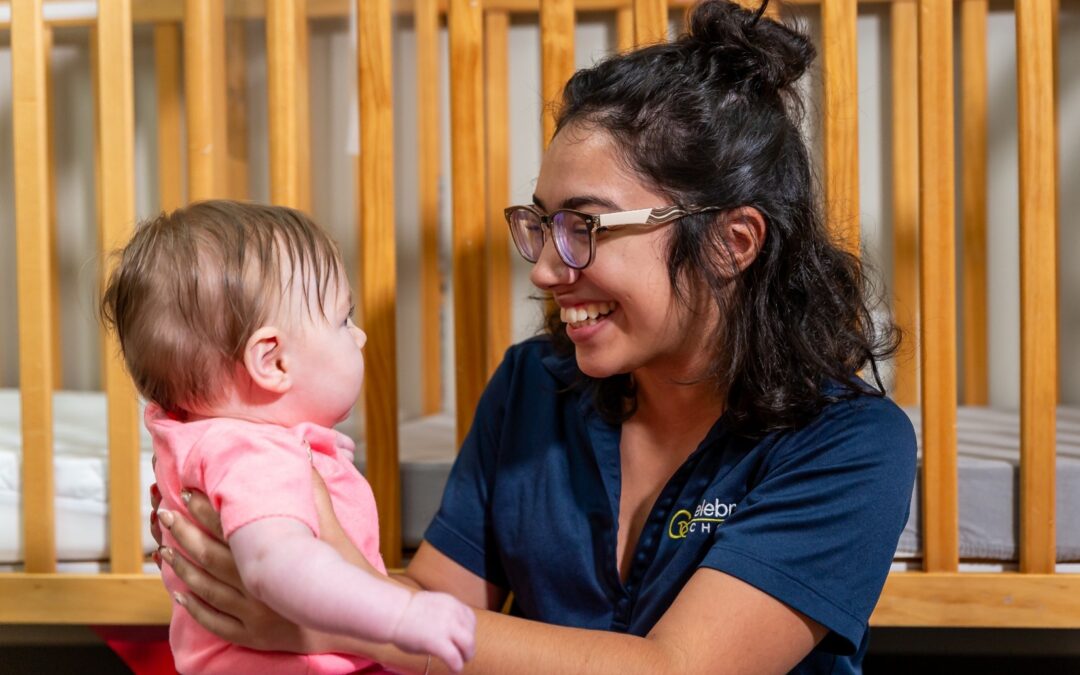
At Celebree School of East Norriton, babies are held during feedings and rocked to sleep. Teachers also spend time changing diapers, helping children settle, and offering comfort when they need it.
Regular time together helps teachers learn the small things that matter. They begin to recognize when a child is getting tired, what tends to be soothing, and how the baby shows that they are hungry, uncomfortable, or ready to play.
What Happens When Your Baby Is Awake?
Awake time gives babies opportunities to move, listen, look around, play, and spend time with teachers.
Celebree School of East Norriton supports language, social development, movement, fine and gross motor skills, and simple sign language during the infant program.
For a baby, that might look like listening to a song, looking at a book, reaching for an object, moving on the floor, or responding to familiar words and gestures.
Teachers also notice what holds a child’s attention. Those interests can help shape what they offer during play.
Early Learning Is Personal Too
Learning at this age often looks simple from the outside.
A baby may become interested in a certain sound, reach for the same type of toy, enjoy a familiar song, or spend time practicing a new movement.
Teachers can build on those moments by offering similar experiences, adding something new, or simply giving the child more time to explore.
That is part of what individualized learning looks like for an infant. It starts with noticing what the child is already doing rather than expecting everyone in the room to participate in the same way.
What Does Infant Curriculum Actually Look Like?
Infant curriculum does not resemble a formal preschool lesson. Learning happens through play, movement, language, interaction, and everyday routines.
A shared book, a familiar song, a simple sign, floor play, or time exploring an age-appropriate object can all support early learning.
These experiences give babies opportunities to listen, move, communicate, explore, and interact without turning their day into something overly structured or academic.
Care Changes as Your Baby Grows
What a baby needs at 3 months will not necessarily look the same several months later.
Feeding patterns change. Sleep can shift. Awake time often gets longer. Babies gain new ways to move, communicate, and take part in play.
Celebree School of East Norriton uses individualized goals and learning plans that can change along with the child.
The plan should continue to reflect what teachers and families are seeing now, rather than staying tied to what the baby needed months earlier.
A Familiar Teacher Gets to Know the Details
Each infant at Celebree School of East Norriton has a primary caregiver.
This does not mean one-to-one staffing. Instead, a familiar teacher has regular opportunities to learn the child’s routines, preferences, comfort needs, and interests.
That familiarity provides useful context when something changes, whether the baby is sleeping differently, showing interest in something new, or finding a new way to communicate.
Families and Teachers Keep Each Other Informed
Parents know what happened before drop-off. Teachers see what happens during the hours that follow. At the end of the day, Celebree School of East Norriton shares information about meals, diaper changes, naps, and play.
Those updates help parents understand how their baby spent the day and give both families and teachers useful information when routines begin to change.
What Can Parents Expect From Infant Daycare?
Infant daycare includes feeding, sleep, diapering, comfort, awake time, movement, play, early learning, and regular family communication.
Those parts of the day will not look exactly the same for every baby.
At Celebree School of East Norriton, teachers use what they learn about each child’s routines, interests, and current needs to help shape both everyday care and early learning.
Explore Infant Daycare at Celebree School of East Norriton
Learn more about infant daycare at Celebree School of East Norriton and visit the infant classroom to see how everyday care and early learning can reflect your baby’s individual needs.