
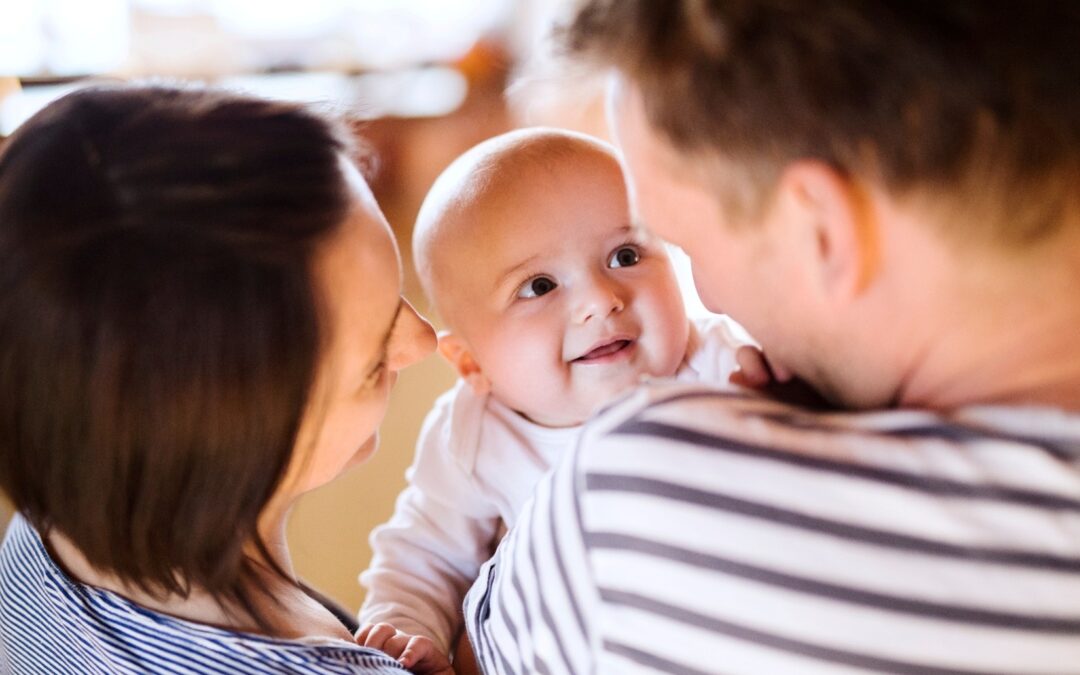
A newborn may fling an arm, turn toward touch, or curl tiny fingers around yours without meaning to do it. Months later, that same baby may reach for a favorite toy, roll toward something interesting, or point to get your attention.
One of the biggest changes during the first year is growing control. Movement becomes more deliberate. Sounds become more interactive. Babies begin acting on what they notice around them.
Those changes are part of the broader picture of baby milestones, and they unfold gradually rather than on one exact schedule.
In the Beginning, Many Responses Are Reflexive
Newborn movement often looks busy but is not yet very controlled. Hands may stay fisted, arms and legs move suddenly, and head control is limited.
Even so, important changes are already underway.
During the first couple of months, babies spend more time alert, study nearby faces, react to sounds, and gradually gain better control of the head and neck.
By about 2 months, many babies also smile in response to another person, make sounds besides crying, watch people move, and lift their head briefly during tummy time.
These early responses form the starting point for the more deliberate actions that follow.
Control Starts Showing Up in Small Ways
During the next few months, movement often becomes easier to read.
A baby who once waved an arm past a toy may begin swiping toward it. Then the swipe becomes a reach. Hands open more often, and bringing them toward the mouth becomes more controlled.
Head movement changes too. Your baby may turn more deliberately toward a sound, face, or object that has caught their attention.
When Do Babies Start Reaching for Things?
Purposeful reaching often becomes more noticeable around the middle of the first year.
At first, accuracy may be hit or miss. Your baby might reach past a toy, touch it without grasping, or need several tries to get hold of it.
That is part of the process. Reaching becomes steadier as vision, body control, and coordination begin working together more effectively.
Movement Starts Having a Destination
Rolling is another good example of the shift toward greater control.
Early rolls sometimes happen almost by accident as babies move and shift their weight. Later, a baby may clearly roll to change position or get closer to something interesting.
As body control develops, you may also notice stronger pushing during tummy time, more stable supported sitting, and eventually reaching while seated.
When Do Babies Roll Over?
Rolling often begins during the middle months of the first year, but timing varies.
Some babies roll from tummy to back first. Others begin with back-to-tummy rolling. Still others take more time before either direction becomes consistent.
By about 6 months, many babies are also reaching for toys they want, pushing up with straight arms, leaning on their hands while sitting, laughing, and taking turns making sounds.
Sounds Become More Deliberate, Too
Growing control is not limited to movement.
Early coos gradually turn into a wider variety of sounds. Babies begin experimenting with volume, pitch, and repetition, often responding differently when someone talks to them.
Later, repeated syllables such as “bababa” or “mamama” may begin to show up.
When Do Babies Start Babbling?
Babbling usually develops during the middle part of the first year and becomes more varied with time.
The sounds may resemble familiar words before they actually carry that meaning. What matters is the growing ability to experiment with sound and participate in back-and-forth vocal interaction.
By around 9 months, repeated babbling is often joined by other changes such as responding to a name, sitting without support, transferring objects between hands, and looking for something that disappears from view.
Babies Begin Acting on What They Notice
Later in the first year, purpose becomes easier to see.
Your baby may spot a toy across the floor and try to get closer to it. If something falls, they may look down to find it. If you hide an object, they may search for it.
Mobility varies widely during this stage. Some babies crawl, while others scoot, roll, creep, or move in another way.
The exact method matters less than the growing connection between noticing something and trying to do something about it.
By the First Birthday, Intent Is Easier to See
Toward 10 to 12 months, many actions begin carrying clearer meaning.
Your baby may wave goodbye, reach toward something they want, put objects into containers, pull to stand, or cruise along furniture.
Some babies also begin pointing, which adds a new way to direct your attention toward a person, object, or event.
By about 12 months, common milestones may include:
- Waving goodbye
- Playing simple interactive games
- Understanding “no”
- Looking for hidden objects
- Putting objects into containers
- Pulling to stand
- Cruising while holding furniture
- Picking up small objects with greater precision
Independent walking is not required by the first birthday. Some babies take their first steps earlier, while others need more time.
Purposeful Does Not Mean Perfect
A baby may know what they want to do before they have the coordination to do it consistently.
They may reach and miss. Roll halfway and stop. Pull to stand and then need help figuring out how to get back down. A gesture may appear once and disappear for several days before showing up again.
That inconsistency is part of learning a new skill.
Baby milestones are more useful when you look at the broader pattern of development rather than expecting every new ability to appear perfectly and stay consistent right away.
Exploration Gives Babies Reasons to Act
Babies do not need complicated exercises to use emerging skills.
A toy within sight gives a reason to reach. Supervised floor time provides room to roll or reposition. A familiar voice gives a reason to turn. A partly hidden object invites a closer look.
These everyday experiences give babies opportunities to move, explore, communicate, and respond without turning development into a practice session.
Room to Explore in Daycare
At daycare in Alexandria, VA, familiar routines, responsive caregivers, movement, sensory experiences, and time to explore become part of the day.
At Celebree School of Alexandria, infant care includes nurturing interactions and developmentally appropriate opportunities to move and investigate the world around them.
For one baby, that may look like turning toward a familiar voice. For another, it may be reaching more accurately for a toy, rolling to get a better view, or repeating a sound during an interaction.
The goal is not to hurry the next milestone. It is to give babies safe, responsive experiences that match where they are now.
When to Ask About Development
Babies develop on different timelines, but questions are worth discussing.
Talk with your child’s pediatrician if your baby is not meeting expected milestones, loses a skill they previously had, or if something about their movement, communication, interaction, or overall development concerns you.
From reflexive newborn movements to increasingly purposeful actions, the first year brings remarkable changes in how babies interact with the world around them.