
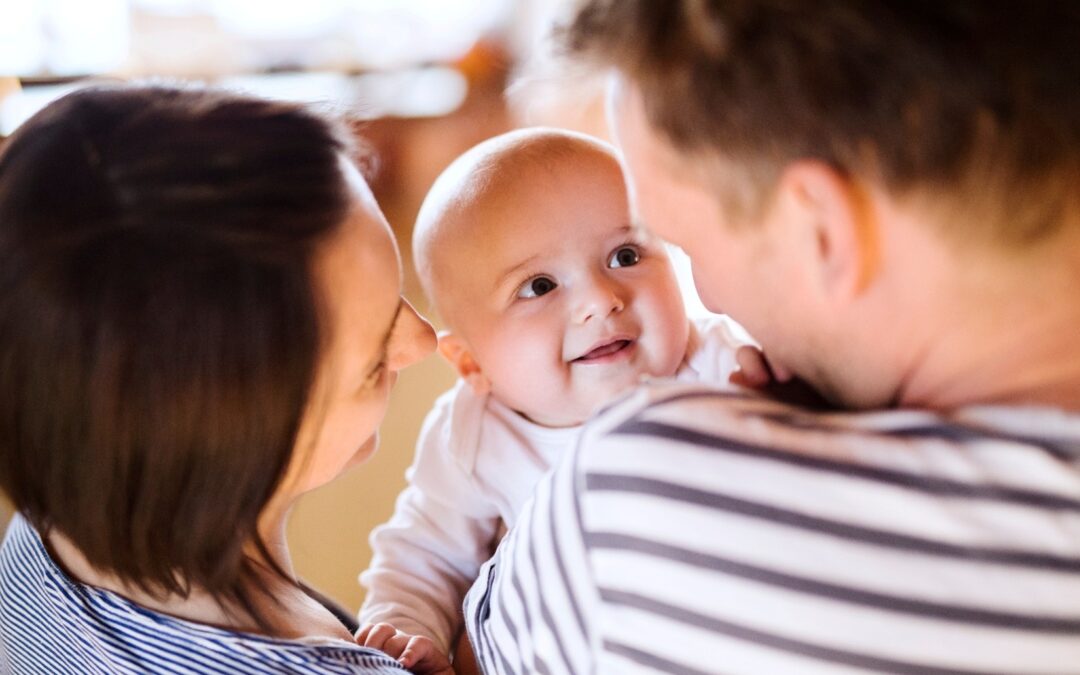
A newborn depends on you for nearly every part of the day. By the first birthday, that same baby may lift their arms to be picked up, wave goodbye, reach for a favorite toy, or pick up small pieces of food.
Those changes are early signs of participation. Babies are still very dependent on their caregivers, but throughout the first year, they gradually find more ways to respond, communicate, and join in.
Baby milestones offer useful guideposts for understanding that progression. The timing will not look exactly the same for every child.
Participation Starts Before Babies Can Do Things for Themselves
During the earliest months, participating often means responding to another person.
Around 1 month, babies may react to nearby sounds, touch, or movement while relying on caregivers for comfort and support.
By about 2 months, many babies smile during interaction and make sounds other than crying. They may also watch a caregiver move around the room.
Around 3 months, babies often spend longer looking at faces and may become more expressive during quiet interaction.
These responses may seem small, but they are some of the earliest ways babies take part in what is happening around them.
Around 4 to 6 Months, Babies Have More Ways to Respond
As babies gain better control over their bodies, everyday interactions start becoming more active.
Around 4 months, many make sounds back when someone speaks and begin swinging toward toys.
By 5 months, reaching may become more deliberate. A baby may also react more noticeably to familiar songs, voices, or repeated parts of the day.
Around 6 months, many babies reach for objects they want and take turns making sounds during interaction.
Instead of only responding to whatever comes close, babies are beginning to show more clearly what has captured their attention.
Sitting Changes How Babies Take Part
Sitting gives babies a new way to experience familiar activities.
Around 6 months, many begin supporting themselves while sitting, often leaning forward on their hands.
During 7 and 8 months, balance may improve enough for longer periods of upright play. A baby who once needed their hands for support may begin using them to hold and examine toys instead.
By about 9 months, many babies sit without support and get themselves into a sitting position.
That increased stability gives them more freedom to look around, reach toward something interesting, and stay involved in play.
Babies Begin Making Their Preferences Easier to Understand
During the second half of the first year, babies often become clearer about what they want. By around 9 months, many lift their arms when they want to be picked up and look when their name is called.
A baby may lean toward a familiar caregiver, reach for an object, or make a sound to keep an interaction going. They still depend on adults to interpret many of these signals, but their role in the interaction is becoming more obvious.
Familiar Games and Goodbyes Become More Interactive
Repeated activities often become easier for babies to recognize as the first year continues.
During 9 to 11 months, they may become excited when a familiar game begins or respond to a repeated gesture.
Around 12 months, many babies wave goodbye and play simple interactive games such as pat-a-cake.
These moments are good examples of development showing up in ordinary family routines. What once involved mostly watching may now include gestures, movement, or sounds from the baby too.
Mealtimes May Look Different Near the First Birthday
Developing hand control also changes how babies participate during meals.
By around 12 months, many babies can pick up a small piece of food using the thumb and pointer finger. They may also drink from an open cup while an adult holds it.
These are still supervised activities. A baby’s growing independence does not mean they are ready to manage meals on their own.
Instead, it means they are beginning to contribute more to the process by grasping, reaching, and practicing new movements.
Baby Milestones From Birth to 12 Months
Here is a quick look at how participation may change across the first year:
- 1 month: Reacts to nearby sounds, movement, and touch
- 2 months: Smiles and begins making sounds during interaction
- 3 months: Shows growing interest in faces and nearby activity
- 4 months: Reaches toward toys and responds with sounds
- 5 months: May reach more deliberately and react to familiar interactions
- 6 months: Reaches for wanted objects and joins vocal back-and-forth
- 7 months: Steadier sitting may make floor play more active
- 8 months: Movement and object exploration may become more deliberate
- 9 months: Raises arms to be picked up, responds to name, and sits independently
- 10 months: May move more purposefully toward people, toys, or activities
- 11 months: Familiar gestures and repeated interactions may become easier to recognize
- 12 months: Waves, joins simple games, grasps small pieces of food, and drinks from a cup with help
The months between official developmental checkpoints are general patterns rather than required milestones for every baby.
Familiar Routines Give Babies Chances to Participate
Ordinary parts of the day give babies repeated opportunities to respond in ways that match their age and abilities. At daycare in Thorndale, PA, familiar routines give babies chances to take a more active role as they grow.
For a younger infant, that participation may be eye contact or a coo during an interaction. Later, it may look like sitting during play, reaching toward something they want, lifting their arms to be picked up, or joining a familiar goodbye.
Early Independence Still Comes With Plenty of Help
Near the first birthday, babies may seem far more capable than they did only a few months earlier. Even so, early independence at this age is still quite small.
It may mean trying to pick up food, signaling for help, joining a game, or moving toward something interesting. Caregivers are still there to guide and support each part of the day.
Talk with your child’s pediatrician if your baby is not meeting expected milestones, loses a skill they previously used, or if you have concerns about development.
Over the first year, babies gradually move from mainly responding to the world around them to taking a more active part in it. Those everyday changes are often some of the clearest signs of how much they are learning and growing.