
Parents often picture daycare as a set timetable: bottles at one time, naps at another, and activities in between.
For infants, things are usually more fluid.
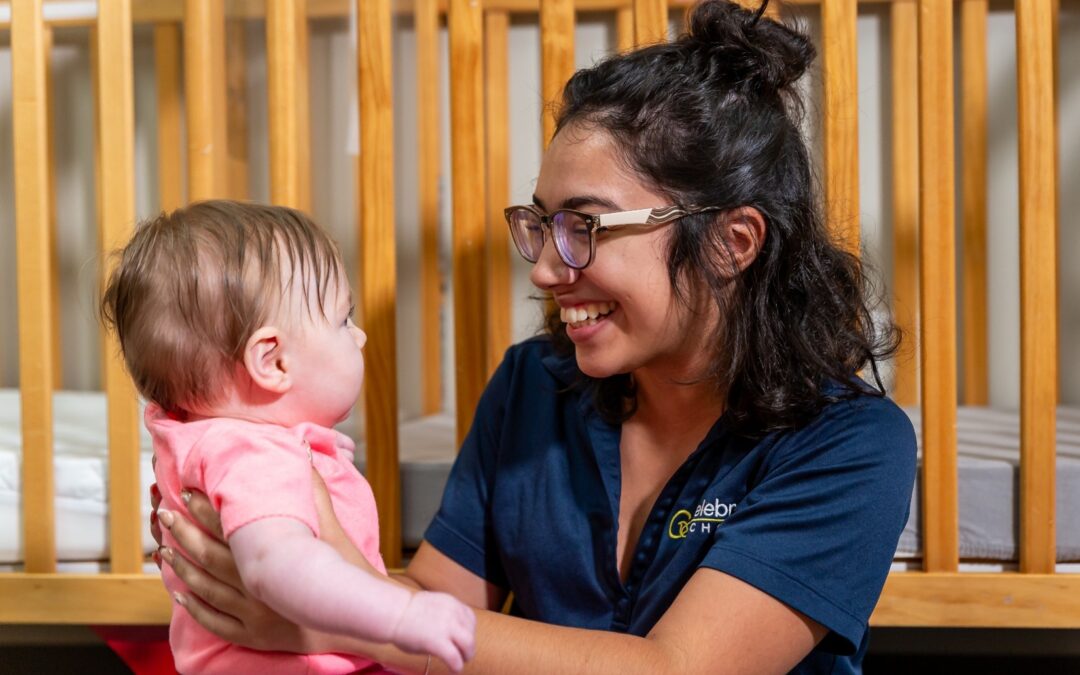
At Celebree School of South Tampa, infant care begins at 6 weeks. Teachers use individualized care plans and morning check-ins to understand each baby’s current feeding, sleep, and comfort needs.
There is structure, but every infant does not need to follow the same clock.
The Morning Starts With What Your Baby Needs
What happened before drop-off matters.
Celebree School of South Tampa uses morning check-ins to learn when a baby last ate, slept, and was changed.
That gives teachers a useful starting point.
A child who woke early may be ready for rest sooner. If your baby recently finished a bottle, feeding may come later.
Instead of assuming the usual timing will always hold, teachers can begin with the child who arrives that morning.
Feeding and Sleep Set Much of the Pace
Bottles, meals, naps, diaper changes, and comfort naturally take up a large share of infant care. At Celebree School of South Tampa, babies are held during feedings and rocked to sleep.
Because routines are individualized, several things may be happening around the classroom at once. One infant might be resting while another is eating or spending awake time with a caregiver.
The classroom remains organized without requiring everyone to move through the same routine together.
Awake Time Fits Around Care Needs
When an infant is fed, rested, and comfortable, there is room for interaction and early learning.
Celebree School of South Tampa includes language, personal and social development, physical development, gross and fine motor experiences, and simple sign language within infant care.
Awake time might include talking with a caregiver, moving on the floor, sharing a book, or spending time with something that has caught the child’s attention.
How that time unfolds depends partly on what the baby needs that day.
Infant Curriculum Does Not Need a Set Lesson Time
Infant curriculum looks different from what parents may picture in an older classroom. Teachers do not need every baby awake and ready for the same activity at a certain hour.
Developmentally appropriate learning can happen during play, one-on-one interaction, movement, and everyday care routines.
Teachers also pay attention to how babies respond, what seems to interest them, and how they engage with their surroundings.
Early learning can be woven into ordinary parts of the infant experience instead of being reserved for a formal lesson period.
The Balance Changes as Babies Grow
Celebree School of South Tampa has separate infant classrooms for babies from 6 weeks to 9 months and from 9 to 18 months.
Earlier in infancy, feeding, sleep, diapering, and close care often occupy more time.
Later, longer awake periods and new ways of moving and communicating create more opportunities for interaction and exploration.
The routine does not suddenly become fixed as babies get older. The mix simply shifts as their needs change.
Two Infants Can Have Very Different Days
Individual care becomes especially clear when you picture what is happening around the classroom.
At one moment, a baby may be sleeping while another finishes a bottle. Nearby, a child might be looking at a book or moving on the floor with a caregiver.
They are sharing the same classroom without following an identical timetable. That is a normal part of infant care.
Daily Reports Show What Actually Happened
Celebree School of South Tampa provides evening reports that include meals, diaper changes, naps, and play. Those details help parents see how the day unfolded for their child.
A nap might have shifted. Feeding may have happened earlier than expected. Your baby may have had a longer stretch of awake time.
Parents can use that information when thinking about the evening ahead rather than trying to compare the day with a perfect schedule.
What Should Parents Expect From an Infant Daycare Schedule?
Parents can expect recurring parts of infant care: feeding, sleep, diapering, comfort, awake time, interaction, and early learning.
What changes is the timing and balance. Your baby’s routine will also continue to develop as feeding patterns, sleep, movement, and awake periods shift.
A well-organized infant classroom does not depend on every child following the same schedule. It depends on teachers understanding each child’s care plan and responding to what they need throughout the day.
Explore Infant Daycare at Celebree School of South Tampa
If you are exploring infant daycare at Celebree School of South Tampa, ask how teachers learn your baby’s current feeding and sleep patterns and how they respond when those routines change.
You can also ask how interaction and early learning fit around everyday care.