
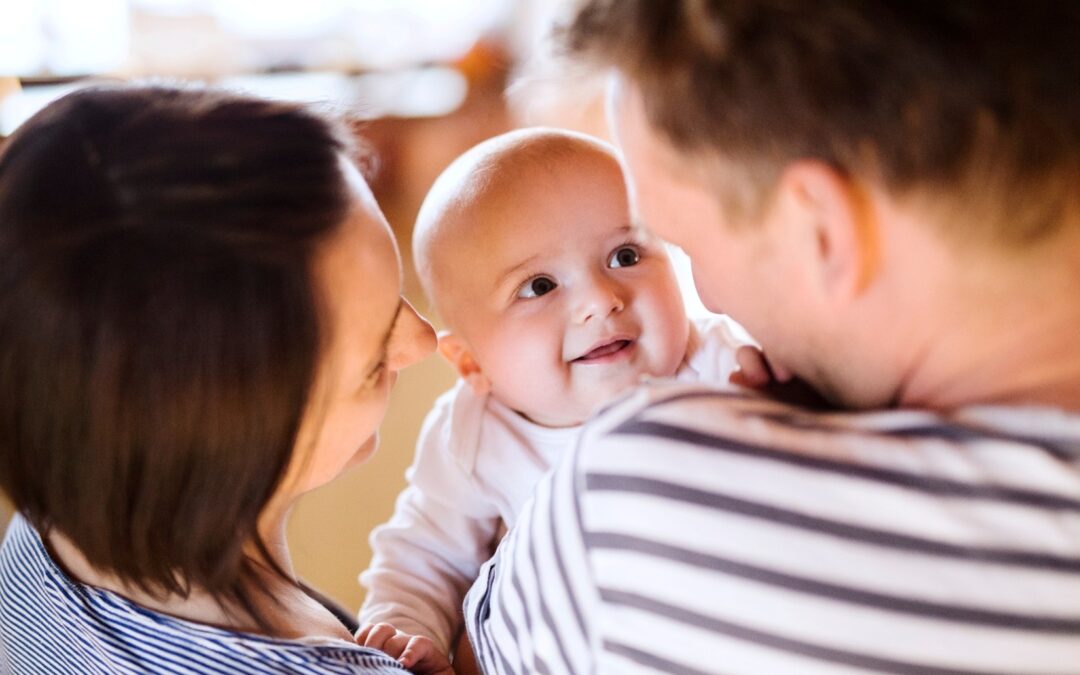
Play during a baby’s first year can look surprisingly simple. You make a face, repeat a sound, sing the same song, or hide your face behind your hands. At first, your baby may simply watch. Months later, they may laugh before the funny part, reach for the toy you moved, or join in with a wave.
Those changes reveal a lot about baby milestones. As attention, memory, movement, and communication develop, familiar games begin to feel very different.
Every baby follows their own timeline, so the ages below are general guideposts rather than exact deadlines.
In the First Months, Interaction Is the Game
During the earliest weeks, babies do not need elaborate activities. A familiar face and voice already give them plenty to notice.
Around 1 month, babies may briefly focus on nearby faces and react to familiar sounds.
By about 2 months, many babies look at faces, smile during interaction, watch movement, and make sounds other than crying.
Around 3 months, cooing and longer periods of face-to-face attention may become more noticeable. A baby may watch your expression closely or respond when you repeat a sound.
At this stage, talking, smiling, singing, and simply spending time together are meaningful forms of play.
Around 4 to 6 Months, Babies Start Joining In
By about 4 months, many babies make sounds back when someone talks to them, chuckle, and swing toward nearby toys.
Around 5 months, reaching often becomes more deliberate. A toy that once drew only a glance may now get a swipe, grab, or excited kick.
By 6 months, many babies laugh, recognize familiar people, take turns making sounds, and reach for objects they want.
That back-and-forth is important. A simple game of copying sounds or pausing to let your baby respond begins to feel more like an exchange.
Familiar Games Become More Fun When Babies Know What Comes Next
During 7 and 8 months, babies often become increasingly interested in repeated songs, expressions, and playful routines.
A familiar sound may get a smile before the activity even begins. A baby may bounce with excitement when they recognize a favorite song or watch closely when you repeat a game they know.
By around 9 months, many babies smile or laugh during peekaboo, look when their name is called, make repeated sounds, and search for something that falls out of sight.
Those changes make familiar games more interactive because babies are bringing more memory, attention, and anticipation to the experience.
Why Is Peekaboo Such a Big Deal?
Peekaboo may be one of the simplest games you can play with a baby, but it brings several developing abilities together.
A baby has to pay attention to your face, notice when it disappears, and react when it returns. As the game becomes familiar, they may begin anticipating what happens next.
A younger baby may simply stare when you cover your face. By later infancy, the same game may bring a grin or laugh before you even uncover it.
The game does not cause these milestones. It simply gives babies a familiar way to use skills that are already emerging.
Dropping Something Can Become a Game Too
At some point, a spoon or toy may begin making repeated trips to the floor.
Around 8 to 10 months, babies may drop an object, look toward where it landed, and wait for someone to retrieve it.
By around 9 months, many babies search for something that falls out of sight and bang two objects together.
For babies, this can become an interesting interaction. Something disappears, someone brings it back, and the whole sequence starts again.
For the adult, it may feel repetitive. For the baby, the pattern is part of the fun.
Turn-Taking Can Happen Without Words
As babies become more socially engaged, simple games often involve more waiting and responding.
Around 9 to 11 months, a caregiver might pass a toy, imitate a sound, or pause during a familiar song to see what the baby does next.
A baby may hand something back, vocalize in response, or make a movement that keeps the interaction going. These exchanges help show how play, communication, and social development overlap during the first year.
Near the First Birthday, Babies Can Join Familiar Games
Between 10 and 12 months, babies often participate more actively in games and routines they know well.
Around 10 months, they may imitate a simple movement, use sounds to keep an interaction going, or react strongly to a repeated part of a favorite song.
By about 11 months, gestures and copied actions may become more consistent.
Around 12 months, many babies:
- Wave goodbye
- Play simple interactive games such as pat-a-cake
- Use “mama,” “dada,” or another special name meaningfully
- Pull to stand
- Move while holding onto furniture
- Pick up small objects using the thumb and pointer finger
- Understand a familiar word such as “no”
Some babies may also imitate familiar motions during play or try to repeat something that made another person laugh.
Simple Play Is Already Part of Everyday Life
Babies do not need a complicated activity schedule to have meaningful opportunities to play.
Songs, books, safe toys, floor time, familiar routines, and face-to-face interaction all give babies things to notice and respond to.
At daycare in Tampa, FL, responsive interactions, sensory experiences, familiar routines, and time for play give babies regular opportunities to watch, respond, explore, and participate as their abilities develop.
For a younger infant, that may mean following a face or listening to a song. Months later, it may look like laughing during peekaboo, passing a toy back and forth, or joining a familiar game with a gesture.
Every Baby Has a Favorite Way to Play
One baby may love songs and face-to-face games. Another may be more interested in handling toys or watching objects disappear and return. Some babies imitate movements readily, while others spend more time observing before joining in.
Those differences are part of normal development.
Milestones are most useful as general reference points. Talk with your child’s pediatrician if your baby is not meeting expected milestones, loses a skill they previously used, or if you have concerns about movement, hearing, communication, interaction, or development.
During the first year, even the simplest game can look completely different from one month to the next. The activity may stay the same, but your baby keeps bringing new skills to it.