
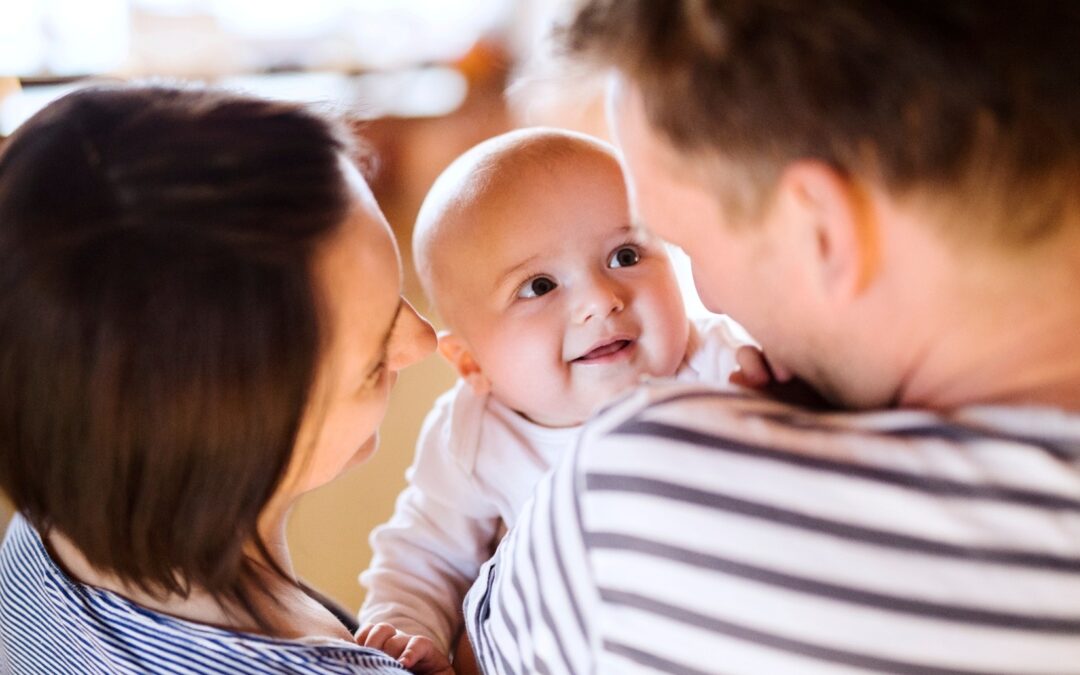
During the first year, the way your baby interacts with you changes noticeably. A newborn may quietly study your face or settle at the sound of your voice. A few months later, you may get a smile in return. Before long, your baby may laugh during a familiar game, turn when you call their name, or wave goodbye.
These social baby milestones develop alongside movement, communication, and thinking skills. They also unfold differently for every child. The ages below offer a general picture of what you may notice during the first year rather than a strict schedule your baby needs to follow.
The First Months Bring More Interest in People
Newborns are already paying attention to the people caring for them, even though their responses may be subtle.
Around 1 month, babies may briefly focus on a nearby face, become alert to a familiar voice, or settle when held and comforted.
By about 2 months, interaction often becomes easier to recognize. Many babies look at faces and smile when someone talks or smiles at them. You may also notice your baby appearing especially interested when a familiar caregiver comes close.
Around 3 months, coos, smiles, and facial expressions may become a bigger part of your time together. Rather than simply watching, your baby may begin responding more clearly when you speak, smile, or make an animated expression.
Smiles Begin to Turn Into a Conversation
Babies do not need words to take part in a back-and-forth exchange.
Around 4 months, many babies make sounds in response to someone talking to them, turn toward a familiar voice, and begin chuckling. A smile may lead to another smile. A sound from you may be followed by a sound from your baby.
By about 5 months, those exchanges may become longer or more expressive. Your baby might watch your face closely, react to a playful tone of voice, or become excited when a familiar interaction begins.
These moments may look simple, but they show that your baby is becoming a more active participant in communication.
When Do Babies Start Laughing?
Many parents remember the first real laugh because it suddenly makes interaction feel much more two-sided.
By around 6 months, many babies laugh and recognize familiar people. They may also take turns making sounds during an interaction.
What makes a baby laugh varies. It might be a silly noise, a gentle bouncing game, a funny expression, or something you have repeated enough times for your baby to anticipate what is coming.
Around 7 months, familiar games and voices may get increasingly enthusiastic reactions. Babies may also begin showing clearer preferences for familiar people and watching someone new more cautiously.
Familiar People Begin to Stand Out
During the middle of the first year, babies often become more aware of who they know well.
Around 7 to 8 months, your baby may brighten when a familiar caregiver approaches, watch an unfamiliar person carefully, or look toward someone they know when they need reassurance.
This does not mean a social baby will automatically be comfortable with everyone. Becoming more selective about familiar and unfamiliar people is one way growing awareness may show itself.
You may also notice your baby responding differently to familiar parts of the day. A favorite song, repeated phrase, or playful routine may bring a smile before the activity has even started.
When Do Babies Respond to Their Name?
Babies hear their names many times before they clearly show that they recognize them.
Earlier in infancy, a baby may turn toward the sound of a familiar voice. By around 9 months, many babies look when their own name is called.
That response may not happen every single time. Your baby might be concentrating on a toy, watching something else, or simply less interested in turning at that moment.
At around 9 months, you may also notice other social baby milestones. Many babies react when a caregiver leaves, show several different facial expressions, raise their arms to be picked up, and smile or laugh during games such as peekaboo.
Simple Games Become Much More Interactive
Peekaboo changes dramatically during the first year.
A younger baby may simply watch your face disappear and return. Later, your baby may smile as soon as you cover your face because they recognize the game.
Around 8 to 10 months, babies often become more involved in these familiar exchanges. They may laugh, move excitedly, make a sound, or wait for the part of the game they know is coming next.
Games like peekaboo combine several developing abilities at once. Your baby is watching you, remembering what has happened before, anticipating what may happen next, and responding socially.
Gestures Add New Ways to Join In
As babies approach their first birthday, interaction involves more than facial expressions and sounds.
Around 10 months, you may notice your baby using movements more deliberately during familiar exchanges. They may reach toward you, lift their arms, or imitate a simple action.
By about 11 months, some babies begin experimenting more with social gestures and copying movements they have seen repeatedly.
At around 12 months, many babies wave goodbye and play simple interactive games such as pat-a-cake. They may also use “mama,” “dada,” or another special name meaningfully and understand familiar words such as “no.”
There is plenty of variation here. Some babies are enthusiastic wavers and clappers. Others communicate more through sounds, facial expressions, or reaching before gestures become a regular part of their interactions.
Social Development Shows Up in Ordinary Moments
Many meaningful interactions during the first year happen during everyday routines rather than planned activities.
Think about what happens during feeding, diaper changes, floor play, or getting ready to go outside. You talk. Your baby watches. You respond to a sound. Your baby makes another one. A familiar expression makes them smile.
Repeated experiences with responsive caregivers give babies opportunities to notice voices, expressions, gestures, and the rhythm of back-and-forth interaction.
At daycare in Severna Park, MD, responsive communication, familiar routines, and caring relationships give babies regular opportunities to smile, vocalize, observe familiar faces, and participate in simple social exchanges throughout the day.
Every Baby Has Their Own Way of Connecting
One baby may laugh easily but take more time to respond consistently to their name. Another may be a quiet observer who studies faces carefully before becoming more expressive. Some babies use gestures frequently near their first birthday, while others rely more heavily on sounds and facial expressions.
Look at your baby’s development as a whole rather than comparing one behavior with another baby’s timeline.
If your baby is not meeting expected milestones, loses a skill they previously used, or you have concerns about hearing, communication, interaction, or development, talk with your child’s pediatrician.
Over the first year, social connection grows through hundreds of small exchanges. A glance becomes a smile. A smile becomes a laugh. Eventually, your baby is joining familiar games, responding to you, and finding more ways to make their thoughts and preferences known.