
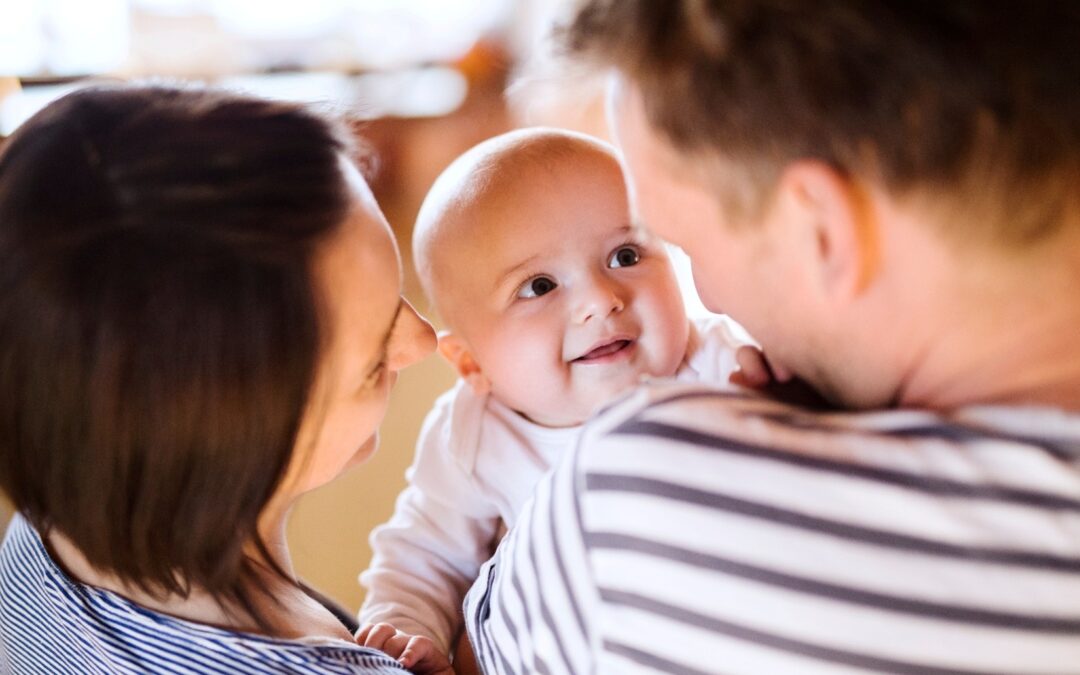
Reaching for a toy looks simple. For a baby, though, that one movement brings several growing abilities together. They have to notice the toy, become interested in it, steady their body, move an arm toward it, and coordinate the hand well enough to grab it.
That is true of many baby milestones. Movement, communication, attention, social connection, and learning rarely develop in isolation. Throughout the first year, new skills begin working together in ways that make your baby’s world bigger and more interactive.
Milestone ages are general guideposts, not deadlines. Babies develop along different timelines, and one area may seem to change quickly while another develops more gradually.
Birth to 3 Months: Control and Connection Begin Together
During the earliest weeks, babies are still gaining basic control over their bodies while becoming more responsive to the people around them.
Around 1 month, your baby may briefly focus on nearby faces, react to sounds, and lift or turn their head for short periods during tummy time.
By about 2 months, many babies smile when someone talks or smiles at them, make sounds besides crying, watch people move, and briefly hold their head up while on their tummy.
Around 3 months, head control is often getting steadier. Hands may stay open more frequently, and early swiping or reaching toward nearby objects may appear. Social interaction may also become more noticeable through smiles, coos, and longer periods of attention.
These changes are connected. Better head control makes it easier to look around, while growing attention gives babies more reasons to turn toward a voice or study a face.
Around 4 to 6 Months: Interest Turns Into Action
The middle months often bring more purposeful movement.
Around 4 months, many babies hold their head more steadily, bring their hands to their mouth, reach toward toys, chuckle, and make sounds back during interaction.
By about 5 months, reaching may become more accurate, and rolling may begin. Babies often spend more time touching, grasping, and exploring whatever is within reach.
At around 6 months, many babies roll, reach for objects they want, bring toys to the mouth, laugh, take turns making sounds, recognize familiar people, and begin sitting with support or while leaning on their hands.
When Do Babies Reach for Things?
Reaching usually becomes more purposeful during the early to middle months of infancy.
At first, your baby may swipe toward something interesting without making contact. Later, they begin judging distance more accurately and coordinating the shoulder, arm, hand, and fingers well enough to grasp it.
Reaching shows how several areas of development meet in one small action. Your baby has to see the object, pay attention to it, want to investigate it, and control the body well enough to get there.
Sitting Opens Up More Than a New Position
Sitting is easy to think of as purely a physical milestone, but it changes much more than posture.
Once babies are steadier upright, they have a different view of the room. Their hands are also freer to reach, hold, bang, transfer, and examine toys.
When Do Babies Sit Up?
Sitting develops gradually.
Babies often begin with plenty of support, then lean forward onto their hands for balance. Over time, they gain enough trunk control to sit more steadily without help.
By around 9 months, many babies sit without support, though the timing varies.
A new position often creates new opportunities. Sitting may lead to more varied play, easier face-to-face interaction, and greater interest in objects that were harder to reach before.
Around 7 to 9 Months: Babies Have More Ways to Act on Curiosity
During this part of the year, babies often become much more active participants in what is happening around them.
Around 7 months, sitting may become steadier, babies may transfer objects between their hands, and babbling often becomes more varied.
By about 8 months, many babies reach in different directions while sitting and begin finding their own ways to move around. Some roll, scoot, creep, or start experimenting with crawling.
At around 9 months, many babies sit without support, move objects from one hand to the other, look when their name is called, make repeated sounds such as “mamamama” or “babababa,” and lift their arms to be picked up.
Their movement, attention, and communication are increasingly working together.
When Do Babies Crawl?
Many babies begin crawling during the second half of the first year, but there is wide variation in both timing and style.
Some crawl on hands and knees. Others scoot, creep, roll, or use another method to get where they want to go.
Mobility does more than move a baby across the room. It lets them choose what to explore, approach familiar people, retrieve toys, and respond to something that catches their attention.
Near the First Birthday, Communication Becomes More Physical
By the later months of infancy, babies often communicate with their whole bodies.
Around 10 months, some begin pulling to stand, changing positions more easily, and using gestures such as reaching or an emerging wave.
By about 11 months, cruising along furniture may appear. Hand movements often become more precise, and babies may imitate familiar actions or show clearer understanding of words and routines.
At around 12 months, many babies:
- Pull to stand
- Move while holding furniture
- Wave goodbye
- Play simple interactive games
- Put objects into containers
- Understand familiar words such as “no”
- Use “mama,” “dada,” or another special name meaningfully
Some babies are also taking independent steps at this age, while others are still crawling or cruising.
When Do Babies Point?
Pointing often develops during later infancy.
It may look like a simple hand gesture, but several abilities are involved. Your baby has to notice something, decide it is worth drawing attention to, coordinate the hand and finger, and use the gesture as part of an interaction with another person.
Pointing is one example of how movement and communication begin overlapping more clearly near the end of the first year.
One Milestone Often Creates Opportunities for Another
Development frequently works like a set of doors opening.
Sitting frees the hands for more play. Mobility brings new objects within reach. Better hand control gives babies more ways to investigate toys. Recognizing a familiar name or word makes interactions more responsive. Gestures give babies ways to communicate before spoken language is established.
That does not mean every milestone follows a fixed chain. Babies may reach the same abilities in different orders and on different timelines.
What matters is the broader pattern of growth over time.
Development Through Everyday Play and Care
Babies learn through ordinary experiences: floor time, songs, books, face-to-face interaction, movement, and chances to explore safely.
At daycare in Rockville, MD, responsive interactions, sensory experiences, movement, and familiar routines give caregivers regular opportunities to notice how different parts of a baby’s development are emerging together.
A younger infant may be practicing head control while watching a caregiver’s face. An older baby may sit, reach for a toy, babble during play, or move toward something interesting. The activity may look simple, but several growing skills are often involved at once.
Milestones Are Guideposts, Not a Scorecard
It is normal for development to look uneven at times. A baby may seem especially focused on movement for a few weeks while changes in communication are less obvious, or the reverse.
Your pediatrician is the right person to ask if your baby is not meeting expected milestones, loses a skill they previously had, or if something about their movement, hearing, communication, interaction, or overall development concerns you.
The first year is full of individual milestones, but the bigger picture is even more interesting. Each new ability gives your baby another way to move, communicate, explore, and connect with the world around them.