
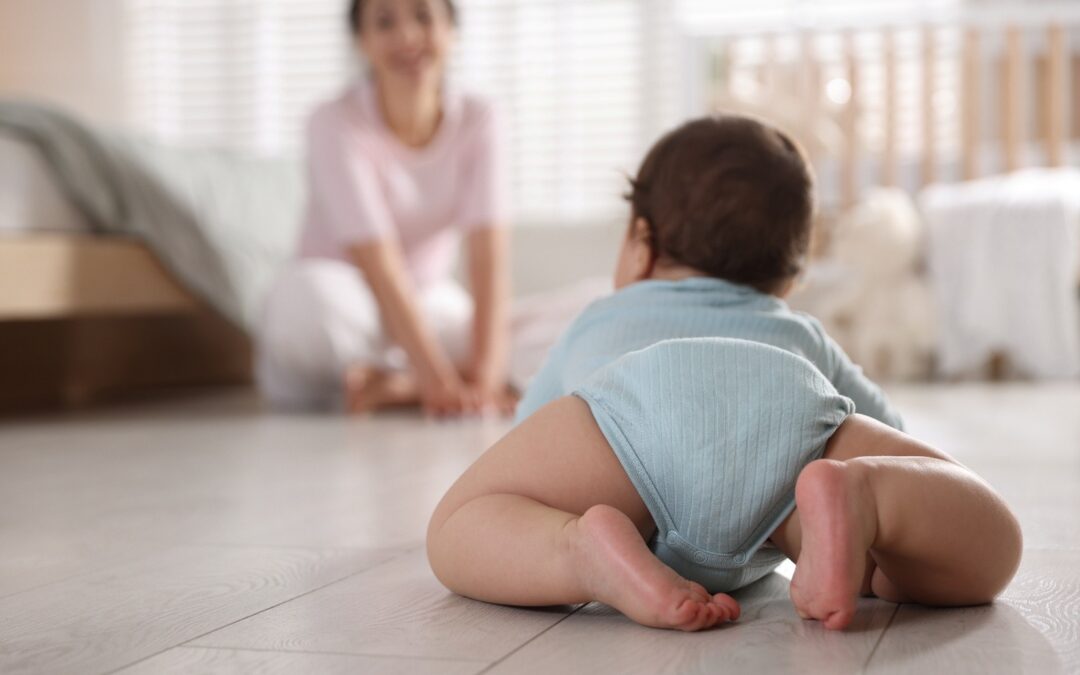
For months, you may be able to set your baby down on a blanket and have a pretty good idea where they will be a few minutes later. Crawling changes that quickly.
If you are wondering when do babies start crawling, many babies begin traditional hands-and-knees crawling around 7 to 10 months. Some start earlier or later, while others belly-crawl, scoot, roll, or find another way to get where they want to go.
However it happens, becoming mobile brings a new challenge for parents: your baby can suddenly reach things that never mattered before.
Mobility Can Change Quickly
Early movement often develops in bursts.
Your baby may spend several days figuring out how to move forward and then become surprisingly efficient once something clicks. At the same time, reaching, sitting, pulling up, and changing positions may also be improving.
That is why it helps to think about safety before crawling is fully established.
A coffee table that seemed harmless when your baby stayed on a play mat may look very different once they can cross the room. The same goes for a cord tucked beside the couch or a cabinet that sits at floor level.
Take a Look From Your Baby’s Point of View
One of the simplest ways to spot potential hazards is to get down near floor level and look around. What can your baby see? More importantly, what can they grab?
You may notice things you normally overlook, including:
- Electrical or blind cords
- Small objects beneath furniture
- Low shelves with breakable items
- Unsecured furniture
- Cabinets and drawers
- Pet food or water bowls
- Stairs and doorways
- Tablecloths or other items that can be pulled
Babies explore with their hands and mouths, so something that looks uninteresting to an adult may deserve immediate attention from a curious crawler.
Make Safety Changes Before You Need Them
You do not have to transform your entire home overnight. Start with the spaces where your baby spends the most time and work outward.
Secure furniture that could tip. Keep small objects and choking hazards off the floor. Use appropriate safety gates near stairs. Move cords and hazardous household products out of reach, and take another look at anything your baby might grab while trying to pull themselves upright.
This is also a good time to reconsider mobile baby walkers. They can give babies access to stairs, hot surfaces, and other hazards before they have the control to navigate them safely.
Preparing early gives you more freedom to enjoy your baby’s growing mobility rather than constantly discovering the next reachable hazard.
Give Your Baby Safe Places to Explore
Babyproofing is not about stopping movement. It is about creating spaces where your baby can move with fewer hazards nearby.
Supervised floor time allows babies to roll, pivot, reach, scoot, and crawl as their abilities develop.
You may find that your baby uses several methods along the way. They might move backward first, pull themselves forward on their belly, or rely on rolling before traditional crawling appears.
There is no need to correct every movement into a classic hands-and-knees crawl. Give your baby space to experiment while staying close enough to keep exploration safe.
What If Your Baby Is Not Crawling Yet?
The 7-to-10-month range is a common reference point, but it is not a deadline.
Some babies begin traditional crawling later, while others rely on different forms of movement or spend relatively little time crawling before becoming interested in standing and cruising.
Watch your baby’s development as a whole rather than focusing only on crawling. If something about their movement concerns you, talk with their pediatrician. You should also bring up a loss of a previously learned skill or an ongoing difference in how your baby uses the two sides of their body.
Your pediatrician can look at the broader developmental picture and help you determine whether any follow-up is needed.
Safe Exploration at Daycare Matters, Too
As babies become mobile, the environment around them matters throughout the day.
At Celebree School of Perry Hall, infant teachers provide age-appropriate opportunities for physical movement and exploration while observing how each child’s abilities are developing.
A baby who has recently started scooting may soon cover more of the classroom. Another may suddenly begin pulling into a new position. Teachers can adjust the environment as mobility changes and share those observations with families.
That communication helps parents stay informed during a stage when new abilities can seem to appear overnight.
Stay One Step Ahead of a Growing Crawler
You may not know the exact day your baby will crawl across the room for the first time, but you can prepare for it.
Give your baby a safe space to move, look at familiar rooms from their perspective, and update babyproofing as their reach grows. If you have questions about how your baby is developing, bring them to your pediatrician.
If you are looking for daycare in Perry Hall, MD, Celebree School of Perry Hall provides infants with a safe environment for movement, exploration, and development throughout the day. Schedule a visit to meet our team and learn more about infant care at Celebree.