
Why did one paper airplane glide across the room while another dropped almost immediately?
It’s the kind of question that can lead a preschooler to try something new, observe what happens, and ask another question. With a little guidance, that investigation can introduce several important learning skills.
At Celebree School of Mt. Airy, our preschool curriculum includes early literacy, math, science, social-emotional development, creative expression, and physical development. Teachers encourage children to explore their questions while helping them develop the skills to think through problems and understand the world around them.
What Are the Main Areas of Preschool Learning?
A preschool curriculum introduces early academic concepts while supporting children’s social, emotional, and physical growth.
At Celebree, we incorporate the Seven Domains of Learning: personal and social development, scientific thinking, mathematical thinking, language and literacy, social studies, the arts, and physical development and health.
These areas cover a wide range of experiences.
Children develop language and literacy skills through stories, songs, conversations, and early writing activities. They explore mathematical concepts by counting, sorting, comparing, and recognizing patterns.
Science encourages children to observe and investigate, while art and music provide ways to express their ideas. Learning about families and communities introduces social studies, and active play supports physical development.
Our teachers use Creative Curriculum to plan age-appropriate activities that connect these learning goals with children’s interests and developing abilities.
How Does a Question Become a Preschool Learning Experience?
Let’s return to those paper airplanes.
Imagine a group of preschoolers noticing that some airplanes travel farther than others. A teacher might invite them to look more closely at the different designs.
Are the wings the same shape? What happens if they change a fold?
Children could make predictions, test their airplanes, and compare what happens. If one design doesn’t fly as expected, they might make an adjustment and try again.
Through this activity, children would be exploring scientific thinking as they observe and test ideas. Comparing how far the airplanes travel introduces early math concepts, while discussing their discoveries develops vocabulary and communication skills.
Folding and launching the airplanes also involves coordination and fine motor control.
The children don’t need to understand all the science behind flight. They’re beginning to learn how to investigate a question by observing, experimenting, and thinking about what happened.
That ability to explore possibilities is an important part of early learning.
Why Do Teachers Encourage Children to Ask Questions?
Young children often notice things adults overlook. They may wonder why objects move differently, how plants grow, or what makes certain sounds.
At Celebree School of Mt. Airy, our teachers encourage children to share those questions and talk about what they’re observing.
Sometimes a teacher might offer an explanation. Other times, asking a question in return can help a child think more deeply.
“What do you notice?” or “What could we try next?” gives children a chance to consider different possibilities.
These conversations help develop reasoning and communication skills. Children practice describing what they see, expressing their ideas, and listening to others.
Teachers can also introduce new vocabulary or materials that help children explore a subject further.
Where Do Reading, Creativity, and Movement Fit In?
Investigating questions is one part of preschool, but children also need a variety of experiences that support different areas of development.
At Celebree School of Mt. Airy, our classroom Interest Areas include spaces for books, art, blocks, science and discovery, music and movement, and imaginative play.
Each area offers different ways to learn.
During story time, children develop vocabulary and listening skills as they discuss characters, recognize familiar words, or predict what might happen next.
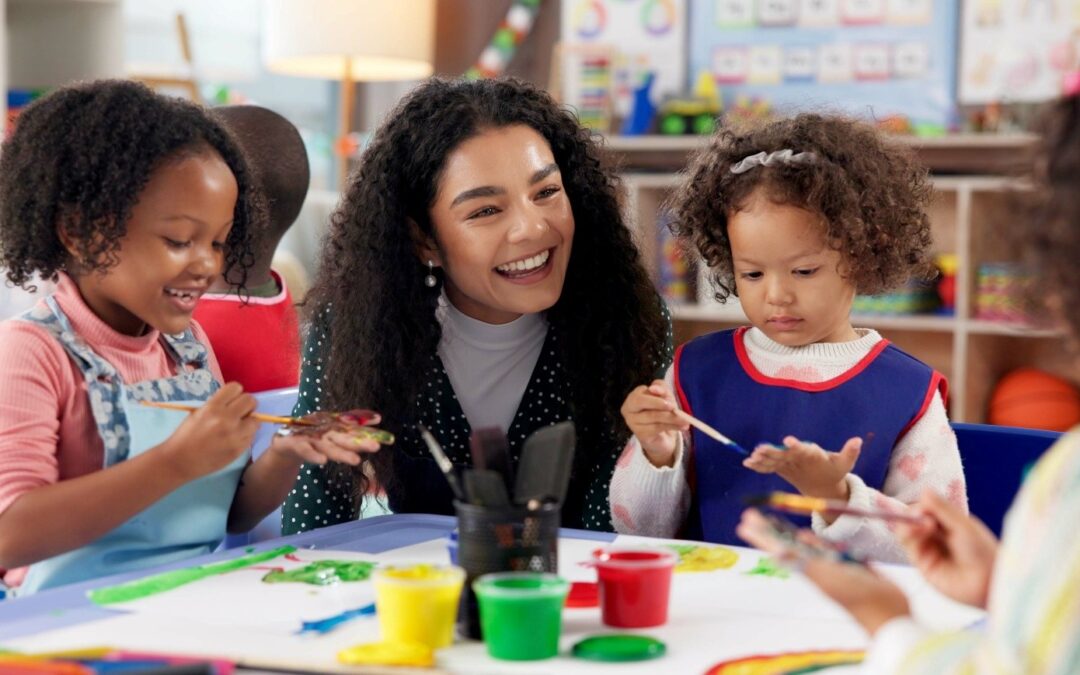
Art activities encourage children to experiment with materials and express their ideas. Through process art, they can explore colors, textures, and techniques without every project needing to look alike.
Music, movement, and outdoor play support coordination and physical development. Games and hands-on activities introduce mathematical concepts, while conversations about families and community helpers help children learn about the people around them.
These experiences give children room to explore different interests while developing important early skills.
What Happens When Children Don’t Know the Answer?
Trying something unfamiliar doesn’t always go smoothly.
A child might become frustrated when a project falls apart or an experiment produces an unexpected result. They may need help deciding what to do next.
At Celebree, Conscious Discipline helps guide how our teachers support children through these moments.
Teachers help children recognize their feelings, communicate what they need, and consider possible solutions.
Sometimes that means offering encouragement or helping with a difficult step. Other times, a child may need a break before returning to the activity.
There’s no expectation that preschoolers will always respond calmly or immediately know how to solve a problem.
With patient guidance, children have opportunities to practice managing frustration, asking for help, and approaching challenges in different ways.
How Do Teachers Support Each Child’s Learning?
Children bring different interests and abilities into the classroom, so the same activity may offer different learning opportunities for each child.
Our teachers use Creative Curriculum and developmental learning goals to guide their planning. They also observe how children participate and respond to new experiences.
For example, one child exploring a science activity might be learning to describe what they notice. Another may be ready to make a prediction or explain why they think something happened.
Teachers can adjust their questions and guidance to support both children.
These observations help us recognize developing skills and introduce new challenges when appropriate, while giving children time to practice what they’re still learning.
How Can Parents Follow Their Child’s Progress?
Your child might be excited to tell you about something they discovered at school. You may also notice them asking more detailed questions or trying different approaches when a familiar task becomes difficult.
At Celebree School of Mt. Airy, our teachers observe children’s development during classroom activities and document their progress through individual portfolios.
Families receive semiannual progress reports that provide insight into different learning areas. Daily reports and family-teacher conferences also help you stay informed about your child’s experiences.
We welcome hearing what you’re noticing at home, too.
Sharing those observations helps us better understand your child’s interests, recognize their developing abilities, and continue supporting their learning.
Explore Preschool at Celebree School of Mt. Airy
At Celebree School of Mt. Airy, our teachers encourage children to ask questions, investigate their surroundings, and develop new skills through hands-on learning.
Our preschool curriculum brings together early academics, creative experiences, and social-emotional development, with caring educators guiding children along the way.
Explore our preschool program in Mt. Airy, MD, or schedule a tour to meet our teachers and see how we support your child’s learning.