
Walk into a child care classroom and you’ll likely see a flurry of activity.
Children building. Talking. Moving from one thing to the next.
It can look busy. It can look relaxed. It can even look a little unpredictable.
So it’s fair to ask: Where’s the learning?
If you’re exploring child care in Forest Hill, MD, the answer is that learning is happening the entire time. It just doesn’t always look the way adults expect it to.
Learning Doesn’t Start With Instruction
Young children don’t learn best by sitting and listening. They learn by:
- Trying things out
- Making mistakes
- Repeating what works
- Interacting with others
Play gives them the space to do all of that.
It’s how they test ideas and build understanding in a way that actually sticks.
It Builds From What Children Notice
One of the most important parts of learning through play is paying attention to what children are already interested in.
A child notices something. Talks about it. Comes back to it again.
That’s where teachers step in. Instead of redirecting, they build on it.
How Small Moments Turn Into Bigger Learning
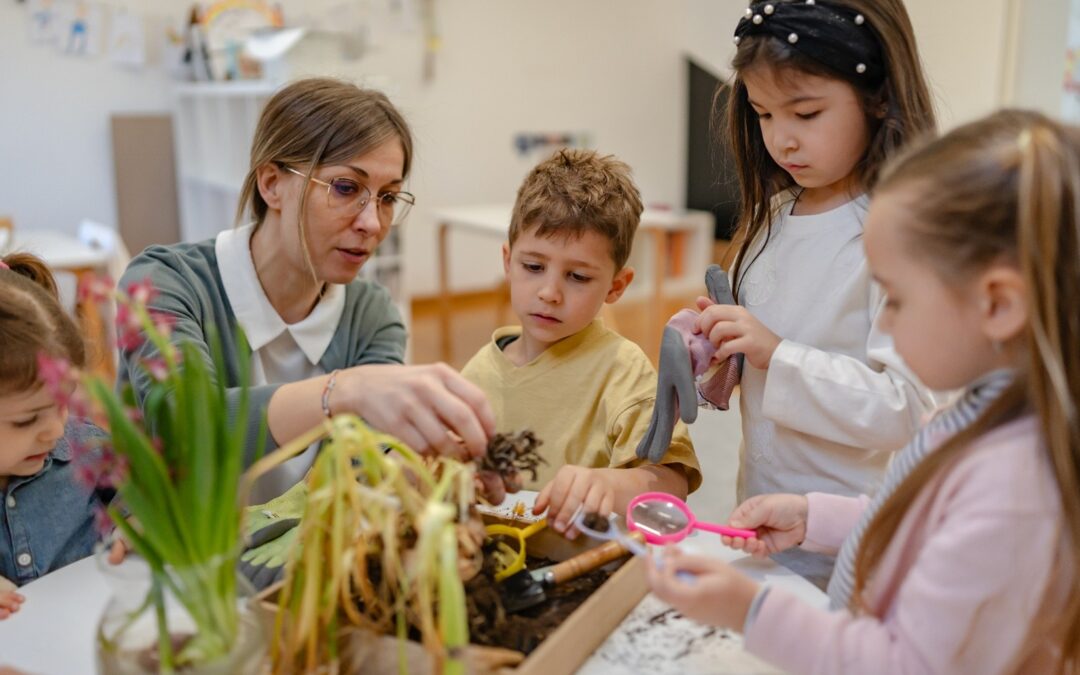
A child digging in sensory materials might start by simply exploring texture.
With guidance, that can turn into:
- Describing what they feel
- Comparing differences
- Using new vocabulary
- Experimenting with cause and effect
The activity stays simple. The learning becomes deeper.
Teachers Are Actively Involved
This isn’t a hands-off environment. Teachers are constantly:
- Observing how children interact
- Listening to how they express ideas
- Introducing new concepts at the right moment
- Adjusting based on each child’s development
At Celebree, assessment happens through these everyday interactions. Teachers gather insight through observation and use it to guide learning without interrupting the experience.
What It Looks Like in Real Life
These learning moments show up in ways that feel familiar.
- A child experimenting with stacking is learning balance and persistence
- A group playing together is learning communication and cooperation
- Creative play builds imagination, language, and storytelling
Each moment builds on the last.
Why This Approach Makes a Difference
Children stay engaged longer when they’re interested. When they stay engaged, they:
- Try again when something doesn’t work
- Explore new ideas
- Build confidence in what they can do
That’s where meaningful learning happens.
It Supports More Than Academics
Learning through play helps children grow in ways that go beyond early academics. They develop:
- Independence
- Problem-solving skills
- Emotional awareness
- Communication
These are the skills that help them navigate both school and everyday life.
What You Might Notice at Home
When children are learning this way, it often carries into their daily routines. You might notice:
- More curiosity about how things work
- More detailed pretend play
- More independence in simple tasks
These are all signs that your child is actively making sense of what they’re learning.
What to Look for in a Child Care Program
If you’re considering child care in Forest Hill, MD, it helps to look beyond the phrase “learning through play” and ask:
- How do teachers guide learning during play?
- How do they respond to children’s interests?
- How do they support individual development?
These details show how intentional the environment really is.
Learning Through Play in Forest Hill
At Celebree School of Forest Hill, learning through play is part of the daily experience.
Teachers observe, guide, and build on each child’s interests to create meaningful learning opportunities. Activities are designed to feel natural while supporting real growth across all areas of development.
It may look like play.
It’s actually how children build understanding, confidence, and a strong foundation for what comes next.