
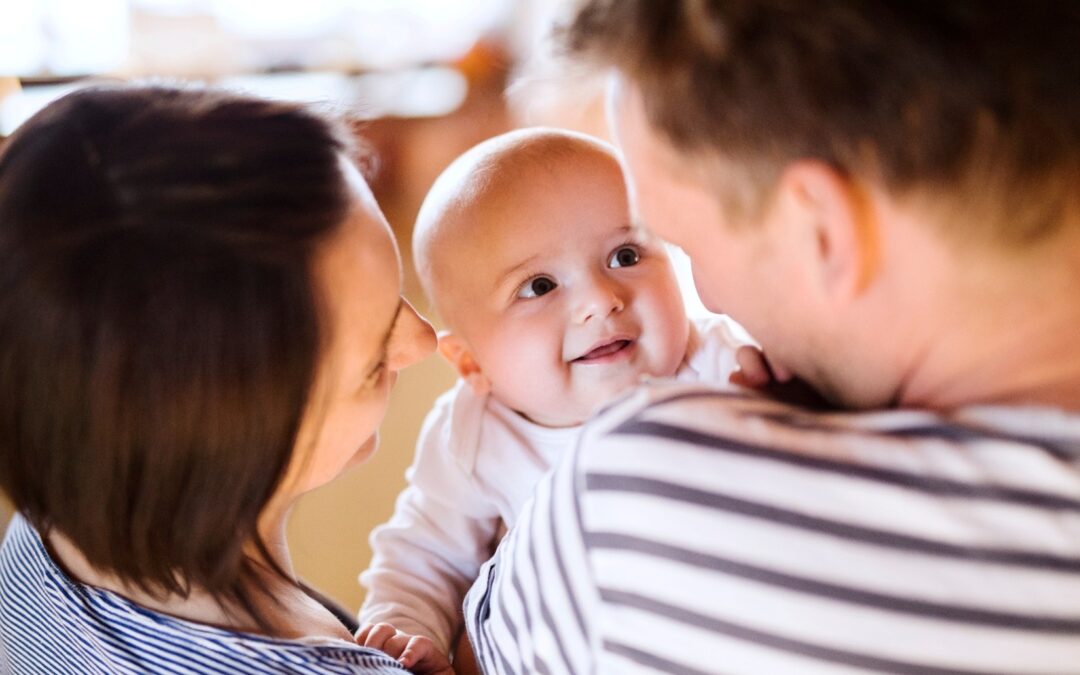
Some milestones arrive with an obvious first: the first roll, the first time sitting alone, the first step. Others show up more quietly during feeding, floor play, diaper changes, songs, and face-to-face time.
Baby milestones include movement, communication, social interaction, and early thinking. The CDC uses developmental checkpoints at 2, 4, 6, 9, and 12 months, but development does not happen in neat monthly jumps. Often, the changes are gradual.
Birth Through 3 Months: Small Changes in Alertness and Response
During the newborn stage, much of your baby’s movement is reflexive. Head control is limited, and early responses often center on sound, touch, comfort, and close faces.
Around 1 month, you may notice longer periods of alertness. Your baby may spend more time looking at your face, reacting to your voice, or moving their arms and legs.
By about 2 months, common milestones include:
- Looking at your face
- Smiling when you talk or smile
- Making sounds other than crying
- Reacting to loud noises
- Watching you move
- Holding the head up briefly during tummy time
Around 3 months, head control may become steadier. Your baby may coo more often, keep their hands open more, and begin swiping or reaching toward nearby objects.
You may first notice these changes in ordinary moments: a longer look during a feeding, a smile during a diaper change, or a little more head control during floor time.
4 Through 6 Months: Interaction Becomes Easier to Notice
Around 4 months, babies often have more ways to show interest in what is around them.
They may reach toward toys, bring their hands to their mouth, hold their head more steadily, chuckle, and make sounds in response to you.
Around 5 months, grasping may become more deliberate. Some babies begin rolling or spend more time sitting with support while examining toys with their hands and mouth.
By 6 months, common milestones include:
- Reaching for a toy they want
- Rolling from tummy to back
- Pushing up with straight arms
- Leaning on the hands while sitting
- Laughing
- Taking turns making sounds
- Recognizing familiar people
Everyday Signs of Progress
You do not have to test for a milestone to notice it.
A toy that barely held your baby’s attention a few weeks ago may suddenly be something they reach for, grasp, turn over, or bring closer for a look. A smile may turn into laughter during a familiar game. Small changes like these are often how development first becomes visible.
7 Through 9 Months: Daily Routines Start Looking Different
Around 7 months, sitting may become steadier, and your baby may use both hands more confidently while playing.
At about 8 months, some babies begin experimenting with new ways to move. That may include rolling, scooting, creeping, crawling, or another form of mobility.
By 9 months, common milestones include:
- Sitting without support
- Getting into a sitting position
- Moving objects from one hand to the other
- Looking when their name is called
- Making repeated sounds such as “mamama” or “bababa”
- Looking for something that disappears from view
- Showing clear reactions when a familiar person leaves or returns
When Do Babies Start Responding to Their Name?
This often becomes more noticeable later in the first year. You may see your baby turn, look toward you, or pause when they hear their name.
As with any single milestone, it is more useful to look at the broader pattern of how your baby responds, interacts, and communicates over time.
10 Through 12 Months: More Purpose in Everyday Actions
As the first birthday approaches, many actions start to look more deliberate.
Around 10 months, you may notice more gestures, imitation, purposeful movement toward interesting objects, and more precise use of the hands.
At about 11 months, familiar words and routines may prompt clearer responses. Some babies also begin pulling up or cruising while holding furniture.
By 12 months, common milestones include:
- Waving goodbye
- Playing simple interactive games
- Understanding “no”
- Looking for hidden objects
- Putting objects into containers
- Pulling to stand
- Walking while holding furniture
- Picking up small objects between the thumb and finger
Independent walking is not required by the first birthday. Some babies begin earlier, while others take more time.
Milestones Often Appear Gradually
A milestone does not always arrive in one dramatic moment.
Reaching may begin as swiping toward an object. Sitting often starts with support and hands used for balance. Vocal interaction may grow from quiet coos into repeated sounds and back-and-forth exchanges.
Seeing development this way makes it easier to notice progress without expecting every new skill to appear all at once.
Everyday Routines Offer Plenty of Opportunities
You do not need a schedule full of milestone activities.
Supervised tummy time and floor play give babies room to move. Talking through a feeding or diaper change gives them chances to listen and respond. Songs, board books, simple games, and safe toys all add variety to the day.
The goal is not to push toward the next milestone. It is to give your baby safe, responsive experiences that match where they are now.
Everyday Development in Daycare
If your baby spends part of the week in daycare in Philadelphia, PA, responsive interaction, familiar routines, sensory experiences, and time to explore become part of the daily rhythm.
At Celebree School of Fishtown, infant care includes comforting routines, responsive communication, sensory experiences, and developmentally appropriate opportunities to move and explore.
For one baby, progress may show up as a steadier reach during floor play. For another, it may be a new sound during a song, a smile for a familiar caregiver, or greater interest in a toy they have seen many times before.
These everyday moments give babies room to grow without expecting each child to follow the same timetable.
When to Bring Up a Developmental Question
A wide range of developmental timing is expected, but questions are always worth asking.
Talk with your child’s pediatrician if your baby is not meeting expected milestones, loses a skill they previously had, or if something about their movement, communication, interaction, or overall development concerns you.
The first year is full of small changes that are easy to miss when you are waiting for the next big first. Paying attention to the everyday moments often gives you the clearest view of how your baby is growing.