
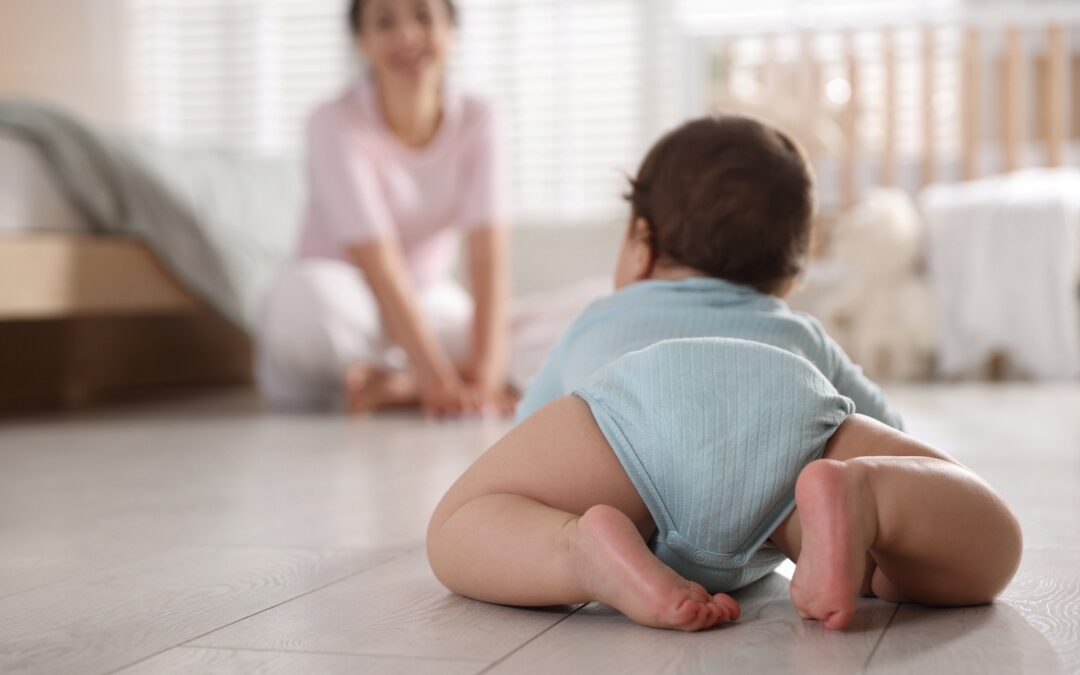
Your baby spots something interesting across the room and heads toward it. A moment later, they turn around to make sure you are still there.
That combination of curiosity and connection is common during a busy stage of infant development. If you are wondering when do babies start crawling, many babies begin traditional hands-and-knees crawling around 7 to 10 months. Some start sooner or later, and others scoot, roll, or move on their bellies instead.
Around this same period, babies may also become more aware of where their familiar caregivers are. So, it is entirely possible to have a baby who is eager to explore and equally eager to know you are close.
Crawling Gives Babies More Room to Explore
Before babies become mobile, much of their world comes to them. Adults carry them from place to place, bring toys closer, and decide where they spend time.
Crawling changes that.
Now your baby may be able to move toward the toy, follow a familiar voice, investigate a new corner of the room, or change direction because something else caught their attention.
That freedom can be exciting for both babies and parents. It can also make your baby’s behavior feel a little contradictory.
They may crawl several feet away without hesitation and then become upset when you step out of sight.
Why Does My Baby Crawl Away and Then Come Back?
Moving away from you does not mean your baby suddenly needs less closeness.
Babies can be curious about their surroundings and still rely heavily on familiar caregivers for comfort and reassurance. Once they are mobile, you may simply see both needs playing out more visibly.
Your baby may crawl toward something interesting, pause to look back, return to you briefly, then head off again. Sometimes the return is physical. Other times, a glance in your direction seems to be enough before exploration continues.
There is no need to read too much into each individual moment. It is simply part of a stage when babies are becoming more capable of moving through the world while remaining very dependent on the people who care for them.
Crawling and Clinginess Can Show Up Together
Parents sometimes expect greater mobility to bring greater independence across the board. Instead, you may notice more separation anxiety around the same time crawling develops.
Your baby might happily explore while you are sitting nearby but protest when you leave the room. Drop-off may suddenly feel harder even though your child was previously comfortable with the routine. At home, they may follow you from room to room once they have figured out how.
Those reactions can coexist with growing physical confidence.
The ability to crawl away and the desire to stay connected are not opposites. Both can be part of what is changing during this stage.
Give Your Baby Space Without Disappearing
Once mobility begins, babies benefit from safe opportunities to explore.
You can stay nearby while giving your baby room to decide where they want to move. Sit on the floor while they investigate toys. Talk to them from a short distance. Respond when they come back for interaction, then let them return to whatever had their attention.
You do not need to constantly direct the experience.
Sometimes your presence in the room is enough to give your baby the confidence to keep exploring.
New Mobility May Look Different Than You Expected
Not every baby travels on hands and knees.
Some scoot while sitting. Others pull themselves forward on their bellies, roll toward something interesting, or combine several movements.
A few babies spend relatively little time using a traditional crawl.
That variation does not change the larger experience: your baby is gaining more control over where they go and what they can explore.
Watch how movement is developing overall rather than waiting for one specific crawling style.
What If Something About Movement Concerns You?
Crawling develops across a broad range, and babies may use different forms of mobility.
If something about your baby’s movement worries you, talk with their pediatrician. You should also mention a loss of a previously learned skill or a persistent difference in how your baby uses the two sides of their body.
A pediatrician can look at your child’s development more broadly and help you decide whether anything needs closer attention.
Connection and Exploration at Celebree School of Ellicott City
At Celebree School of Ellicott City, infant teachers support both physical exploration and the consistent relationships babies rely on throughout the day.
A newly mobile baby may crawl across the room to investigate something, return to a familiar teacher for interaction, then head off again. Teachers can give children safe opportunities to move while remaining available for comfort, conversation, and connection.
They also observe changes in development and share what they notice with families.
That communication can be especially valuable during a stage when physical abilities and social-emotional responses may both seem to change quickly.
Let Exploration and Connection Grow Together
Crawling gives babies new freedom, but it does not suddenly make familiar caregivers less important.
Your baby may move farther away, come back often, and repeat that pattern throughout the day. Give them room to explore while staying responsive when they seek you out.
If you are looking for daycare in Ellicott City, MD, Celebree School of Ellicott City provides infants with opportunities for safe movement, exploration, and connection throughout the day. Schedule a visit to meet our team and learn more about infant care at Celebree.