
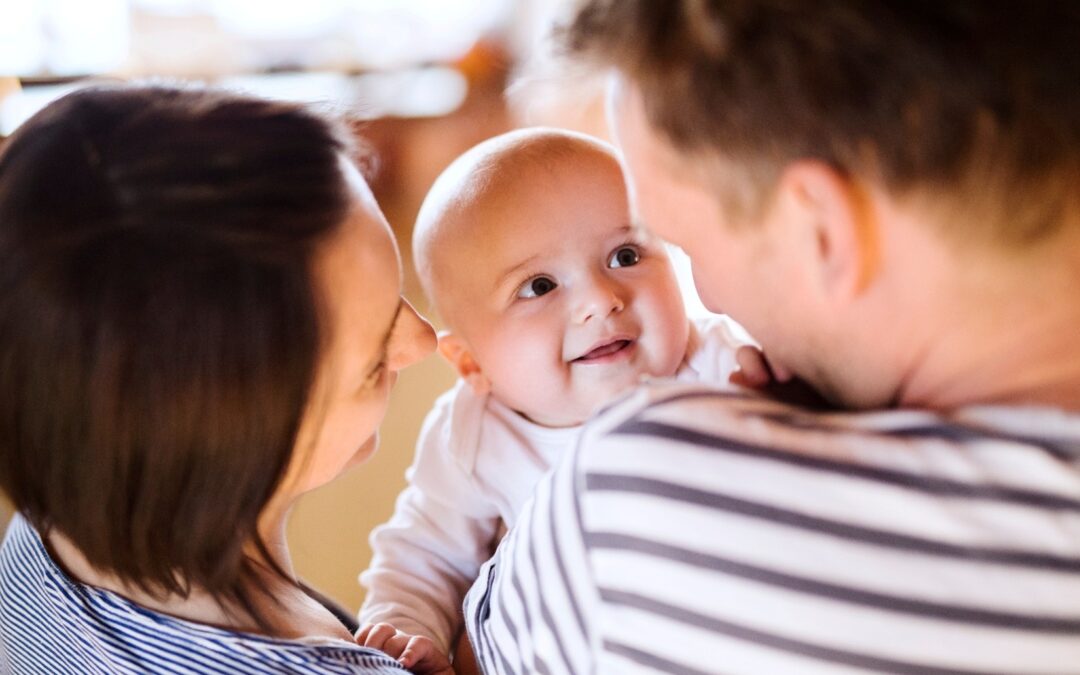
Newborn movements can look quick and unpredictable. Arms stretch out, legs kick, and the head still needs plenty of support. By the first birthday, many babies are sitting, reaching accurately, moving around the room, and pulling themselves up with much greater control.
That change happens gradually. Throughout the first year, babies become better at coordinating what they see with how they move. Each new ability also gives them more ways to play and explore.
These baby milestones are general guideposts. Development varies from child to child, and there is no single timeline every baby will follow.
Early Movement Starts With Basic Body Control
During the first few months, babies are getting used to controlling their head and body.
Around 1 month, much of their movement is still reflexive. Head and neck support remain important, and arm or leg movements may look sudden.
By about 2 months, many babies briefly hold their head up during tummy time and move both arms and legs actively.
Around 3 months, head control may become steadier. Babies may bring their hands toward their mouth, watch their own movements more closely, or begin swiping toward something nearby.
Those early changes create a foundation for the more purposeful movements that follow.
Reaching Connects What Babies See With What They Do
A toy may catch a baby’s attention before they have the control to reach it accurately.
Around 4 months, many babies begin swinging an arm toward toys and holding an object placed in their hand.
By about 5 months, reaching may look less accidental. Your baby might stretch toward something they have been watching and make several attempts to grab it.
Around 6 months, many babies reach for a toy they want.
Something as simple as reaching requires the eyes, arms, hands, and body to work together. As that coordination improves, babies gain more control over what they choose to explore.
Rolling Requires a Different Kind of Control
The middle of the first year often brings bigger changes in how babies move their whole body.
Around 4 months, many babies hold their head more steadily and push up on their elbows or forearms during tummy time.
Over the next couple of months, weight shifting may lead to rolling. By around 6 months, many babies roll from tummy to back and push up with straight arms.
Some babies roll frequently, while others seem more interested in sitting or reaching. The exact sequence and timing vary.
What rolling shows is a growing ability to shift weight and move different parts of the body together.
Sitting Adds Balance to the Picture
Sitting develops in stages rather than appearing all at once.
Around 6 months, many babies begin sitting while leaning forward on their hands for support.
During 7 and 8 months, balance often improves. Your baby may stay upright longer and start reaching toward toys without immediately tipping over.
By around 9 months, many babies sit without support and get themselves into a sitting position.
Once sitting becomes steadier, play changes too. The hands are freer to pick up toys, turn them over, and reach in different directions.
Both Sides of the Body Begin Working Together
Later in infancy, you may notice your baby using both hands in increasingly coordinated ways.
By around 9 months, many babies move an object from one hand to the other and bang two objects together.
These may look like small milestones compared with sitting or crawling, but they show growing control. Your baby has to hold an object, bring the hands together, or transfer something without losing it along the way.
This kind of coordination also becomes useful during everyday play as babies examine toys from different angles and decide what to do with them next.
Mobility Brings Several Abilities Together
During roughly 8 to 10 months, some babies begin crawling. Others scoot, creep, roll, or find another way to move across the floor.
Getting around involves more than strength. Babies also have to shift their weight, maintain balance, coordinate movement, and keep track of where they want to go.
Crawling does not happen on a set schedule, and some babies spend very little time crawling before moving toward standing.
Around 10 months, you may also notice your baby becoming more comfortable moving between positions or reaching for something from a new angle.
Near the First Birthday, Movement Becomes More Complex
During 10 and 11 months, some babies begin experimenting with pulling themselves upward or moving along furniture with support.
Their movements may still be wobbly at first. Learning how to stand also means figuring out how to shift weight and eventually get back down.
By around 12 months, many babies pull to stand and move while holding onto furniture. They may also pick up a small object using the thumb and pointer finger.
Other common milestones near the first birthday include waving goodbye, playing simple interactive games, understanding a familiar word such as “no,” and using “mama,” “dada,” or another special name meaningfully. Independent walking is not required at 12 months.
Everyday Movement Gives Babies Practice Using New Abilities
Babies get opportunities to coordinate movement during ordinary play. A toy gives them something to reach toward. Floor time creates space to roll or change positions. Sitting gives them a different way to handle objects and see what is happening nearby.
At daycare in East Louisville, KY, babies have regular opportunities to move and explore as greater control develops throughout the first year.
What that looks like changes with age. A younger infant may work on lifting their head or reaching toward a toy. Later, that same child may sit to play, move toward something interesting, or pull up to explore from a new position.
Coordination Develops Differently for Every Baby
One baby may reach accurately before sitting steadily. Another may become a confident sitter but take more time to get around. Some babies crawl for months, while others move through that stage quickly.
Those differences are one reason milestone ages work best as general reference points.
Talk with your child’s pediatrician if your baby is not meeting expected milestones, loses a skill they previously used, or if you have concerns about movement or development.
During the first year, movement becomes noticeably more controlled. Early kicks and swipes gradually give way to reaching, rolling, sitting, moving, and standing with greater purpose.