
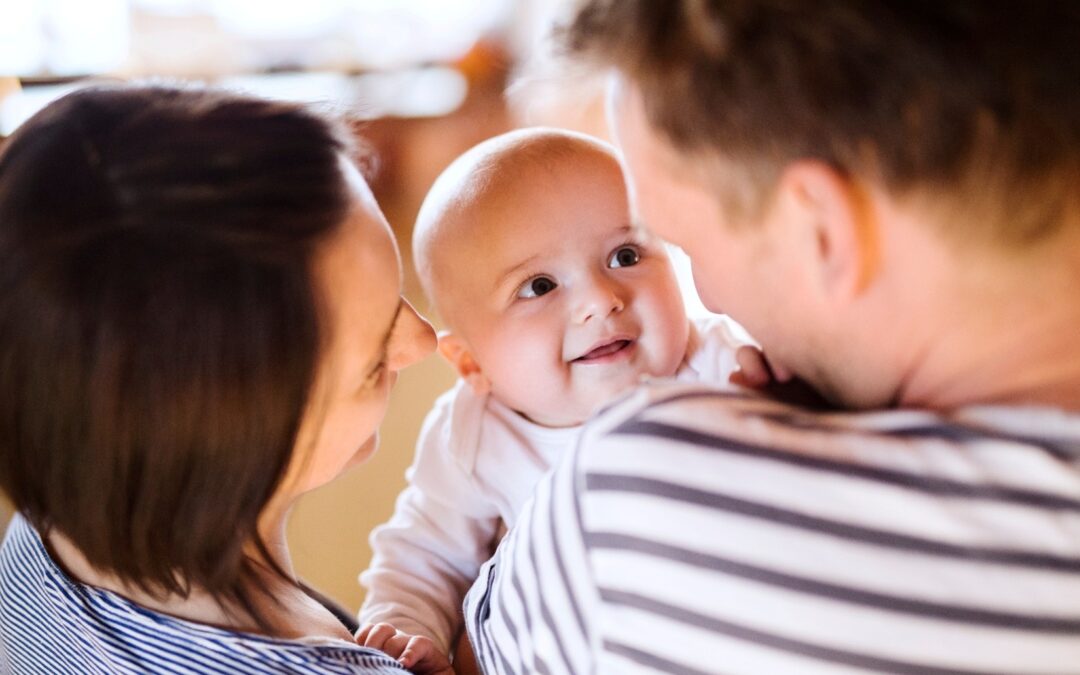
Long before babies can tell you what they want, they find other ways to show you.
A reach toward a favorite toy, raised arms when they want to be picked up, or an excited movement when someone familiar walks into the room can all start carrying more meaning as the first year goes on.
These gestures develop gradually alongside other baby milestones. Some begin as simple movements and become easier to understand over time.
Communication Starts Before Clear Gestures Appear
In the earliest months, babies communicate mostly through sounds, facial expressions, and body movement.
By around 2 months, many babies smile during interaction and make sounds besides crying.
Around 3 months, they may spend more time watching familiar faces and responding during quiet interaction.
By about 4 months, many smile to get attention and make sounds back when someone talks to them.
At this stage, communication is still mostly about reacting and responding. More intentional gestures tend to come later.
Reaching Starts to Carry More Meaning
Reaching begins as a movement skill, but over time it can also help babies show what they want.
By around 4 months, many babies swing toward toys. By 6 months, reaching for a toy they want is a common milestone.
As control improves, the message may become easier to read. Your baby might stretch toward a toy, reach toward someone familiar, or lean in the direction of something that has caught their attention.
The movement itself is physical, but it also gives babies another way to make their interests known.
By 7 or 8 Months, Preferences May Be Easier to Read
Later in infancy, babies often become more expressive about what they want.
A 7- or 8-month-old may lean toward a caregiver, turn toward something interesting, or move their body when they want an interaction to continue.
These are not official milestones tied to one exact month. They are examples of how communication may become more obvious as babies gain greater control over their movements.
Some babies are very animated. Others communicate in quieter ways.
By 9 Months, Raised Arms Can Have a Clear Message
Around 9 months, many babies lift their arms when they want to be picked up.
That simple movement carries a message most caregivers understand right away.
At this age, many babies also look when their name is called and make repeated sounds such as “mamamama” or “babababa.”
Gestures and sounds often begin working together. A baby may lift their arms while vocalizing or reach toward something while looking at the person nearby.
When Do Babies Start Waving?
Waving usually appears later in the first year.
By around 12 months, waving “bye-bye” is a common communication milestone.
Some babies experiment with waving earlier. The first attempts may look more like an arm flap or an open-and-close hand movement than a polished wave.
Over time, the gesture becomes easier to recognize and more clearly tied to a familiar routine such as saying goodbye.
What About Pointing?
Pointing may also begin to emerge later in infancy, but there is no single month when every baby should start.
Some babies use a whole-hand reach first. Others may begin extending a finger toward something that interests them.
Pointing is not one of the CDC’s current 12-month milestones, so it is better viewed as a behavior that may begin around this stage rather than a skill every baby needs to have by their first birthday.
Gestures Often Work Together With Sounds
Near the end of the first year, babies may combine movement and vocalization more often.
Your baby might reach while making a sound, lift their arms while looking directly at you, or wave as someone leaves.
By around 12 months, many babies also use “mama,” “dada,” or another special name meaningfully.
Gestures do not disappear as early words emerge. They continue to give babies another way to communicate while spoken language is still developing.
Baby Milestones From Birth to 12 Months
Here is a quick look at how communication and gestures may change during the first year:
- 1 month: Reacts to nearby voices, faces, and touch
- 2 months: Smiles during interaction and makes sounds besides crying
- 3 months: May stay engaged with familiar faces for longer periods
- 4 months: Smiles for attention and makes sounds back
- 5 months: Reaching and social responses may become more deliberate
- 6 months: Reaches for wanted toys and takes turns making sounds
- 7 months: Body movement may make preferences easier to read
- 8 months: Reaching and leaning toward people or objects may become more purposeful
- 9 months: Lifts arms to be picked up and responds to their name
- 10 months: Gestures and sounds may begin working together more often
- 11 months: Familiar gestures may become easier to recognize
- 12 months: Many babies wave goodbye and use a meaningful special name
The months between official developmental checkpoints describe common patterns rather than milestones every baby needs to meet at that exact age.
Other Skills Are Changing Too
Communication is only one part of development during the first year.
By around 6 months, many babies roll from tummy to back, reach for wanted toys, and begin supporting themselves while sitting.
By about 9 months, many sit without support and transfer objects between their hands.
Near the first birthday, many babies pull to stand, move while holding furniture, and pick up small objects using their thumb and pointer finger.
These changes give babies even more ways to act on what interests them and take part in everyday interactions.
Everyday Communication at Bel Air South-Laurel Bush
Babies communicate throughout ordinary parts of the day, even before they have words.
At daycare at Bel Air South-Laurel Bush, babies spend time with familiar caregivers who respond to the ways they communicate throughout the day.
For a younger infant, that may mean a smile, sound, or turn of the head. Later, it may be a reach, raised arms, or a wave that makes the message easier to understand.
Babies Do Not Use Gestures on One Exact Schedule
One baby may wave early but take more time to point. Another may clearly lift their arms to be picked up while showing little interest in waving for a while.
That variation is normal.
Milestones are most useful when they help you notice how your baby’s communication changes over time.
Talk with your child’s pediatrician if your baby is not meeting expected milestones, loses a skill they previously used, or if you have concerns about hearing, communication, interaction, or development.
Throughout the first year, babies find more ways to make themselves understood. What begins as a look or a small movement can gradually become a clear gesture with meaning behind it.