
“Why does my toddler say no to everything?” “Why do they get frustrated so easily?” If you have ever asked yourself these questions, you are not alone. Toddler years are full of big emotions, lots of learning, and growing independence. Many behaviors that can feel challenging are actually a normal part of development.
Toddlers are learning to do things on their own and learning how to express their feelings. Because they don’t always have the words to communicate, frustration can come out as tantrums, crying, or saying “no”. You may also notice your toddler testing boundaries and wanting to do everything by themselves. Even though these situations are frustrating, they are important for children to learn about expectations, choices, and problem solving.
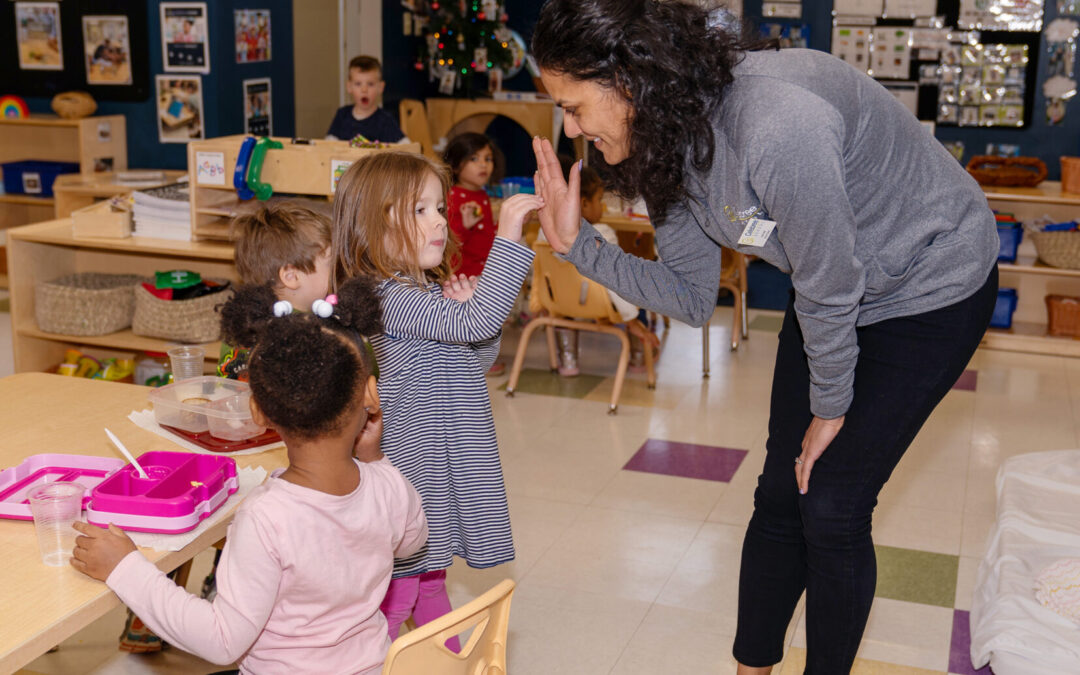
“Many toddlers are still developing communication skills and may resort to a tantrum to express their anger, frustration or need for attention; a teacher’s role is to patiently guide a child through this emotion so they can learn to express themselves constructively”
Toddlers also will struggle with sharing and taking turns. Moving from one activity to another, cleaning up toys, or giving a friend a turn with a favorite toy can lead to big emotions. These skills will take time to develop. Consistent routines, guidance, and patience all will help children learn how to navigate these situations successfully.
Many of these behaviors are developmentally appropriate for a toddler:
- Temper Tantrums and saying “No!”: Toddlers are still learning to communicate, so frustration may come out as tantrums or saying “no”.
- Refusing to Follow Directions: Testing boundaries is a normal part of developing independence.
- Trouble Taking Turns: Toddlers are beginning to learn the concept of ownership and kindness, therefore it is appropriate for a toddler to have a hard time sharing.
- Aggression: Biting, hitting, pushing, or throwing toys can happen when toddlers don’t have the words to express their feelings.
- Connection Seeking Behaviors: Whining or clinging may be a child’s way of seeking attention.
- Difficulty Transitioning: Toddlers may find it difficult to stop playing in order to move onto another activity which can lead to resistance or meltdowns.
- Staying Still: Toddlers naturally have lots of energy and may have trouble sitting stull or focusing for long periods.
- Touching Everything: Toddlers are very curious and often touch everything around them, sometimes even breaking items.
Most challenging behaviors are a normal part of development, and you shouldn’t be concerned if your toddler occasionally shows some of these behaviors.
But when should I be concerned? When does behavior need extra support?
You should be concerned if your child is consistently displaying these severe behaviors:
- Extreme Aggression: Consistent, persistent hitting, severe biting, and/or pushing that involves children or adults
- Self-Harm: Intentionally causing harm to self, for example, hitting self on head or biting self
- Destructive Tendencies: Purposefully and persistently trying to destroy toys, furniture, others artwork etc.
- Severe Tantrums: Frequent and prolonged and usually in response to a minor irritation or interruption
- Extreme Anxiety or Fear: Excessive and irrational fears that interfere with the routine of the day and may even cause the child to self-isolate and withdrawal from activities and experiences
- Heightened Impulsivity: A disregard for their own personal safety or activities that put other children in danger, such as running out of the building or into the road
- Intense Mood Swings: Severe and unpredictable shifts in moods over the course of a day seemingly unprompted
- Difficulty Completing Daily Tasks: Severe challenges with basic self-care tasks such as feeding or dressing oneself beyond what is typical for the age
- Threats: Making threats to harm self, teachers or other children
These may be a sign that extra guidance or early intervention could be beneficial.
How does Celebree support children and families?
Our teachers observe behaviors and patterns, document what happened before, during, and after an incident, and look for better ways to support the child using our proprietary positive behavior practice, “The Positive Path”. This helps us identify possible triggers, figure out what strategies are working, and respond.
We also keep families informed though open communication. When needed, teachers will complete incident reports and behavior logs to document patterns and share information with parents. These tools help us work together to create strategies at school and home.
If a child continues to need additional support, our leadership team partners work with families to develop a plan that meet the child’s individual needs. Our goal is never to punish a child, but to understand what they are communicating and teach them the skills they need to be successful.
At Celebree school, we believe that behavior is communication. Whether a child is learning to manage everyday toddler emotions, or needs additional support, we partner with families to create a safe, nurturing environment where every child can learn, grow, and thrive. Through patience, guidance and consistency, we help children build the confidence and skills they need for success.