
If you’ve found yourself searching for the hardest age to start daycare, you’re probably asking a much bigger question:
Will my child be okay?
Whether you’re preparing to return to work, moving to a new area, or simply exploring new opportunities for your child, starting daycare is a major milestone for the entire family. It’s natural to wonder how your child will handle the transition and whether there’s a “best” age to begin.
The answer may surprise you.
There isn’t one age that is universally harder than all the others.
Children start daycare successfully as infants, toddlers, preschoolers, and Pre-K students every day. Each stage brings its own opportunities and challenges, but there is no perfect age that guarantees a seamless transition.
Instead, the experience depends far more on your child’s personality, temperament, and support system than the number of candles on their birthday cake.
The Hardest Age Is Different for Every Child
Some children thrive on new experiences. Others prefer time to observe before jumping in.
You may have one child who happily waves goodbye on the first day and another who clings to your leg for a few weeks before finding their comfort zone. Both experiences are completely normal.
Children adjust to new environments in different ways because they process change differently.
Factors that often influence the transition include:
- Your child’s personality and temperament
- Previous experiences with caregivers outside the home
- Comfort with new routines
- Communication skills
- Sleep habits and daily schedules
- The consistency of the transition process
This is why two children of the exact same age can have very different experiences when starting daycare.
At Celebree School of Bel Air South-Laurel Bush, we view every transition through the lens of the individual child. Building trust and creating a sense of security come first because children learn best when they feel safe, supported, and understood. Conscious Discipline, predictable routines, and strong teacher-child relationships help create that foundation every day.
Starting Daycare as an Infant
Many parents assume infancy must be the easiest time to begin daycare.
In some ways, it can be.
Young infants are still learning about the world around them and often adapt well to consistent caregiving environments. But while the transition may appear easier from the outside, that doesn’t necessarily mean it feels easy.
For many families, the most emotional part of infant care isn’t the baby.
It’s the parent.
Leaving your child with someone else for the first time can feel overwhelming. You may wonder how they’ll nap, whether they’ll be comforted when they’re upset, or if anyone else will understand their little quirks the way you do.
The good news is that strong infant programs focus on building relationships, not simply following schedules.
At Celebree, infant classrooms support secure attachment, responsive caregiving, and early development. Teachers learn each child’s individual routines and cues, helping babies build trust and confidence as they explore their environment.
When Toddlers Discover They Have Opinions
If one age group has earned a reputation for making daycare transitions interesting, it’s toddlers.
Toddlers are developing independence at lightning speed. They know what they want. They know what they don’t want. And sometimes, what they don’t want is for you to leave.
A toddler who was perfectly happy yesterday may suddenly decide that drop-off is unacceptable.
While that can be difficult in the moment, it isn’t necessarily a sign that something is wrong.
In fact, it often reflects healthy attachment and growing emotional awareness.
Toddlers are learning that people come and go. They’re beginning to understand routines and relationships in a new way. At the same time, they are still developing the language and emotional regulation skills needed to process those feelings.
This is why consistency matters so much.
A predictable routine helps toddlers learn that school is a safe place, their teachers are trusted adults, and their parents always come back.
At Celebree, routines and rituals are intentionally built into the day because young children thrive when they know what to expect. Emotional development isn’t treated as a separate lesson. It’s woven into everything we do.
Preschoolers Often Face Different Challenges
By the preschool years, many children are less concerned about separating from their parents and more concerned about everything else.
Will I make friends?
Will I know what to do?
What if everyone else already knows each other?
For preschoolers, the biggest hurdle is often social confidence rather than separation.
Some children walk into a classroom and immediately join a game. Others prefer to watch for a few days before participating. Neither approach is better than the other.
Children build confidence at their own pace. This is where intentional play becomes incredibly valuable.
When children engage in dramatic play, block building, art, sensory exploration, and collaborative activities, they’re doing far more than staying busy. They’re learning how to communicate, solve problems, share ideas, and develop friendships. Learning happens through meaningful experiences that feel natural and enjoyable.
What About Starting at Pre-K Age?
Some parents worry they may have waited too long. The reality is that older children often bring strengths that make the transition easier.
Pre-K children typically have stronger communication skills, greater independence, and a better understanding of routines than younger children. They can ask questions, express concerns, and talk through new experiences.
That doesn’t mean they never feel nervous.
Older children may worry about fitting in, meeting expectations, or navigating a new social environment.
The difference is that they often have more tools to work through those feelings.
A high-quality Pre-K program helps children build confidence, independence, problem-solving abilities, and executive function skills while preparing them for kindergarten. The goal isn’t simply academic readiness. It’s helping children feel capable and confident in new situations.
What Makes the Biggest Difference?
After working with children across every age group, here’s what we know:
Strong Relationships
When children trust the adults caring for them, they feel more comfortable exploring, learning, and participating.
Predictable Routines
Knowing what comes next helps children feel secure and reduces anxiety around new experiences.
Consistent Communication
When families and teachers work together, children benefit from a more seamless transition between home and school.
Time
Adjustment is a process. Some children settle in after a few days. Others may need several weeks to fully find their rhythm. Both experiences are normal. The goal isn’t perfection. It’s progress.
Helping Your Child Feel Ready
While every child’s transition will look different, there are a few things families can do to help.
- Talk positively about school before the first day.
- Establish a consistent morning routine.
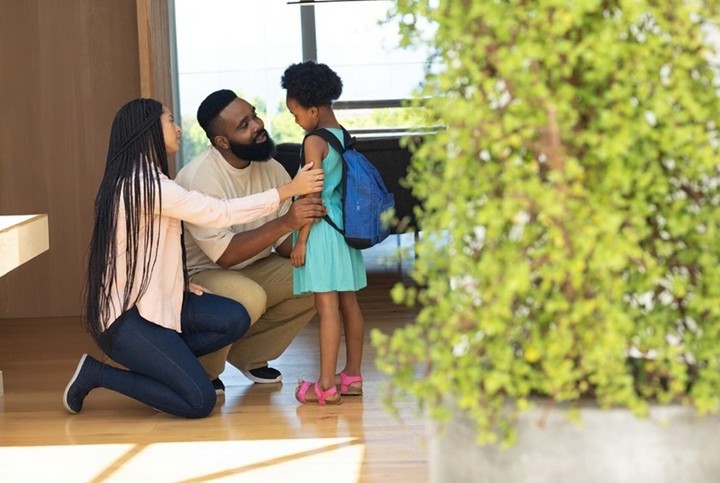
- Keep goodbyes warm, confident, and brief.
- Share important details about your child’s preferences and routines with teachers.
- Most importantly, give yourself grace.
Children often take cues from the adults around them. When you approach the transition with confidence and trust, your child is more likely to view the experience positively as well.
The Right Time Is When Your Child Has the Right Support
Parents often spend a lot of time searching for the perfect age to start daycare. The truth is that children are remarkably adaptable when they feel safe, supported, and cared for.
An infant may need nurturing relationships and consistency.
A toddler may need help navigating big feelings.
A preschooler may need encouragement as they build friendships.
A pre-K child may need reassurance while developing confidence in a new environment.
Every stage brings something different. What matters most is not finding the “right” age. It’s finding the right environment.
At Celebree School of Bel Air South-Laurel Bush, we partner with families to create a welcoming, supportive experience where children can build confidence, develop meaningful relationships, and discover a love of learning. Through intentional play-based learning, strong family partnerships, and a whole-child approach to development, we help children thrive at every stage of their journey.
If you’re exploring daycare in Bel Air, MD, we invite you to learn more about our programs and discover how we help children feel right at home from day one.