
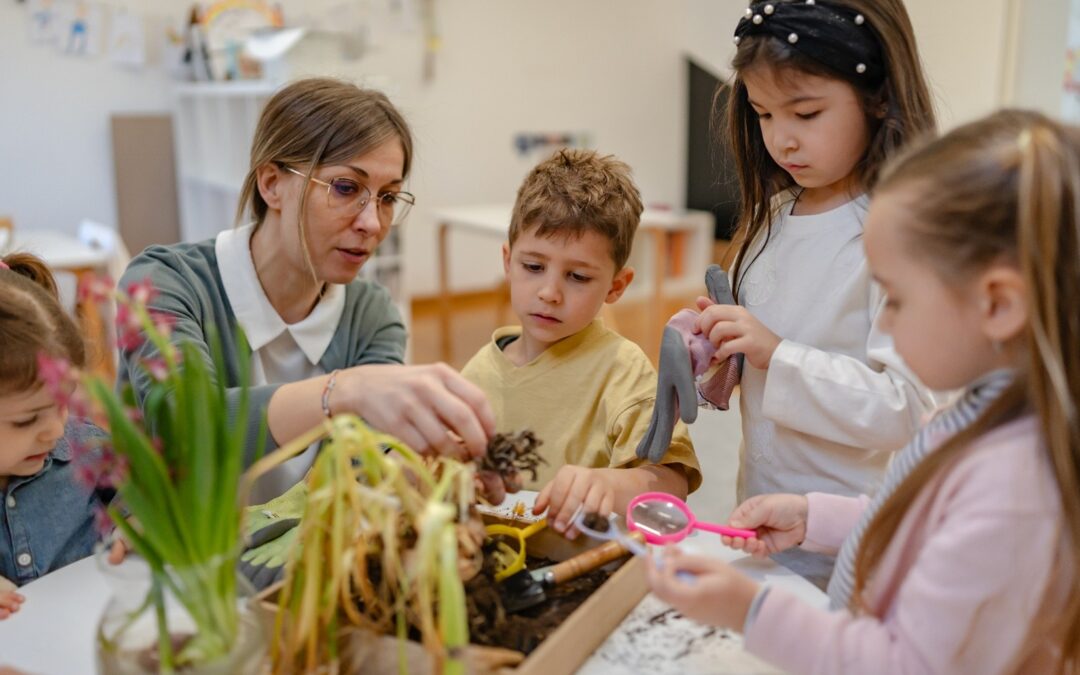
If you walked into a classroom and saw children building with blocks, pretending to cook, or playing outside, you might wonder:
When does the learning happen?
The answer is: it’s already happening.
If you’re considering child care in Bel Air, MD, understanding what “learning through play” really means can help you see the difference between busy time and meaningful learning.
Play Is How Young Children Make Sense of the World
Young children aren’t wired to sit still and absorb information. They learn by:
- Trying things out
- Repeating actions
- Asking questions
- Interacting with others
Play gives them a way to do all of that at once. It’s not separate from learning. It’s the foundation of it.
It Begins With Engagement
Before a child can learn something, they have to care about it.
That’s where interest-based learning comes in.
Teachers pay attention to what captures a child’s attention—what they’re excited about, what they come back to, what sparks questions.
From there, learning builds naturally.
How Everyday Play Turns Into Real Learning
A simple moment can carry a lot more depth than it appears.
- Pouring water between cups becomes early measurement and coordination
- Building a tower becomes a lesson in balance, structure, and persistence
- Playing with others introduces negotiation, language, and social awareness
Children aren’t just passing time. They’re building understanding through experience.
The Role of the Teacher Matters
This isn’t unstructured play without direction. Teachers are actively involved in shaping the experience. They might:
- Ask open-ended questions
- Introduce new vocabulary
- Suggest a new way to approach a challenge
- Observe how each child is progressing
At Celebree, teachers use ongoing observation to understand how each child is learning and where they can offer support. That insight helps guide the next step without interrupting the moment.
Why Children Learn More This Way
When children are engaged in what they’re doing, they:
- Stay focused longer
- Try again when something doesn’t work
- Build confidence through small successes
That kind of learning lasts.
It’s not memorized. It’s understood.
It Supports More Than Academic Skills
Play-based learning builds skills that go far beyond early academics. Children develop:
- Independence
- Communication
- Emotional awareness
- Problem-solving
These are the skills that help them succeed not just in school, but in everyday situations.
What You Might Notice at Home
Children who are learning this way often bring it with them. You might see:
- More imaginative play
- More questions about how things work
- More willingness to try things on their own
These are signs that your child is actively processing and applying what they’re learning.
What to Look for When Evaluating Child Care
If you’re exploring options for child care in Bel Air, MD, it helps to look beyond the phrase and ask:
- How do teachers interact with children during play?
- How is learning guided, not just observed?
- How do they support each child’s development individually?
The answers will show how intentional the environment really is.
Learning Through Play at Celebree in Bel Air South
At Celebree School of Bel Air South, learning through play is woven into the entire day.
Teachers observe what children are interested in and use those moments to introduce new ideas, build skills, and encourage deeper thinking. Each experience is designed to feel natural while supporting meaningful development.
It may look like play.
It’s actually how children learn best.