
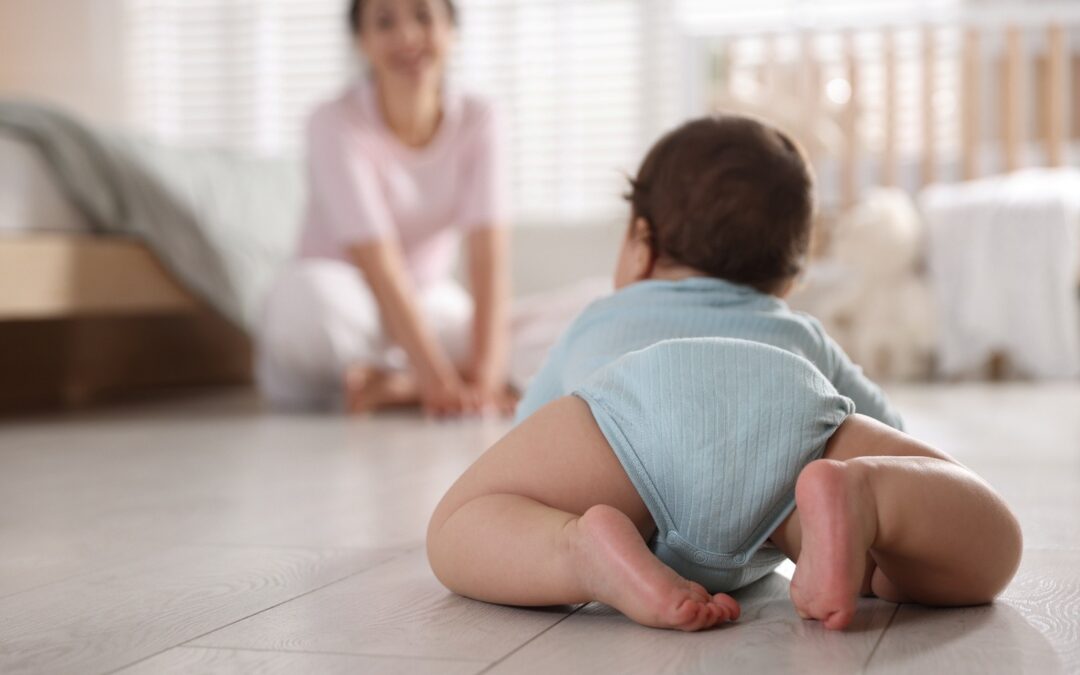
Your baby is suddenly everywhere. Across the rug. Around the coffee table. Under the chair you were sure they couldn’t reach.
Once crawling begins, parents often start thinking about what their baby needs for all this new movement. Shoes may seem like an obvious next step, but a crawling baby usually doesn’t need them simply because they’re mobile.
If you’re wondering when do babies start crawling, traditional crawling is commonly mastered between about 7 and 10 months, although babies may move in many different ways. As for footwear, the American Academy of Pediatrics says babies’ feet generally do not need to be confined in shoes during the early months. Shoes become useful for protection once children begin walking outdoors.
Crawling Doesn’t Mean It’s Time for Shoes
There’s no special pair of shoes your baby needs in order to learn to crawl.
For indoor floor play, bare feet can be perfectly appropriate when the space is comfortable and safe. If your baby needs extra warmth, socks may be enough. AAP guidance specifically notes that socks can keep babies’ feet warm before outdoor walking makes shoes necessary.
So, if your baby has just figured out how to cross the room on hands and knees, you don’t have to rush out for their first sneakers.
Crawling is about learning how to move through the environment. Shoes are mainly there to protect feet when the environment calls for them.
Bare Feet Are Fine for Indoor Floor Play
A crawling baby spends plenty of time using more than just their feet. Their hands press into the floor. Their knees may carry much of their weight. They shift, pivot, stop, sit back up, and start again.
Nothing about that process requires footwear.
You also don’t need to buy products marketed specifically as “crawling shoes” because you think your baby needs extra help learning the skill. AAP guidance does not recommend special footwear to promote crawling.
Give your baby a safe place to move instead.
CDC suggests placing toys on the floor slightly out of reach and encouraging babies to crawl, scoot, or roll toward them. Sometimes a favorite toy is all the motivation a baby needs.
What About Socks?
Socks can be useful when your baby’s feet need warmth, but they aren’t a developmental requirement either.
Whether your baby wears them during play may depend on the temperature, the flooring, and the setting.
You may also notice that babies are exceptionally skilled at removing socks the moment you put them on. That battle does not need to become part of learning to crawl.
The main goal is simple: your baby should be comfortable and have a safe opportunity to move.
When Do Babies Actually Need Shoes?
Shoes become more important once a child starts walking outside.
At that point, footwear helps protect little feet from rough surfaces, sharp objects, heat, cold, and other outdoor hazards.
AAP recommends comfortable, flexible shoes with room to grow once outdoor walking begins. Nonskid soles and closed toes are also recommended for early walkers.
That gives parents a fairly easy distinction to remember: Crawling indoors does not automatically mean shoe time. Walking outdoors is when footwear starts serving a practical purpose.
Crawling and Standing May Overlap
Part of the confusion around shoes comes from how quickly movement can change during this period.
A baby may still spend most of the day crawling but suddenly start pulling up on furniture. Soon, they may begin moving along a couch while holding on.
AAP notes that the latter part of the first year can include crawling, pulling up, standing, and early supported walking.
That doesn’t mean you need to put shoes on your baby the moment they pull themselves upright in the living room.
Indoor movement can still happen without shoes. Footwear becomes more useful when your baby starts taking those skills outside.
Make the Floor Safe Before You Worry About Footwear
Once crawling begins, your baby’s surroundings deserve more attention than their shoe collection. Mobility changes what they can reach, and it often happens faster than parents expect.
An object that seemed safely tucked away last week may suddenly be within grabbing distance. Your baby may also start heading toward doorways, furniture, cords, or anything else that looks interesting from floor level.
Take another look at the areas where your baby plays and ask a different question:
What can they reach now that they couldn’t reach before?
That simple check can be far more useful than trying to outfit a crawling baby for indoor travel.
What Should a Crawling Baby Wear at Daycare?
Individual childcare programs may have their own clothing and footwear guidelines, so it’s always worth asking your school what they recommend for infants during the day.
From a developmental standpoint, however, crawling itself does not mean a baby needs special crawling shoes.
Comfortable clothing that gives babies freedom to move is more important than dressing them for a milestone they haven’t reached yet.
If you have questions about what your infant should wear during the day, your child’s teachers can also help you understand what works well in their classroom environment.
Movement at Celebree School of Annapolis
At Celebree School of Annapolis, infant care includes individualized attention to physical development, along with opportunities to work on gross- and fine-motor skills. Teachers also document new accomplishments so families can stay connected to the changes happening throughout the day.
One baby may be rolling toward an interesting object. Another may be crawling across the classroom, while someone else is beginning to pull up and see the room from a completely different perspective.
The school’s day care program emphasizes movement, exploration, familiar routines, and ongoing communication between teachers and families.
Those everyday opportunities give babies room to practice whatever movement they are currently working on without rushing them toward the next one.
Shoes Can Wait Until They Have a Job to Do
When crawling begins, there are plenty of changes to think about. Your baby’s world is suddenly much bigger, and anything within reach may be worth investigating.
Shoes don’t need to be high on that list yet.
For indoor crawling, focus on comfort, safe floor space, and opportunities to move. When your child begins walking outdoors, shoes can step in to do what they’re meant to do: protect those busy little feet.
If you’re exploring daycare in Annapolis, MD, come see how Celebree School of Annapolis supports infants through movement, exploration, responsive care, and daily connection with families. Set up a time to visit the school and experience the infant classroom in person.