
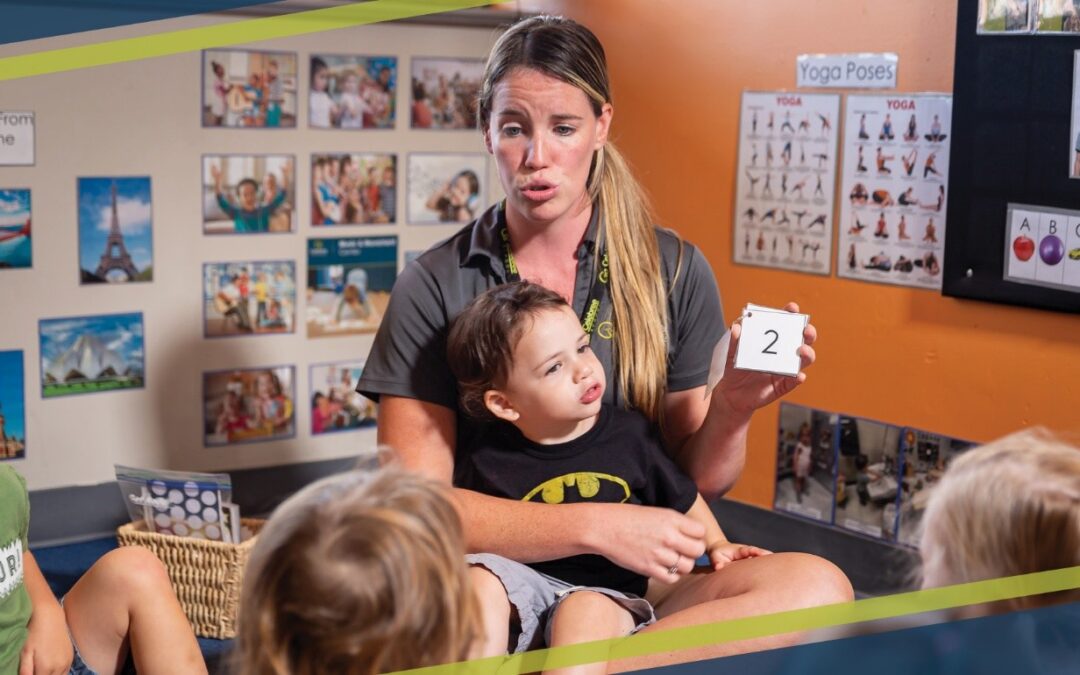
A daycare classroom can tell you a great deal before anyone begins explaining the program.
Look at where the materials are placed. Notice whether children can reach what they need, whether the room includes space for both active play and quieter moments, and whether the displays reflect what children are actually exploring.
As you consider daycare in Woodstock, MD, try to view the classroom from your child’s perspective. The strongest environments are not simply neat or attractive. They make it easier for children to participate, make choices, feel secure, and become more independent throughout the day.
Begin at the Classroom Entrance
The entrance can show you how thoughtfully the room welcomes children and families.
You may see places for coats, backpacks, lunch items, or family information. For younger children, there may be photos, names, or visual cues that help them recognize where their belongings go.
Notice whether the entry feels manageable for children. Can they participate in putting away their things, or does every step depend on an adult?
A well-organized arrival area can support a smoother start to the day. It gives children a familiar routine and helps them begin taking responsibility for simple tasks.
You may also want to look for information families can use, such as the daily schedule, classroom updates, or details about current learning.
Look at the Room From Your Child’s Height
Adults and children experience the same classroom very differently.
Crouch down or take a moment to notice what your child would see. Are shelves, books, materials, and displays placed at a height children can use? Can your child understand where activities belong?
When materials are within reach, children have more opportunities to make choices and take part in the routine. They can select a book, return a puzzle, or move toward an activity that interests them.
This does not mean children should have unrestricted access to everything. Some materials require close supervision. Still, the room should show that children are active participants rather than visitors waiting for adults to hand them each item.
Notice Whether the Classroom Offers Different Ways to Play
Young children do not all learn or participate in the same way.
One child may spend a long time building. Another may be drawn to books, pretend play, art, movement, or sensory materials. A thoughtful classroom gives children several ways to engage.
Look for areas that support experiences such as:
- Building and construction
- Books and storytelling
- Art and creative expression
- Pretend play
- Early math and problem-solving
- Science and discovery
- Music and movement
- Quiet observation
These areas do not need to be elaborate. What matters is whether children can explore materials, follow an idea, and interact with teachers and classmates.
At Celebree, classroom learning is intentional even when it looks like play. Teachers use children’s interests and developmental observations to help shape meaningful experiences.
See Whether Children Have Enough Time to Stay Engaged
A classroom may contain many activities, but children also need time to become absorbed in what they are doing.
During your visit, notice whether children appear rushed from one task to the next. Can they continue building, drawing, or pretending long enough to develop an idea?
Meaningful learning often happens after the first few minutes. A child may begin by stacking blocks, then turn the structure into a house, negotiate roles with another child, or experiment with how to make it more stable.
Ask how much time children have for self-selected play and what happens when an activity becomes especially engaging.
The schedule should have a rhythm, but it should not interrupt children so frequently that they cannot settle into exploration.
Look for a Balance of Active and Quiet Spaces
A strong classroom should offer more than one level of energy.
Children need room to move, talk, build, and collaborate. They may also need a quieter place to look at a book, work alone, or take a break from a busy group.
Notice whether the room includes a comfortable area where children can slow down without feeling separated from the classroom.
For toddlers and older children, Celebree classrooms may include a Safe Place. This is a child-led space that supports calming and self-regulation. It should never be used as punishment or treated like a time-out.
Ask how children use quieter spaces and how teachers help them return to the group when they are ready.
Pay Attention to What Is Displayed
Classroom walls can reveal whether the space belongs to the children.
Look for actual child work, photographs of classroom experiences, ongoing projects, or documentation that shows how an idea developed.
A wall filled only with identical adult-prepared crafts may look polished, but it tells you less about how children think and create.
Children’s work will not always be neat or immediately recognizable. That is often the point. A drawing, structure, or dictated story can show how a child is experimenting with ideas, language, or materials.
You may want to ask:
- How is children’s work selected for display?
- Do teachers document what children say or notice?
- Are projects connected to children’s interests?
- How are families shown what children are learning?
- Does the classroom display change as the children’s ideas change?
The answers can help you understand whether the environment reflects active learning or simply decoration.
Notice Whether the Materials Invite More Than One Answer
Some materials have one clear purpose. A puzzle, for example, may have a specific solution.
Children also benefit from open-ended materials that can be used in several ways. Blocks, fabric, loose parts, art supplies, natural materials, and pretend-play items allow children to make decisions and test ideas.
A wooden piece might become food in a pretend kitchen, a bridge in a block structure, or part of a pattern. That flexibility encourages creativity, language, planning, and problem-solving.
Look for a mix of materials. The classroom should not depend entirely on toys that light up, make sounds, or tell children what to do next.
Ask how teachers introduce materials and whether they change them based on children’s current interests.
Watch How the Classroom Supports Independence
The environment should help children do what they are ready to do for themselves.
You might see low sinks, child-sized tables, labeled shelves, accessible tissues, or visual reminders for everyday routines. These features allow children to participate in washing hands, cleaning up, choosing materials, and caring for their belongings.
Teachers should still be nearby to help. Independence does not mean expecting children to manage everything alone.
Look for a classroom where adults offer the right amount of support. A teacher may begin a task with the child, provide a reminder, or help with the difficult part before allowing the child to finish.
This kind of guidance helps children build confidence without creating unnecessary frustration.
Consider How the Room Supports Communication
A language-rich environment should give children many reasons to talk, listen, ask questions, and share ideas.
Look for books, labels, photographs, writing materials, songs, and opportunities for conversation. In a toddler room, this may include simple picture cues and teachers naming what children see or do.
In preschool, you may notice child-made books, charts, dictated stories, or writing materials woven into pretend play.
The classroom should not rely only on formal group lessons for language development. Conversation can happen while children build, eat, solve a problem, or explore outdoors.
Listen to how teachers use the environment. Do they ask open-ended questions? Do they give children time to answer? Do they introduce new words naturally?
These interactions help turn the classroom itself into a source of language and connection.
Look for Signs That the Environment Can Change
A strong classroom is not frozen in place all year.
Materials, projects, and activity areas may change as children’s interests develop. If a group becomes curious about insects, transportation, cooking, or weather, teachers may add books, tools, photographs, or new materials that allow the idea to grow.
Celebree follows an interest-based approach, which means classroom studies can develop from what children are noticing and asking about rather than following a rigid theme calendar.
Ask how often teachers adjust the environment and what helps them decide when to make a change. The answer should show that teachers are observing children, not simply rotating materials on a set schedule.
See How Outdoor Space Extends the Classroom
Outdoor time should offer more than a chance to release energy.
Children can build physical skills, notice changes in nature, test ideas, and engage in different kinds of social play outside. Look at whether the outdoor area supports climbing, running, digging, observing, creating, or quieter exploration.
Ask how often children go outside and what happens when weather changes the plan.
You may also want to know whether classroom learning sometimes continues outdoors through art, books, building, music, or science experiences.
A thoughtful program treats the outdoor environment as another place where children can learn, connect, and make choices.
Ask How the Classroom Works for Different Ages
A room that supports infants should not look or operate like a preschool classroom.
Infants need safe floor space, responsive care, soft materials, and opportunities for movement and connection. Toddlers need room to move, predictable routines, and materials they can use with growing independence.
Preschool classrooms may include more complex learning centers, collaborative projects, writing materials, and opportunities for problem-solving. Pre-K should remain distinct, with experiences that support executive function, communication, and kindergarten readiness.
Ask how the environment changes from one program to the next. The answer should reflect developmental differences rather than simply larger furniture or more advanced toys.
Picture Your Child Using the Space
Before leaving, take one more look around and imagine your child in the room.
Could they find something that captures their interest? Is there a place where they could pause if the room feels busy? Would they be able to reach materials and take part in daily routines?
Consider:
- Does the classroom invite exploration?
- Are children’s ideas visible?
- Is there room for movement and quieter concentration?
- Can children make age-appropriate choices?
- Do materials support more than one kind of learner?
- Does the space help children become more independent?
- Can you see teachers adapting the room as children grow?
The classroom should feel organized, but it should also feel lived in by children.
At Celebree School of Woodstock-Waverly Woods, classroom spaces are arranged to support exploration, relationships, independence, and developmentally appropriate learning. Families looking for daycare in Woodstock, MD, can schedule a visit to see how the environment helps children participate in the day and follow their growing curiosity.