
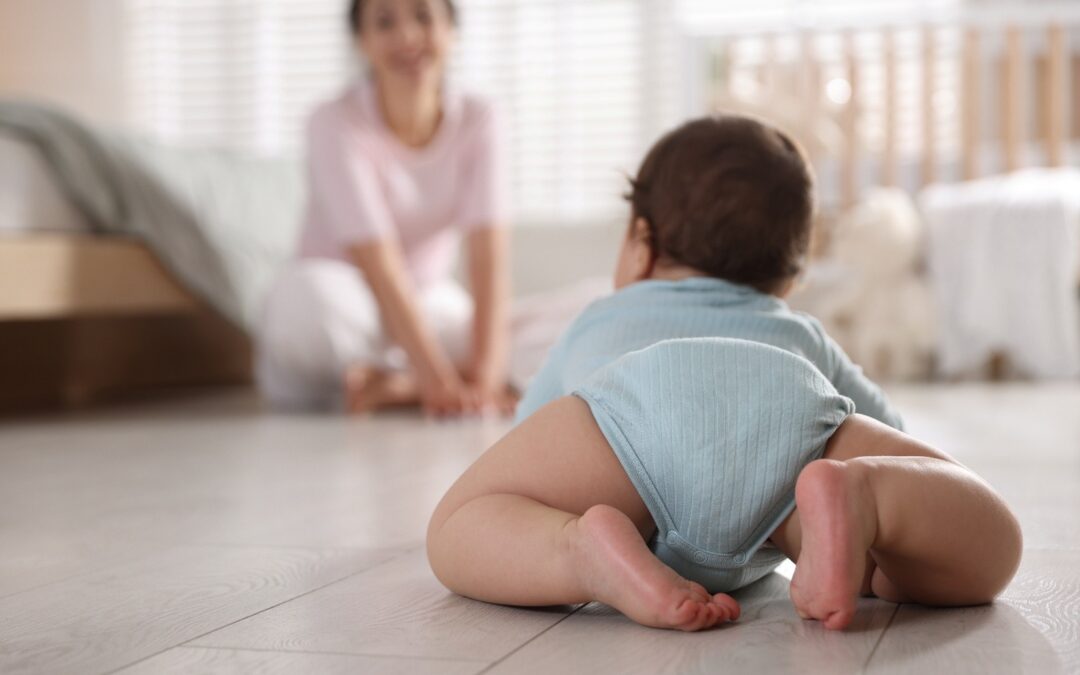
Your baby notices something interesting a few feet away and begins trying to reach it. They might push along on their belly, scoot across the floor, get onto their hands and knees, or experiment with a few different movements before getting anywhere.
If you are wondering, “When do babies start crawling?” many babies begin traditional hands-and-knees crawling between about 7 and 10 months. Some start moving independently earlier or later, and those first movements may look different from the classic crawl you pictured.
The important shift is that your baby is starting to discover how to move from one place to another without someone carrying or repositioning them.
What Does Crawling Independently Really Mean?
Parents often picture independent crawling as a baby moving confidently across the room on their hands and knees.
In the beginning, getting around can look much less coordinated.
Your baby might travel just a few inches. They may need several attempts, stop along the way, or combine rolling, scooting, and pushing to reach their destination.
The key is that your baby is initiating the movement.
They are starting to take action, adjust their position, and work out how to get closer to something that catches their attention.
Independent Movement Often Starts Small
Your baby’s first successful attempt at getting somewhere independently may be a moment you almost overlook.
A toy that was slightly out of reach might suddenly be within their grasp. They may move forward just enough to close a gap or turn their body and scoot closer to you.
As your baby develops more control, those small movements can gradually cover greater distances.
You do not have to wait for a full trip across the room to notice that independent mobility is beginning.
Crawling Can Look Different for Every Baby
Moving on hands and knees is just one way babies get around.
Some travel with their bellies against the floor. Others scoot from a seated position, roll toward something they want, or switch between different movements.
Their preferred way of moving may change as they continue exploring.
If your baby is finding a way to get from one spot to another, that progress is worth recognizing—even when it looks different from what you expected crawling to be.
Do Babies Need Help to Start Crawling?
You can encourage your baby’s movement without physically showing them each step of a crawling pattern.
Safe floor time provides space to reach, roll, turn, scoot, and attempt to move independently. Placing a favorite toy nearby can give your baby something to work toward.
There is no need to repeatedly guide their arms and legs or hurry the process. Stay close, keep the play area safe, and allow time for them to try different movements.
Sometimes, the most helpful support is simply giving your baby room to discover what works for them.
Progress May Look Different From Day to Day
A baby who moves across the play mat during one play session may prefer sitting and exploring in the next. Choosing not to repeat a movement every time does not necessarily mean they have lost the skill.
New abilities can take time to become consistent. Your baby might practice a movement to reach a favorite person or toy, then focus on something different the next time they play.
Pay attention to changes over days and weeks rather than expecting each new movement to become dependable right away.
Crawling Is Not on the 9-Month Milestone Checklist
It is understandable to have questions when your baby reaches 9 months and has not started crawling independently.
The CDC’s 9-month milestone checklist includes physical skills such as getting into a sitting position and sitting without support. Crawling itself is not included.
That does not mean crawling is unimportant. Babies vary in both the timing and the ways they begin moving around.
Share any concerns about your baby’s movement with their pediatrician. Losing a previously developed skill or consistently using one side of the body differently from the other also deserves a discussion.
Recognizing New Skills at Celebree School of Reston
At Celebree School of Reston, infant teachers watch for changes in physical development while giving babies safe opportunities to move and explore throughout the day.
A teacher might notice your baby reaching a toy without help, moving through part of the play area differently, or making more frequent attempts to get somewhere independently.
Sharing these everyday observations helps families and teachers follow development together. A new movement may first happen at home, while another small change may be noticed during the school day.
Regular communication brings those experiences together without making development a race to reach the next milestone.
Give Independent Movement Room to Grow
Early crawling attempts can be short, inconsistent, or easy to overlook.
Your baby does not need to travel a long distance or follow one particular movement pattern for their growing independence to matter. Offer safe opportunities to explore, notice how their movements develop, and give them time to practice at their own pace.
If you are looking for daycare in Reston, VA, Celebree School of Reston offers individualized infant care with opportunities for movement and exploration. Contact us to schedule a tour and learn more about our infant program in person.