
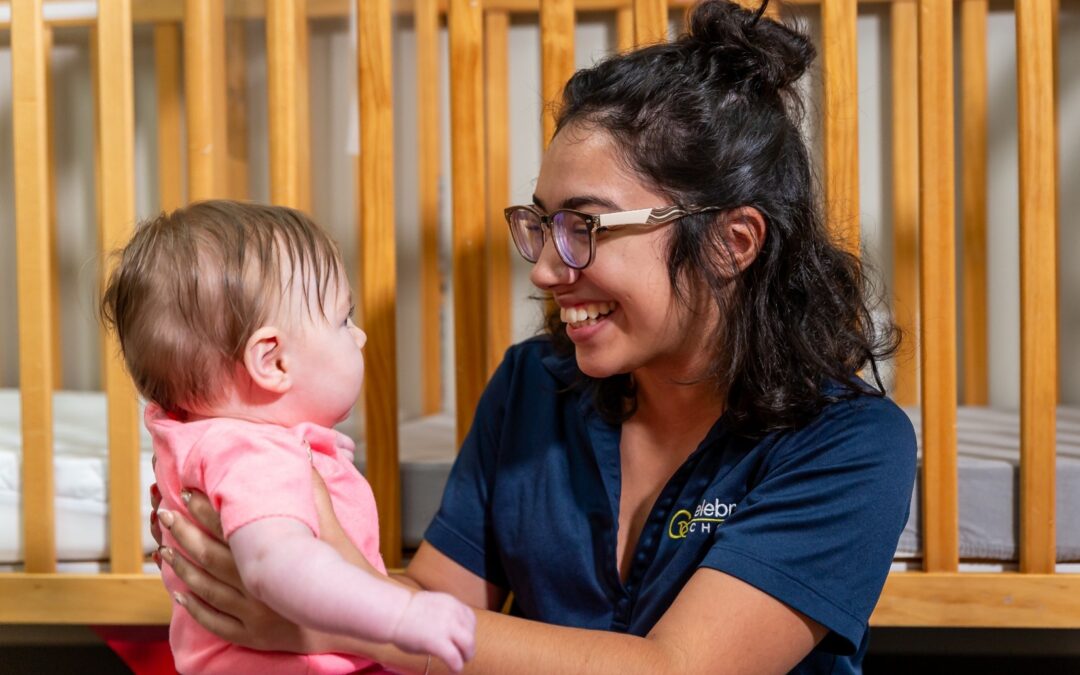
Babies can share an infant classroom without moving through the day in exactly the same way.
One may have eaten shortly before drop-off and be ready to spend some time awake. Another could arrive nearing a nap. Feeding, sleep, diapering, comfort, play, and early learning all need room within the classroom.
At Celebree School of Reston, infant daycare begins at 6 weeks and continues through 18 months. The setting is shared, but each baby brings their own routines, needs, interests, and pace.
Infant Daycare Covers a Wide Range of Needs
Celebree School of Reston has infant classrooms for babies from 6 weeks to 9 months and from 9 to 18 months.
That age span includes considerable variation in sleep, feeding, movement, communication, and how children engage with their surroundings.
A very young infant may spend more time resting and receiving close care. Later in infancy, longer alert periods often create more opportunities for play, movement, language, and exploration.
The age groups provide structure without turning age into a rigid set of expectations.
The Morning Starts With What Happened at Home
During morning check-in, families can share when their baby last ate, slept, and was changed. Those details help teachers understand where the child is in their routine when they arrive.
The school day does not automatically begin with a bottle, nap, or activity for everyone. What happens next depends in part on what the baby has already experienced that morning.
Everyday Care Takes Up a Meaningful Part of the Day
Infant daycare is not primarily a schedule of activities. Feeding, diaper changes, sleep, settling, and comfort take up a substantial amount of time.
At Celebree School of Reston, babies are held during feedings and rocked to sleep.
Those practical routines also give teachers opportunities to talk with children, respond to sounds and expressions, and learn more about how each baby communicates and settles.
Awake Time Can Take Many Forms
When infants are rested and alert, there is room for movement, language, play, and interaction.
Celebree School of Reston incorporates personal and social development, language, physical development, gross and fine motor experiences, and simple sign language into infant care.
That could mean floor movement, listening to a book or song, exploring an age-appropriate object, or spending time with a teacher.
Not every baby will be drawn to the same thing, and not every alert period needs to be busy.
What Does Individualized Infant Curriculum Look Like?
Infant curriculum is very different from a formal group lesson. Learning is woven into movement, language, play, interaction, and familiar care routines.
Teachers observe what children notice, return to, and enjoy. Those observations help inform developmentally appropriate experiences that reflect current interests and abilities.
A child who repeatedly responds to a certain song may hear it again. Another who is interested in reaching and grasping might be given appropriate opportunities to explore objects.
The classroom can support varied interests without asking every infant to complete one activity in one way.
The Mix Shifts as Babies Grow
Feeding, rest, comfort, and close care may take up more of the schedule during the earliest months. As alert periods lengthen, there is often more time for movement, interaction, books, objects, and play.
Reston’s primary-caregiver approach also gives teachers ongoing context as those needs and interests develop. Regular time together helps them become familiar with a baby’s usual patterns and notice when something begins to look different.
Growth adds new possibilities to the day without replacing the need for responsive infant care.
Families Get a Picture of Their Baby’s Own Day
Celebree School of Reston provides evening reports with information about meals, diaper changes, naps, and play. Parents can see when their baby ate and rested, as well as what happened during alert periods.
That is especially useful in an infant classroom because there is no single group schedule that tells a family what their own child experienced.
The update fills in the hours between drop-off and pickup with details specific to the baby.
What Can Parents Expect From Infant Daycare?
Infant daycare brings together feeding, sleep, diapering, comfort, movement, play, early learning, and regular family communication.
Those pieces will not appear in identical proportions for every child. Some days involve more rest or close care. Others leave longer stretches for play and exploration.
A shared classroom provides the setting, while routines, learning experiences, and daily care continue to reflect the individual baby.
Explore Infant Daycare at Celebree School of Reston
Learn more about infant daycare at Celebree School of Reston and visit the classroom to see how teachers support different feeding, sleep, play, and early learning needs within one shared infant environment.