
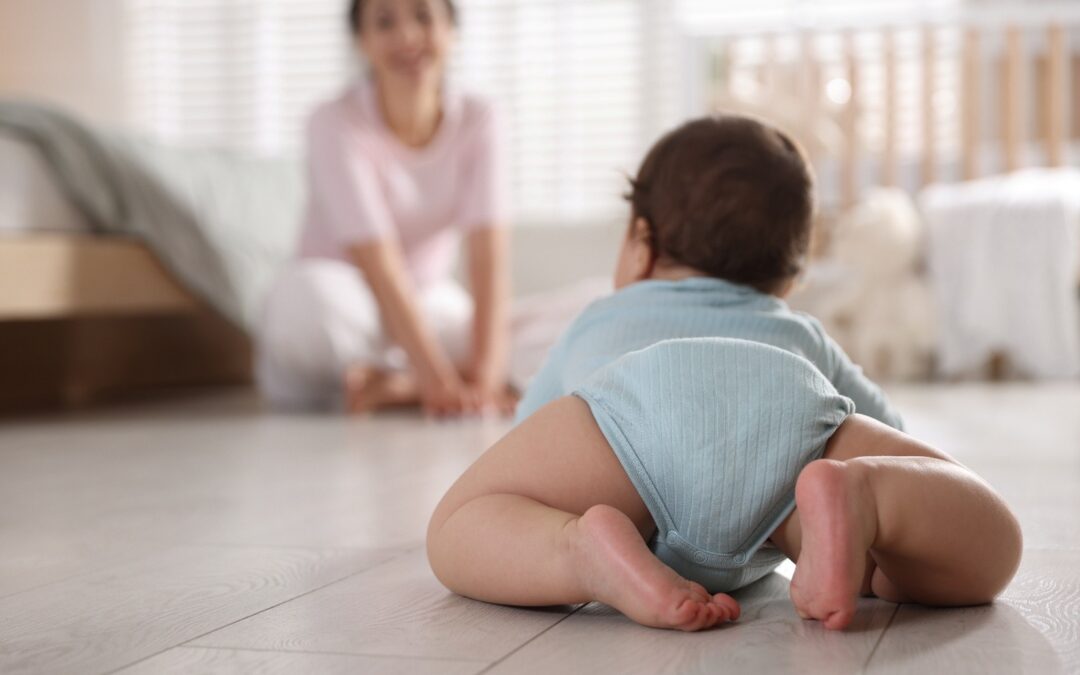
Diaper changes used to be fairly straightforward. Then your baby discovers rolling, twisting, or crawling, and suddenly staying on their back is the last thing they want to do.
If you are wondering when do babies start crawling, many babies begin traditional hands-and-knees crawling around 7 to 10 months. Others become mobile earlier or later, and crawling may look more like scooting, belly movement, or another way of getting across the floor.
However your baby gets moving, this stage can change more than playtime. Familiar parts of the day may need a few adjustments once you are caring for a baby who would much rather be on the move.
The Baby Who Stayed Put Is Now Going Places
Before mobility, you could usually count on finding your baby close to where you left them. Crawling changes that assumption quickly.
A toy across the room becomes reachable. Your baby may follow you toward the doorway or abandon one activity because something else caught their eye.
That new mobility is exciting, but it also means parents start thinking a few steps ahead. Where can the baby go from here? What is within reach? How long will they actually be interested in sitting still?
Daily routines do not need a complete overhaul. They may simply need to account for a much more active participant.
Diaper Changes Can Feel Different
A baby who has recently discovered movement may not understand why a diaper change requires them to pause.
They may roll over, reach for something nearby, or try to crawl away halfway through. Keep supplies within your own reach before you begin, and never leave your baby unattended on a changing table, bed, or other elevated surface.
You may also find that getting dressed takes a little more patience than it did a month ago.
That does not mean your routine is falling apart. Your baby has simply added a new priority: moving whenever the opportunity presents itself.
Floor Time Takes on a New Meaning
Earlier in infancy, floor time may have involved reaching, rolling, tummy time, and practicing sitting.
Once crawling begins, the available space suddenly feels much larger. Your baby may cross the mat, change direction, move between toys, or follow something that interests them. Supervised floor time gives them an opportunity to use this growing mobility without turning it into a structured crawling lesson.
A few safe objects nearby are often enough. Your baby can decide what is worth approaching and how they want to get there.
Getting Out the Door May Require More Patience
Parents already know that leaving the house with a baby rarely happens instantaneously. New mobility can add another wrinkle.
A baby who once sat fairly contentedly while you gathered a diaper bag may now be crawling toward the next interesting thing. Getting dressed, putting on a jacket, or settling into the stroller may compete with their desire to keep exploring.
Leaving a little extra room in the routine can help.
You do not need to rush every transition simply because the schedule says it is time to move on. When possible, give your baby a few minutes to finish exploring before shifting to the next part of the day.
Familiar Routines Still Have Value
Babies can become more active without needing every familiar part of the day to change.
Regular feeding, nap, and bedtime routines continue to give the day a predictable rhythm. What changes is often the time between those routines.
A baby who is crawling may want more chances to move rather than spending long periods in a seat, swing, or other contained space. Safe opportunities for floor exploration can fit naturally between meals, diaper changes, naps, and outings.
That balance lets your baby use their new mobility while preserving the routines that already work well for your family.
Crawling May Not Look the Way You Expected
Your baby’s version of mobility may not involve hands-and-knees crawling right away—or at all.
They may scoot, move on their belly, roll intentionally, or combine several approaches. The method may also change from one week to the next.
Pay attention to the broader pattern of movement rather than waiting for one exact crawling style.
If something about your baby’s development worries you, talk with their pediatrician. A loss of a previously learned skill or an ongoing difference in how the two sides of the body are used is also worth discussing.
Routines at Celebree School of Pike Creek
At Celebree School of Pike Creek, infant care includes individualized routines and regular communication between families and teachers.
Morning check-ins give parents a chance to share information about feeding, sleep, and other parts of the baby’s routine. Teachers can also share what they observed during the day, including changes in movement and physical development.
That communication becomes especially useful during a stage when abilities can change quickly. A baby who was mostly sitting during floor play one week may be traveling across the room the next.
Teachers can respond to the child who arrives each day while maintaining the familiar care routines that help families and caregivers stay connected.
Make Room for a More Mobile Routine
Crawling brings a new kind of energy to everyday life. Diaper changes may require quicker hands, playtime may cover more floor space, and getting ready to leave could include one extra trip across the room to retrieve your determined explorer.
You can keep the routines that work while making room for what your baby can do now.
If you are looking for daycare in Wilmington, DE, Celebree School of Pike Creek provides individualized infant care with opportunities for movement, exploration, and consistent daily routines. Schedule a visit to meet our team and learn more about infant care at Celebree.