
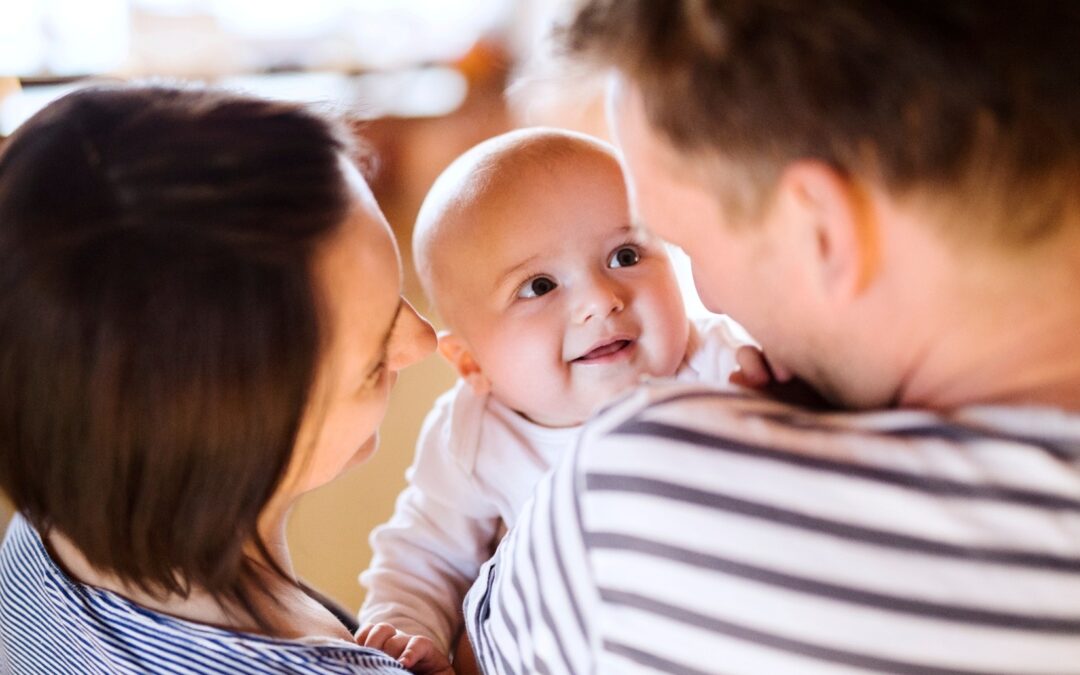
By 10 months, many babies seem much more determined about what they want to do. They may move toward a favorite toy, make their preferences easier to understand, or experiment with pulling up for a different view of the room.
Ten months is not an official developmental checkpoint with a fixed list of skills every baby should have. It falls between the 9-month and first-birthday milestones, making it a useful time to notice how earlier abilities are becoming more purposeful.
Every baby develops differently, so the ages below are general guideposts rather than deadlines.
What Does Development Often Look Like Around 10 Months?
A lot may be changing at once.
Sitting is often well established, giving babies more freedom to turn, reach, and play. Some are crawling or using another way to get around, while others are beginning to experiment with standing.
Communication can also feel easier to read. Your baby may combine a sound with a reach, lean toward someone they want, or use a familiar gesture to keep an interaction going.
The biggest change may be how intentionally babies use abilities that began developing months earlier.
The 9-Month Milestones Set the Stage
Looking back at the 9-month checkpoint helps explain what may be happening around 10 months.
By about 9 months, many babies sit without support, get into a sitting position, move objects between their hands, and look for something that falls out of sight.
They may also look when their name is called, make repeated sounds such as “mamamama” or “babababa,” and lift their arms when they want to be picked up.
Around 10 months, those abilities may feel more coordinated and consistent.
Movement May Become More Purposeful
Some babies are especially interested in getting around at this age.
A baby may crawl toward a toy, scoot across the floor, roll to a new spot, or use another method of mobility. There is no single required way to move.
Others may become more interested in pulling themselves upward or shifting between sitting, kneeling, and other positions.
What matters is the broader progression in control and mobility rather than whether your baby follows one exact sequence.
Is a 10-Month-Old Supposed to Be Standing?
Not necessarily.
Some babies begin pulling themselves up during this period, while others do so later. Pulling to stand is a common milestone by around 12 months, so a 10-month-old does not need to be standing independently.
Even babies who do pull up may still spend most of their time sitting, crawling, or playing on the floor.
The first attempts at standing can also look awkward. Babies are still learning how to shift their weight, keep their balance, and get back down safely.
Communication Becomes Easier to Read
Around 10 months, babies often have more ways to get a message across.
Babbling may be more varied. A baby might vocalize while reaching for something or make a sound to get your attention.
Movement adds meaning, too. Looking toward a person, lifting the arms, leaning, or reaching may help you understand what your baby wants before words are available.
By 11 months, some babies use familiar gestures or vocal patterns more consistently, although the timing varies.
Babies Have More Control Over What They Explore
Object play may also look different near 10 months.
A baby who once simply held a toy may now turn it over, deliberately release it, pass it between hands, or reach for it again after it falls.
Greater control gives babies more choices during play. They can decide what to pick up, what to investigate, and what to move toward next.
These small changes are easy to overlook, but they show how movement and curiosity continue working together.
What Changes Between 10 Months and the First Birthday?
The final couple of months before age 1 often bring more mobility, more precise movements, and clearer communication.
Around 11 months, some babies become increasingly comfortable changing positions or pulling upward. Gestures may also become more recognizable.
By about 12 months, many babies:
- Pull to stand
- Move while holding onto furniture
- Wave goodbye
- Play simple interactive games
- Use “mama,” “dada,” or another special name meaningfully
- Understand a familiar word such as “no”
- Pick up small objects with the thumb and pointer finger
Independent walking is not required by the first birthday. Some babies take early steps, while others continue cruising or crawling for a while longer.
What Came Before 10 Months?
The changes around 10 months are part of a year-long progression.
During the first few months, babies begin gaining head control, watching faces, and responding to sounds.
Around 4 to 6 months, reaching, rolling, laughter, vocal turn-taking, and supported sitting often become more noticeable.
During 7 to 9 months, sitting usually becomes steadier. Babies may begin experimenting with mobility, handling objects with greater control, babbling more, and responding to their name.
By 10 months, many of those earlier abilities are simply giving babies more ways to act on what interests them.
Everyday Exploration Changes as Babies Grow
Babies do not need complicated activities to use new abilities. Floor play, familiar toys, books, songs, and ordinary interactions all give them chances to move and respond in different ways.
At our Bryson daycare in Leander, TX, babies have time to explore and use new abilities as they become more active throughout the first year.
A younger infant may watch or reach for a toy. Months later, that same child may move across the floor to get it or pull up nearby to see it from a new position.
Ten Months Is One Point in a Much Bigger Year
One 10-month-old may be crawling everywhere but show little interest in standing. Another may pull up frequently while still preferring quiet floor play. Communication and object skills will vary, too.
Milestones are most useful when you look at your baby’s overall development over time.
Talk with your child’s pediatrician if your baby is not meeting expected milestones, loses a skill they previously used, or if you have concerns about movement, hearing, communication, or development.
Around 10 months, many earlier skills begin working together in new ways. Your baby has more control, more choices, and more ways to show you what has caught their attention.