
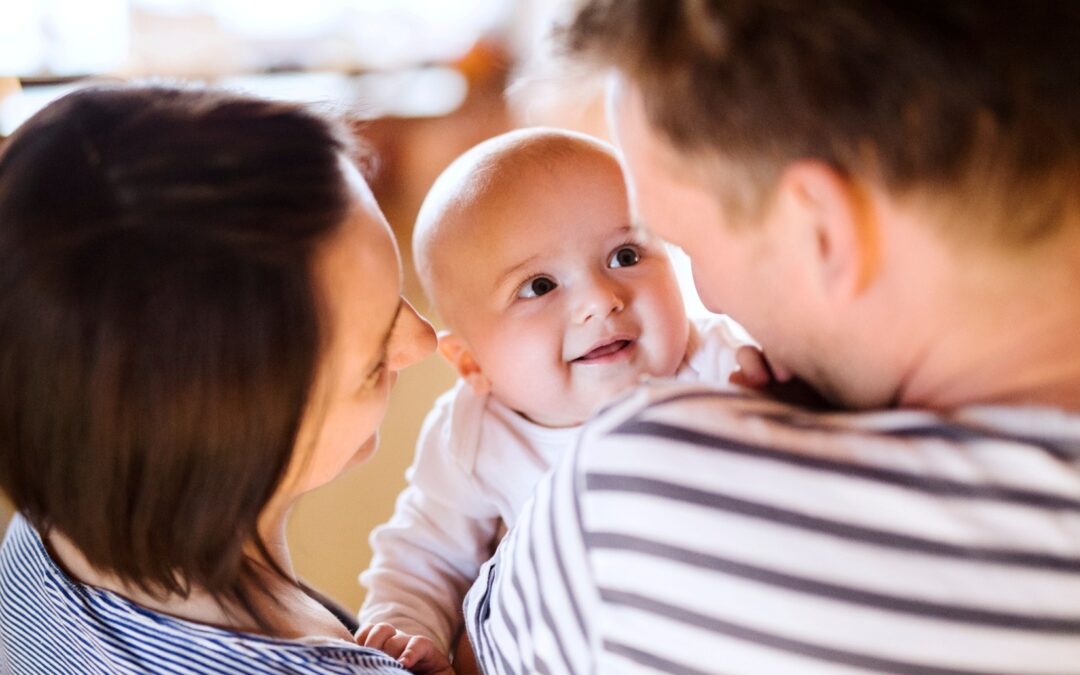
A first word tends to get a lot of attention. Long before you hear a clear “mama,” “dada,” or another recognizable word, though, your baby has already spent months learning how communication works.
They listen to your voice. They study your face. They experiment with sounds, wait for you to respond, and eventually add gestures to the conversation. At the same time, changes in movement, hand control, attention, and memory give them more ways to interact with you and the world around them.
Baby milestones develop along a range, and every child follows an individual timeline. Still, knowing what commonly emerges throughout the first year can help you notice the many smaller steps that come before those memorable first words.
Baby Milestones by Month: What You May Notice
Development does not change neatly on the first day of each new month. The following is a general guide to abilities that may begin appearing around each age. The CDC uses 2, 4, 6, 9, and 12 months as formal milestone checkpoints, while the months in between help illustrate how skills often build gradually.
Around 1 month: Your baby may briefly focus on your face, react to sounds, calm to familiar voices, and lift or turn the head for short periods while on the tummy.
Around 2 months: Many babies smile when someone talks or smiles at them, make sounds besides crying, watch people move, and hold their head up briefly during tummy time.
Around 3 months: Cooing and social interaction may become more frequent. You may notice longer periods of eye contact, more interest in voices, and early attempts to swipe or reach toward nearby objects.
Around 4 months: Babies often chuckle, make sounds back when you talk, bring their hands to their mouth, reach toward toys, and hold their head more steadily.
Around 5 months: Reaching and grasping generally become more deliberate. Babies may laugh more readily, experiment with new sounds, roll, and show growing interest in whatever is happening nearby.
Around 6 months: Many babies take turns making sounds, laugh, recognize familiar people, reach for things they want, roll, and begin sitting with support or by leaning on their hands.
Around 7 months: Babbling often becomes more varied. A baby may pass objects between hands, sit with increasing control, and show a stronger reaction to familiar voices and words.
Around 8 months: Sitting may become steadier, freeing both hands for play. Babies often explore objects in more deliberate ways, vocalize frequently, and pay closer attention when familiar people speak.
Around 9 months: Many babies look when their name is called, make repeated sounds such as “mamamama” or “babababa,” lift their arms to be picked up, sit without support, and move objects from one hand to the other.
Around 10 months: Some babies begin pulling up or moving along furniture. Gestures such as reaching or an emerging wave may join babbling as another way to communicate what they want or notice.
Around 11 months: Your baby may imitate more sounds and actions, use gestures more purposefully, pick up smaller objects with greater precision, and show clearer understanding of familiar words and routines.
Around 12 months: Many babies wave goodbye, understand “no,” use “mama,” “dada,” or another special name meaningfully, play simple games, put objects into containers, pull to stand, and move while holding furniture.
Independent walking is not required by the first birthday. These ages are guideposts rather than deadlines. A skill may appear earlier, later, or gradually over several months.
Communication Begins Before Cooing
Newborns do not have words, but communication is already part of their day.
Crying brings a response. Your voice may calm them. During quiet awake periods, they may study your face or become still when you speak.
As the first couple of months pass, those exchanges often become easier to recognize. Smiles appear. Sounds other than crying begin. A baby who once mostly listened starts adding something to the interaction.
When Do Babies Start Cooing?
Cooing commonly begins during the early months of infancy. These soft vowel-like sounds are among a baby’s first experiments with using their voice socially.
You may say something, hear a coo in return, and answer again. That simple back-and-forth is an early version of conversation.
There is no need to prompt a particular sound. Talking naturally, pausing, and responding to whatever your baby gives you keeps the exchange enjoyable.
Babbling Brings a Bigger Sound Repertoire
As babies gain more control over their mouths and voices, their sounds become more varied.
By the middle and later months of the first year, you may hear strings of repeated syllables such as “bababa,” “dadada,” or “mamama.”
When Do Babies Start Babbling?
Babbling often becomes noticeable around the middle of the first year and grows more complex over the months that follow.
At first, the sounds are generally vocal practice rather than actual words. A baby saying “mamamama” at 7 months, for example, may simply be experimenting with a sound rather than intentionally calling for Mom.
That distinction matters because meaningful first words develop from months of this kind of practice.
Movement Adds New Ways to Communicate
Communication is not limited to sounds.
A baby who reaches toward you is telling you something. So is a baby who turns toward an interesting object, lifts both arms to be picked up, or moves across the floor toward a favorite person.
Changes in physical development make these signals easier to use.
As babies roll, sit more steadily, grasp objects, and become mobile, they gain more control over how they participate in an interaction. Instead of waiting for you to bring a toy closer, an older baby may reach or move toward it. Once gestures appear, they have even more ways to express themselves without words.
Familiar Words Begin to Stand Out
Babies spend the first year hearing the same sounds again and again: their name, familiar people’s names, greetings, songs, and words connected to everyday routines.
Over time, some of those sounds begin to carry recognizable meaning.
When Do Babies Recognize Their Name?
A clearer response to a baby’s name often develops during later infancy. By around 9 months, many babies look when their name is called.
That does not mean they will respond every single time. A baby who is deeply interested in a toy, tired, or distracted may keep doing what they are doing.
Watching the overall pattern is more useful than repeatedly calling a baby’s name to test the response.
Gestures Help Bridge the Gap to Words
Toward the later part of the first year, communication becomes increasingly visible.
A baby may reach toward something they want, lift their arms to be held, wave, or eventually point toward something that interests them.
These gestures carry meaning even though no spoken word is involved.
Pointing is especially interesting because it allows a baby to involve another person in what they notice. Instead of simply looking at an object, they have a way to say, in effect, “Look at that.”
When Do Babies Say Their First Words?
Many parents search for the exact age when babies start talking, but first words do not arrive on one universal schedule.
Near the first birthday, some babies begin using one or more words meaningfully. For others, recognizable words emerge later.
The distinction between making a sound and using a word with meaning is important. Repeating “dada” while playing with sounds is different from consistently saying “Dada” to refer to a parent.
The months of cooing, babbling, listening, name recognition, gestures, and back-and-forth interaction all contribute to the communication skills that come before spoken language.
Talking With Your Baby Can Stay Simple
Supporting early communication does not require flash cards or constant instruction.
Talk about what your baby is already looking at. Respond when they babble. Read together. Sing familiar songs. Pause during an interaction so they have time to react.
If your baby points or reaches toward something, name it. If they make a sound, answer as though they have joined the conversation.
Those ordinary exchanges give babies opportunities to listen and practice communicating while keeping the interaction natural.
At Celebree School of Laurel, that same kind of responsive interaction is part of infant care. At daycare in Laurel, MD, familiar routines, songs, stories, sensory experiences, and face-to-face moments give babies regular opportunities to listen, make sounds, use gestures, and connect with their caregivers.
When to Talk With Your Pediatrician
There is a broad range of typical development during the first year. Still, bring questions to your child’s pediatrician if your baby is not meeting expected milestones, loses a skill they previously had, or something about their hearing, movement, communication, or interaction concerns you.
A first word may seem to appear suddenly. In reality, it has a long history behind it. The coos, babbles, looks, reaches, gestures, and responses you notice throughout the first year are all meaningful parts of the conversation that comes before words.