
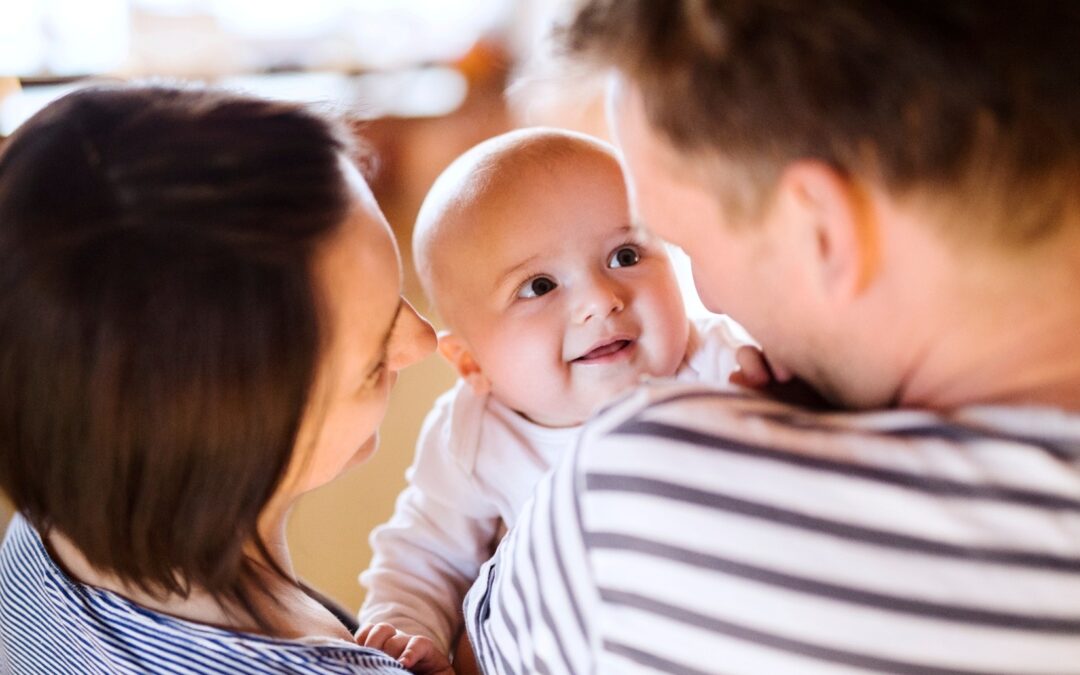
A baby’s first year comes with a lot of age labels. There are 2-month milestones, 4-month milestones, 6-month milestones, and plenty more in between. Those checkpoints can be helpful, but real development rarely follows a perfectly tidy calendar.
Baby milestones are best used as guideposts. They can help you notice how your child is growing across movement, communication, social interaction, and early thinking skills without turning every new ability into a deadline.
The CDC uses formal developmental milestone checkpoints at 2, 4, 6, 9, and 12 months. During the months between, you may notice new skills beginning to emerge as your baby develops at their own pace.
Birth Through 3 Months: Early Responses Begin to Grow
In the newborn stage, much of your baby’s movement is reflexive. Head control is limited, and many of their early responses center on sound, touch, feeding, comfort, and close interaction.
Around 1 month, you may notice longer periods of alertness. Your baby may spend more time looking at faces, reacting to familiar voices, and moving their arms and legs with greater energy.
By about 2 months, common milestones include:
- Looking at your face
- Smiling when you talk or smile
- Making sounds other than crying
- Reacting to loud sounds
- Watching you move
- Holding the head up briefly during tummy time
Around 3 months, your baby may have stronger head control, open their hands more often, begin swiping or reaching toward nearby objects, and become increasingly expressive with coos and smiles.
There is no need for every change to happen on an exact date. What matters more is the broader pattern of development over time.
4 Through 6 Months: More Ways to Explore
During the middle of the first year, babies often become much more active participants in what is happening around them.
At 4 months, you may notice steadier head control, hands moving toward the mouth, more deliberate reaching, and stronger pushing during tummy time. Many babies also become more vocal and social, with chuckles, coos, and sounds made in response to you.
Around 5 months, reaching and grasping may become more purposeful. Some babies begin rolling during this period, while others may spend more time building the strength and coordination involved.
By 6 months, common milestones include:
- Reaching for a toy they want
- Rolling from tummy to back
- Pushing up with straight arms
- Leaning on the hands for support while sitting
- Laughing
- Taking turns making sounds
- Recognizing familiar people
One baby may focus more on movement while another seems especially social or vocal. Development does not always move forward in the same order from one child to the next.
7 Through 9 Months: New Skills May Arrive in Different Orders
By the second half of the first year, babies often become more interested in getting to the people and objects that catch their attention.
Around 7 months, your baby may sit more steadily, transfer objects from one hand to the other, and explore toys with greater purpose.
At about 8 months, you may begin to see more mobility. Some babies roll across the floor, scoot, creep on their stomach, rock on hands and knees, or begin crawling. Others take longer to become interested in moving from place to place.
By 9 months, common milestones include:
- Sitting without support
- Getting into a sitting position
- Moving objects from one hand to the other
- Looking when you call their name
- Making repeated sounds such as “mamama” or “bababa”
- Looking for an object that disappears from view
- Showing clear reactions when you leave or return
A baby who does not crawl in the same way as another child is not automatically behind. There is more than one way to become mobile, and not every baby follows the same sequence.
10 Through 12 Months: The First Birthday Is Not a Finish Line
The months leading up to the first birthday can bring a lot of visible changes.
Around 10 months, you may notice more purposeful movement, stronger imitation, clearer gestures, and more precise use of the hands.
At about 11 months, some babies begin pulling up frequently or moving along furniture while holding on. Babbling may become more varied, and familiar words and routines may seem increasingly meaningful.
By 12 months, common milestones include:
- Waving goodbye
- Playing simple interactive games
- Understanding “no”
- Looking for hidden objects
- Putting objects into containers
- Pulling up to stand
- Walking while holding furniture
- Picking up small objects between the thumb and finger
Does My Baby Need to Walk by 12 Months?
No. Independent walking is not a requirement for the first birthday.
Some babies take their first steps before 12 months. Others walk later. Your baby may be cruising along furniture, crawling quickly, or using another form of mobility while still building the balance and coordination needed to walk independently.
The first birthday is an exciting marker, but it is not a developmental finish line.
Try Not to Compare One Milestone in Isolation
It is easy to focus on the milestone that is most visible.
A baby who walks early may take more time with another skill. Another child may be highly communicative before becoming especially mobile. One baby may spend weeks practicing a new physical ability while another seems more interested in sounds, gestures, or social interaction.
Earlier does not automatically mean more advanced overall.
Looking at your baby’s development across several areas gives you a more useful picture than comparing one skill against another child’s timeline.
You Do Not Need to Practice Every Milestone
Milestones are not assignments.
Your baby does not need a schedule built around sitting practice, crawling drills, or first-word exercises. Ordinary experiences give them plenty of opportunities to work on new abilities.
Supervised tummy time and floor play can provide room to move. A safe toy placed nearby can invite reaching or turning. Songs, books, and simple conversation add language and connection to the day.
The goal is to offer safe opportunities to explore, not to rush your baby toward the next box on a checklist.
Supporting Development in Daycare
If your baby spends part of the week in daycare in Hershey, PA, a responsive environment can provide more opportunities to move, play, interact, and practice emerging skills throughout the day.
At Celebree School of Hershey, infant care includes nurturing routines, sensory experiences, movement, and responsive interaction. Teachers can observe how babies are developing and offer age-appropriate experiences without expecting every child to reach the same milestone on the same timetable.
For a baby, meaningful development may happen during something as simple as reaching for a toy, turning toward a familiar voice, pushing up during floor play, or sharing a smile with a caregiver.
When to Ask Your Pediatrician About a Milestone
A wide range of developmental timing is expected, but questions are still worth asking.
Talk with your child’s pediatrician if your baby is not meeting expected milestones, loses a skill they previously had, or if something about their movement, communication, or overall development concerns you.
You do not need to decide on your own whether something is a delay before bringing it up.
Milestone guides can make the first year easier to understand, but they work best when they leave room for your baby to be an individual. Notice the progress, enjoy the new abilities as they appear, and remember that development is not a race to the first birthday.