

Families searching for day care in Reston, VA, often hope to find a place where their child feels safe, supported, and encouraged to explore. With several programs in the West Reston and Herndon areas, knowing what to pay attention to during a tour can make the difference between feeling overwhelmed and feeling confident.
This day care checklist in Reston, VA, offers a simple way to compare programs and understand how each center approaches learning, safety, communication, and care. Bring it along on your visits so you can ask helpful questions and notice the details that matter most for your family.
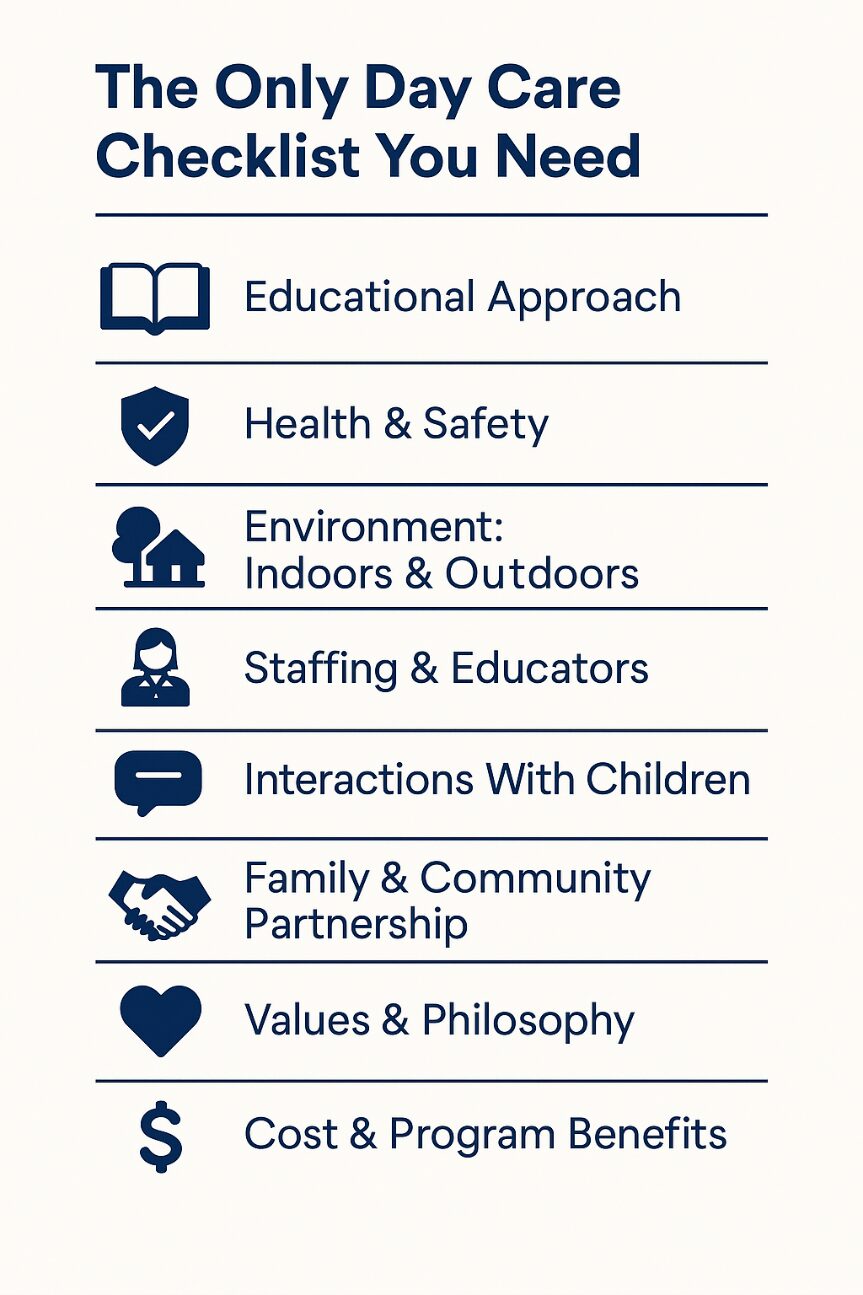
- Educational Approach
Why it matters: A strong early learning approach helps children develop confidence, curiosity, and essential skills for school readiness.
Questions to Ask
- What curriculum guides the daily routine?
- How do teachers plan lessons for different developmental stages?
- How is progress observed and shared with families?
- What programs are available as children grow?
- How does play support early literacy, math, and social-emotional learning?
What to Observe
- Defined learning areas that invite hands-on exploration
- Children engaged in meaningful classroom activities
- Teachers extending learning through thoughtful conversation
- Health & Safety
Why it matters: A secure, well-managed space gives families peace of mind and helps children feel comfortable throughout the day.
Questions to Ask
- How is building access monitored?
- What is the procedure for visitor check-in?
- How are allergies and dietary needs handled?
- What is the illness and exclusion policy?
- Who is CPR and first aid certified?
- How often are emergency drills practiced?
What to Observe
- Clean, well-organized classrooms and hallways
- A predictable, smooth check-in process
- Staff who appear prepared, attentive, and confident in their routines
- Environment: Indoors & Outdoors
Why it matters: Children learn from the environments around them—both inside the classroom and outdoors.
Questions to Ask
- Are materials easy for children to access independently?
- How often do children go outdoors?
- Is the playground shaded and age-appropriate?
- Do classroom setups encourage independence, creativity, and movement?
What to Observe
- Inviting learning centers with open-ended materials
- Cozy spaces for reading or quiet moments
- Outdoor play areas designed for exploration and activity
- Staffing & Educators
Why it matters: The adults guiding the classroom shape each child’s day through their approach, tone, and interactions.
Questions to Ask
- What is the child-to-teacher ratio?
- What training do educators receive before leading a classroom?
- Does the program support ongoing professional development?
- How does the center ensure staffing consistency?
What to Observe
- Teachers who communicate warmly at children’s eye level
- Respectful, patient interactions
- Classrooms that feel supported, calm, and well structured
- Interactions With Children
Why it matters: Meaningful, responsive relationships help children build confidence, independence, and emotional resilience.
Questions to Ask
- How do teachers build strong connections with children?
- How is independence encouraged throughout the day?
- How are conflicts handled?
- What strategies support emotional development and self-regulation?
What to Observe
- Children approaching teachers comfortably
- Encouraging language throughout the day
- Gentle, supportive guidance during difficult moments
- Family & Community Partnership
Why it matters: When educators and families stay connected, children feel more secure and supported.
Questions to Ask
- How are daily updates shared with families?
- Are parent-teacher conferences offered?
- How is developmental information communicated?
- What does the enrollment process include?
- How are families invited into the school community?
What to Observe
- Communication boards or digital tools
- Staff who take time to answer questions and welcome families
- Values & Philosophy
Why it matters: A center’s values determine how children experience learning, structure, and relationships each day.
Questions to Ask
- What philosophy guides the school’s early learning approach?
- How is inclusion represented in materials and routines?
- How does the program balance structure with child-led exploration?
- What values guide teacher-child interactions?
What to Observe
- Calm areas that support emotional regulation
- Teachers modeling patience, respect, and empathy
- Cost & Program Benefits
Why it matters: Clear, fully explained tuition and program details help families compare options confidently.
Questions to Ask
- What is the tuition for each age group?
- What does tuition include?
- Are meals, supplies, or enrichment programs part of the cost?
- Are additional fees required?
- Are sibling discounts available?
- What sets this center apart from other programs in Reston, VA?
What to Observe
- Transparency around tuition and expectations
- A level of quality that aligns with the investment
How to Use This Day Care Checklist During a Tour
- Bring it with you—printed or digital
- Ask the questions that matter most to your family
- Take a few notes after each visit to compare programs
- Observe how your child responds to the space and the staff
A day care that feels welcoming, organized, and aligned with your values is always worth deeper consideration.
A Final Word of Encouragement
Choosing day care is a meaningful milestone for your family, but having a clear checklist makes the process more reassuring and less overwhelming. As you explore programs in Herndon and West Reston, use this guide to compare each center confidently and find a nurturing place where your child can learn and grow.
Whenever you’re ready, Celebree School of Herndon-West Reston would be happy to walk through your checklist with you during a tour.