
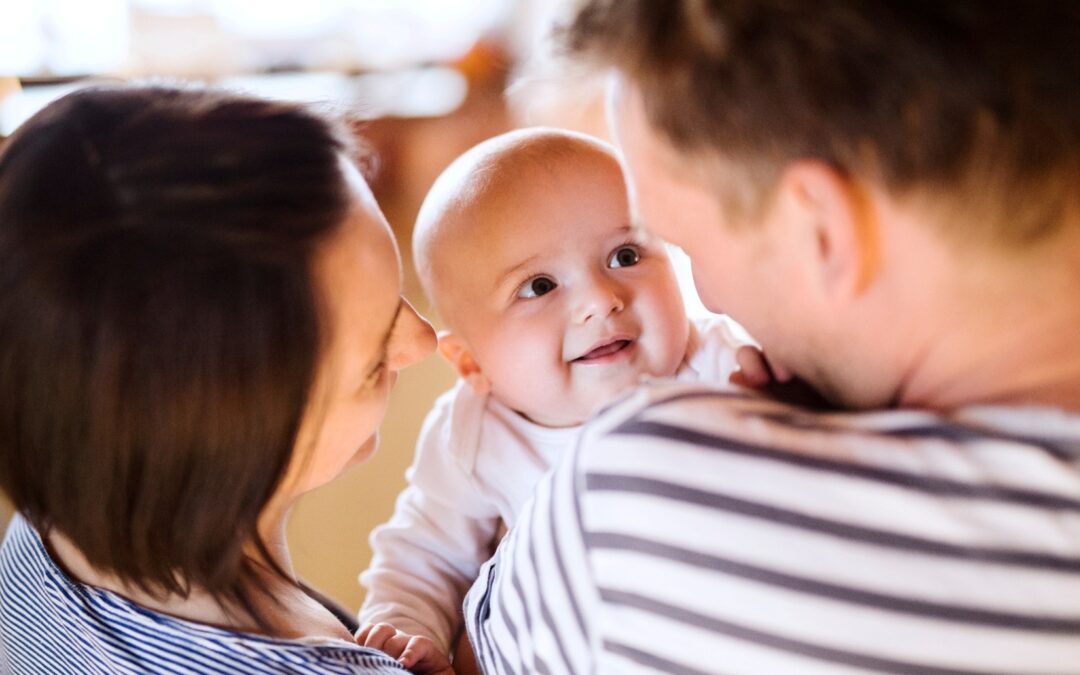
By 3 months, your baby may already seem quite different from the newborn you brought home just a few weeks ago. They may spend more time looking around, hold their head more steadily, smile more often, or make new sounds when you talk to them.
Three months is not an official developmental checkpoint with its own fixed list of milestones. It falls between the 2- and 4-month checkpoints, so it is better thought of as a transition. Skills that began appearing earlier may become easier to notice, while others are just beginning to take shape.
What Is Different Around 3 Months?
Around this age, babies are often more alert and engaged with the people and activity around them.
Your baby may spend longer looking at your face, seem more comfortable holding their head up, or respond more clearly when you speak. Their arms and hands may also start to look a little less random as they bring their hands toward their face or swipe at something nearby.
These changes do not all happen at once. One may stand out long before another.
Head Control May Feel Much Steadier
At around 2 months, many babies can briefly lift their head during tummy time.
By 3 months, you may notice that your baby can keep their head up a little longer or that it wobbles less when you hold them upright.
By about 4 months, many babies can hold their head steady without support.
The difference from one month to the next can be subtle, but it often becomes obvious when you look back over several weeks.
Faces and Nearby Objects May Hold Their Attention Longer
Young babies are interested in faces early on, but their attention may become easier to notice around 3 months.
Your baby may watch you while you talk, follow your movement with their eyes, or spend more time studying something nearby.
They may also begin looking at their own hands or showing more interest in toys within view.
There is no need for elaborate activities. A face, a familiar voice, or a simple object nearby can be plenty to capture a baby’s attention at this stage.
Smiles May Start Feeling More Social
By around 2 months, many babies begin smiling when someone talks or smiles at them.
Around 3 months, those smiles may show up more often during familiar interactions. You might smile at your baby and get a grin back, or notice that your face alone is enough to get a reaction.
By 4 months, many babies begin smiling to get attention and may use movement or sounds to keep an interaction going.
That progression can make communication feel much more two-sided than it did during the newborn weeks.
Cooing May Become Part of the Conversation
Crying is still an important way babies communicate, but it is no longer the only sound you may hear.
By around 2 months, many babies start making sounds besides crying.
At 3 months, cooing may become more noticeable, especially when your baby is comfortable and engaged with someone familiar.
By about 4 months, many babies make sounds back when someone talks to them.
These early vocal exchanges are still a long way from words, but they are an important part of learning how back-and-forth communication works.
Hands and Arms May Look More Purposeful
A newborn’s arm movements can seem quick and unpredictable.
Around 3 months, you may notice your baby bringing their hands toward their mouth more often or swiping at something nearby.
By 4 months, many babies can hold a toy placed in their hand and swing an arm toward toys that interest them. These movements are still developing, so reaching may be inaccurate at first. That is part of the process.
What Comes After 3 Months?
The next few months often bring more obvious physical and social changes.
By around 4 months, many babies have steadier head control, push up on their forearms during tummy time, bring their hands to their mouth, and respond with sounds during interaction.
Around 5 months, reaching may become more purposeful, and some babies begin experimenting with rolling.
By 6 months, many babies reach for toys they want, roll from tummy to back, laugh, and begin supporting themselves while sitting.
Later in the first year, sitting becomes steadier, mobility may begin, and communication becomes easier to read.
Baby Milestones From Birth to 12 Months
Here is a quick look at how development may change throughout the first year:
- 1 month: Movement is mostly reflexive, and nearby faces or sounds may briefly capture attention.
- 2 months: Many babies smile during interaction, make sounds besides crying, and briefly lift their head during tummy time.
- 3 months: Head control may become steadier, and babies may spend more time smiling, cooing, and watching faces.
- 4 months: Many babies hold their head steady, push up on their forearms, bring their hands to their mouth, and make sounds back.
- 5 months: Reaching may become more purposeful, and rolling attempts may begin.
- 6 months: Many babies reach for toys, roll from tummy to back, laugh, and begin supporting themselves while sitting.
- 7 months: Sitting may become steadier.
- 8 months: Babies may experiment more with changing positions and getting around.
- 9 months: Many babies sit without support, respond to their name, transfer objects between their hands, and make repeated sounds.
- 10 months: Movement and gestures may become more deliberate.
- 11 months: Some babies become more interested in pulling up or moving while supported.
- 12 months: Many babies pull to stand, move while holding furniture, wave goodbye, and use “mama,” “dada,” or another special name meaningfully.
The months between official developmental checkpoints describe common patterns rather than requirements every baby needs to meet at that exact age.
Everyday Interaction at Daycare in Frederick
A lot of early development happens during ordinary parts of the day. Looking at a familiar face, spending time on the floor, reaching toward a toy, or hearing someone respond to a coo all give babies opportunities to use their growing abilities.
At daycare in Frederick, MD, babies have time to move, look around, and respond to familiar caregivers as their early abilities begin to change.
For a 3-month-old, those changes may still seem small from day to day. Over several weeks, though, the difference can be remarkable.
Three Months Is a Transition, Not a Deadline
One 3-month-old may be especially social and full of smiles. Another may be more interested in looking around or working on holding their head steady.
Neither needs to follow an exact unofficial 3-month checklist.
Milestones are most useful when they help you notice progress over time. Talk with your child’s pediatrician if your baby is not meeting expected milestones, loses a skill they previously used, or if you have concerns about movement, hearing, communication, or development.
Three months is still early in the first year, but it is often when the newborn stage begins giving way to a baby who is more alert, more responsive, and increasingly interested in the world around them.