
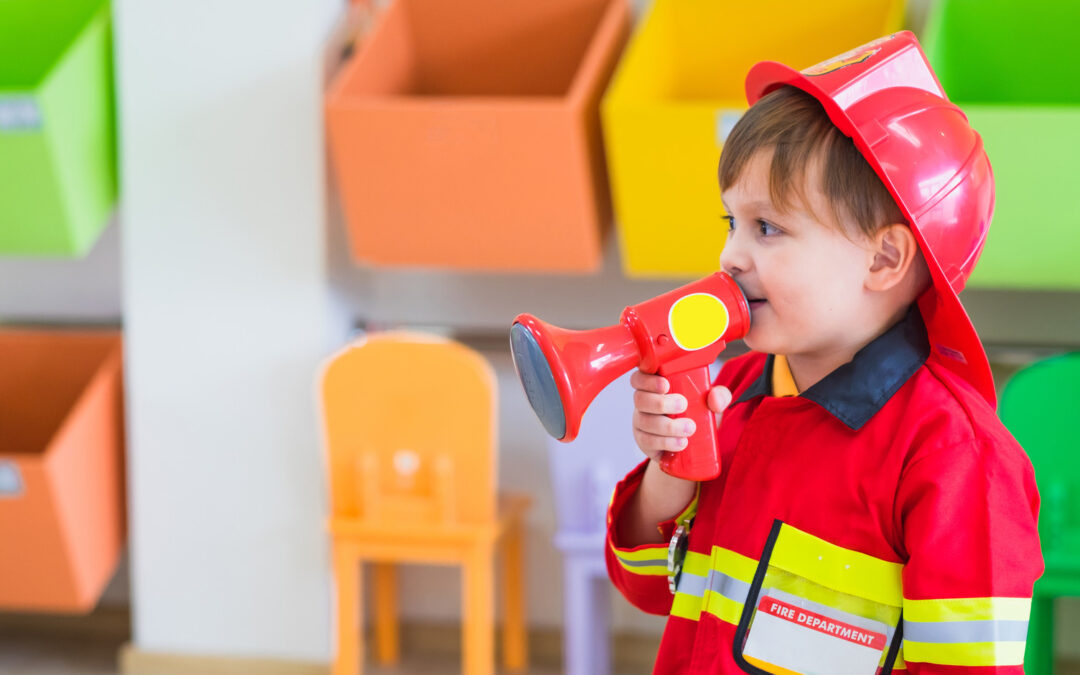
It is easy to see fire drills as a procedural inconvenience. We all remember them from childhood, almost every school in America does them every month, and they can seem like an unimportant part of the day.
But when little brains are at work, not part of the day is unimportant, and a fire drill is no exception. Let’s explore some of the ways this run of the mill exercise has an important place in young children’s development.
Adults Will Keep You Safe
In the famous words of Daniel Tiger “Take a grown-up’s hand, follow the plan, and you’ll be safe”. Teaching children that in an emergency, grown-ups have a plan, is a great regulation strategy. It allows them to calm their anxiety and know that their teachers will be able to help them stay safe. Even as toddlers they are learning to turn to their caregivers to know what to do next. For Preschool and PreK this is an exercise in self-trust as well. They know the safety plan, and they can keep themselves safe by following that plan. When we teach children to trust themselves, they grow up confident that they can address situations that can feel overwhelming.
Fire Drills are Startling
While fire drills may be scheduled ahead with teachers, students are often unaware they are going to happen, and several per year are required to be unannounced. For children who may be sensitive to loud noises, jarred by transitions, or have stranger danger, this can be stressful. However, by practicing this drill each month, we can identify the children who need extra support and teach them how to self-advocate. For example, a child with a noise sensitivity may keep headphones in a special place that they can get if the alarm goes off. As a teacher I often used the phrase that “Alarms are loud, but that’s a good thing. Alarms are there to keep us safe.” Providing context can help children who are easily startled begin to understand why something is happening and then find their brave.
Safety Comes First
There is nothing sadder than leaving the most perfect block tower behind. It is hard to stop playing when a teacher says it’s time to clean up, and for some children transitions are some of the biggest challenges of their day. But fire drills help instill the idea that safety comes first. The teachers’ job, first and foremost, is to keep you safe, and when that alarm goes off, we must go right then. This understanding can help children begin to learn concepts like “We don’t run in the street after a leaf we like” and “We stay with a grown up when we go out.” Safety comes first every time.
Fire Drills Build Confidence for Everybody!
A fire drill is just that, a drill, until it’s not. Drills are not just for the students. Teachers develop their muscle memory. They learn which students are more likely to veer off from the group, who is likely to move the slowest, and which friend will need a helping hand. Kiddos learn the skills they need to be confident in an emergency, and confidence builds life long self-esteem. When we pair drills with guided conversations about safety plans, emotions, and positive reinforcement, this run of the mill routine becomes a critical learning moment each month.