
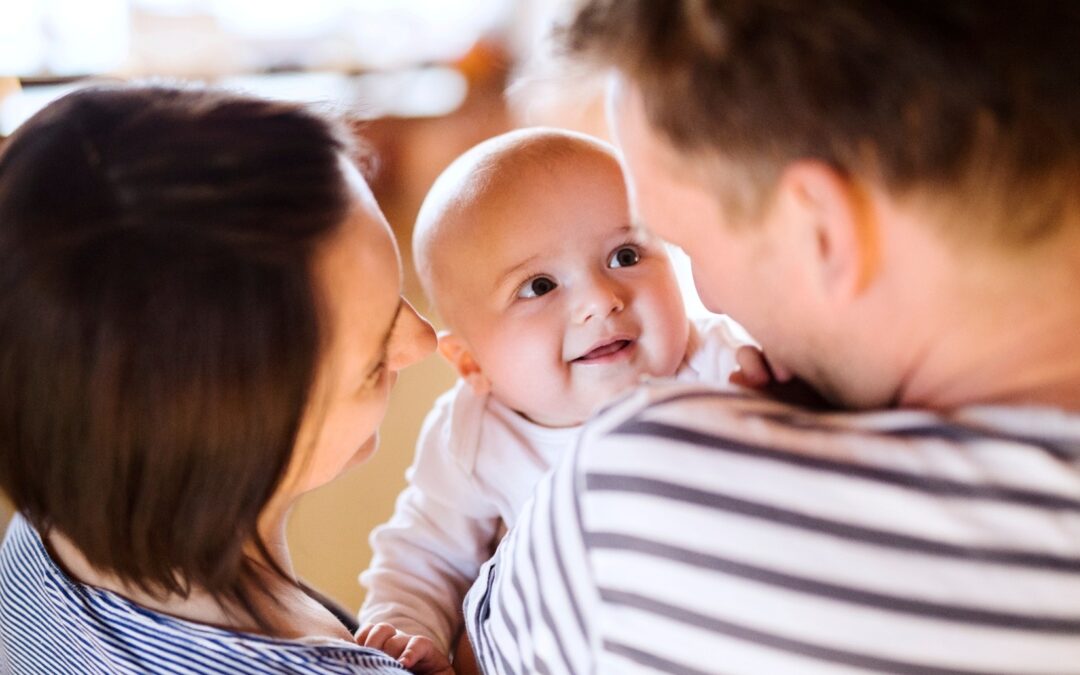
Long before your baby says a first word, they are already finding ways to communicate. A newborn may cry, settle when held, or react to a familiar voice. A few months later, smiles, sounds, reaching, facial expressions, and gestures begin adding much more to the conversation.
These baby milestones develop gradually throughout the first year. While the timing looks different for every child, watching how communication changes from month to month gives you a better sense of how babies begin making their needs, interests, and feelings known.
Communication Begins With Signals, Not Words
During the earliest weeks, communication is mostly about sounds, movement, and response.
Around 1 month, crying remains one of the clearest ways babies express a need. You may also notice changes in alertness, facial expressions, or body movement when they hear a familiar voice or are picked up.
By about 2 months, many babies smile when someone talks or smiles at them and begin making sounds other than crying.
Around 3 months, cooing often becomes more noticeable. Babies may spend longer looking at familiar faces and responding during quiet face-to-face interactions.
At this stage, communication may be simple, but it is already becoming more two-sided.
Around 4 to 6 Months, Babies Join the Conversation More
By about 4 months, many babies make sounds back when someone talks to them and begin chuckling. They may also turn toward a familiar voice.
Around 5 months, vocal play may become more varied. Babies often experiment with different sounds and use facial expressions or body movements more clearly when something interests them.
By about 6 months, many babies laugh, take turns making sounds, recognize familiar people, and reach toward things they want.
That reaching matters too. Communication does not happen only through sound. Stretching toward a toy or leaning toward a caregiver may make a baby’s intentions increasingly clear.
When Do Babies Start Babbling?
Babbling develops gradually rather than beginning on one exact day.
Early coos and vowel-like sounds usually come first. Over time, babies begin experimenting with a wider range of sounds and combinations.
During 7 and 8 months, babbling may become more frequent or varied. You may hear repeated syllables and notice your baby vocalizing directly toward you during an interaction.
By around 9 months, many babies make repeated sounds such as “mamamama” or “babababa.”
Hearing “mama” during babbling does not necessarily mean your baby is deliberately naming you yet. Repeating those syllables is an important step toward the meaningful words that develop later.
Babies Also Use Their Bodies to Get a Message Across
As babies become more mobile and coordinated, movement gives them additional ways to express themselves.
A baby may reach toward something they want, lean toward a familiar person, turn away when they have had enough, or move excitedly when they recognize a favorite activity.
By around 9 months, many babies lift their arms when they want to be picked up. They may also react when a familiar caregiver leaves, look when their name is called, and show a wider range of facial expressions.
These signals make it easier for the adults around them to understand what they are trying to communicate.
Around 9 Months, Intent Becomes Easier to Read
Communication often feels noticeably different by the second half of the first year.
At around 9 months, many babies:
- Look when their name is called
- Make several repeated sounds
- Lift their arms to be picked up
- Show different facial expressions
- React when a familiar caregiver leaves
The individual behaviors matter, but so does the larger change. Your baby is becoming more active in an interaction rather than simply responding to what someone else does.
When Do Babies Start Waving?
Gestures usually become more noticeable during later infancy, though the timing varies.
Around 10 and 11 months, babies may begin experimenting with familiar movements they have seen repeatedly. They might reach, copy a simple action, or move their hands during a familiar song or game.
By around 12 months, many babies wave goodbye.
Pointing may also begin during later infancy, although it does not appear on one exact schedule. These gestures give babies another way to share interest or make a preference known while spoken language is still emerging.
Communication Near the First Birthday Uses More Than Words
Between 10 and 12 months, babies often combine sounds, facial expressions, body movements, and gestures more deliberately.
Around 10 months, a baby may vocalize while reaching toward something or make a particular sound to get your attention.
By about 11 months, familiar gestures and vocal patterns may become more consistent.
Around 12 months, many babies:
- Wave goodbye
- Play simple interactive games such as pat-a-cake
- Use “mama,” “dada,” or another special name meaningfully
- Understand a familiar word such as “no”
- Pull to stand
- Move while holding onto furniture
- Pick up small objects with the thumb and pointer finger
Those physical and social milestones matter too. First-year development happens across many areas at the same time.
Familiar Routines Create Natural Chances to Communicate
Some of a baby’s most meaningful exchanges happen during ordinary parts of the day.
During feeding, diaper changes, floor play, songs, stories, and familiar routines, babies hear repeated words and tones while also seeing facial expressions and gestures. Over time, they begin responding in more noticeable ways.
At daycare in Franklin, TN, responsive communication, familiar routines, and nurturing interactions give babies regular opportunities to listen, vocalize, gesture, and make their needs increasingly clear throughout the day.
A younger infant may respond with a look or smile. Months later, that same child may babble back, lift both arms to be picked up, or wave during a familiar goodbye.
Babies Find Different Ways to Make Themselves Understood
One baby may babble constantly while another relies more on facial expressions and movement. Some babies use gestures early, while others become especially expressive with sounds first.
There is no single communication style every baby follows.
Milestones are most useful as general reference points. Talk with your child’s pediatrician if your baby is not meeting expected milestones, loses a skill they previously used, or if you have concerns about hearing, communication, interaction, or development.
Before first words arrive, babies have already spent months learning how communication works. Each smile, sound, reach, and gesture adds another way to take part in the conversation.