
As we continue to grow in our community, we’re grateful for the thoughtful questions families ask during tours… some of them even inspire these posts.
Lately, we’ve had several conversations about socialization: When is the right time to start? How does our curriculum support it? Is part-time or full-time better? So, we wanted to take time to explore some of those questions this week.
When is the right time?
Is “anytime” too broad an answer?
Some children are social from the very beginning. They’re drawn to other infants, love busy toddler spaces, and welcome new classmates like old friends. For these children, school fills their cup and there’s no wrong age to begin.
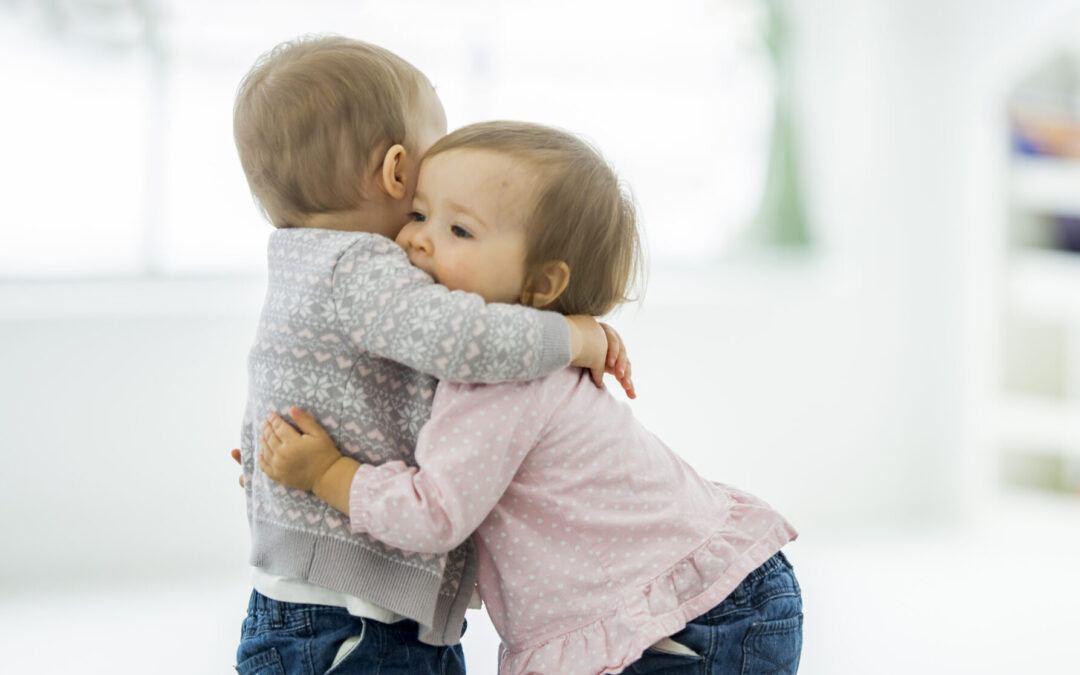
For other children who maybe are more introverted, toddlerhood is a wonderful starting point. Around eighteen months, children begin to enter parallel play. This is the phase where children are intrigued by each other but lack the vocabulary and processing skills to play together. Instead, they will play alongside each other like building block towers side by side or stirring separate pots of pretend soup. During this stage, we gently introduce skills like sharing space, respecting bodies, and engaging with friends. These skills develop into cooperation and teamwork before we know it.
A safe, consistent space with familiar teachers and classmates allows those skills to grow and shine.
How do we help those skills grow?
At Celebree, we believe social skills are one of the most important skills we teach. While math and literacy can sometimes be thrust into the spotlight, it’s social skills that stay with us for our lives.
Learning to listen to others, collaborate, and regulate our emotions is critical to success in school and beyond.
Our social-emotional curriculum begins with connection. As a school, we do morning announcements each day, a chance for children to hear from the office firsthand what is going on in their school today. Our classes then move into their morning meeting. For the older children, this involves connection activities like open discussions about their current study and greeting each of their friends. For our younger classes, this is practicing their friends’ names and learning how to appropriately greet their classmates.
Daily lessons intentionally build skills such as taking turns, cheering on our friends, and teamwork. We also practice phrases that are the building blocks of social development like “Can I play?,” “Help me!,” or “Excuse me!”
Part-Time or Full-Time
When choosing between part-time and full-time care, two factors matter most: temperament and goals.
You know your child best. Children who thrive on routine often transition more smoothly with consistent weekly schedules, even if their days are shorter. The same daily routine provides comfort, as opposed to the uncertainty of whether it’s a school day. Others, especially those more “go with the flow”, may flourish in part-time care.
Your goals for your child are also an important factor. The more days a child attends, the more learning experiences, creative projects, and social practice they receive. Time in the classroom is time spent learning, and only your family can decide what balance feels right.
Skills for Life
Ninety percent of a child’s brain is formed before the age of five. The skills we learn now shape lifelong patterns.
Socialization isn’t just about “please” and “thank you.” It’s about learning how to process disappointment when it is not your turn or how to express excitement in a way that keeps everyone’s bodies safe. It’s learning how to ask a friend, “Can I play with you?” and how to move from screaming “You are stepping on my foot.” to “Thank you for moving; now we can play together.”
Celebree of Franklin Cool Springs strives to help each child fill their toolbox with socialization skills, whether they are only with us a few days a week or every day!