
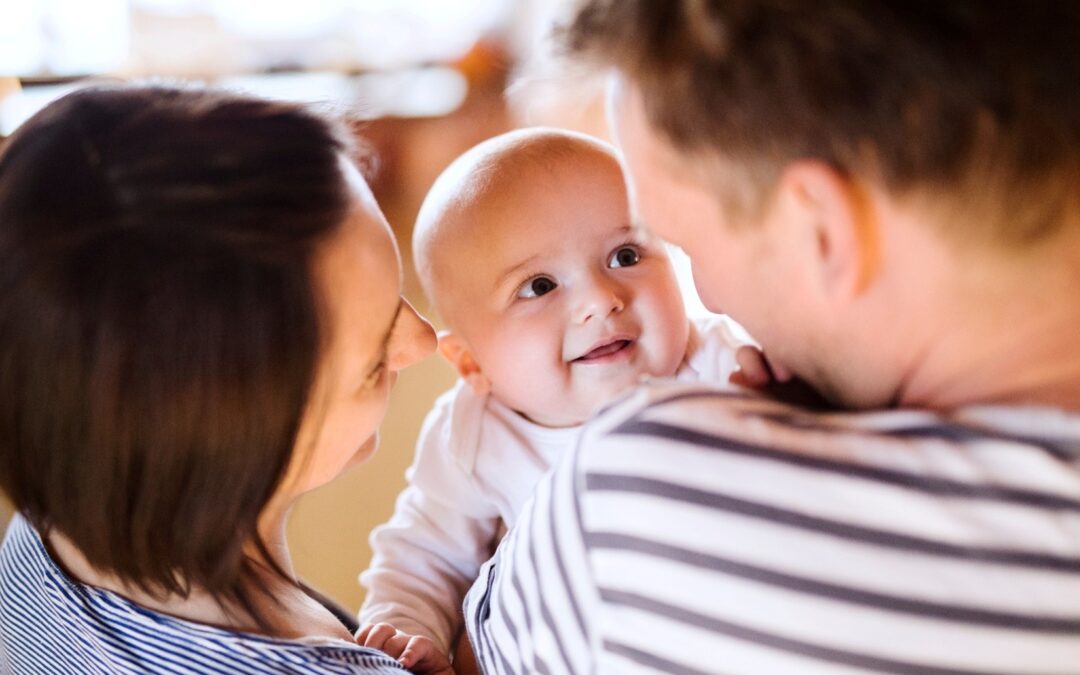
Nine months can feel like a turning point in your baby’s first year. The baby who once spent most of the day watching the world may now be sitting up, reaching for what they want, babbling across the room, looking when you call their name, and finding new ways to get closer to whatever has caught their attention.
Those changes have been building for months. Baby milestones develop gradually, and every child follows an individual timeline. Still, the 9-month stage is a useful checkpoint for seeing how movement, communication, play, and social interaction are beginning to come together.
What Are Common 9-Month-Old Milestones?
By around 9 months, many babies are taking a much more active role in what happens around them.
You may notice your baby:
- Sits without support
- Gets into a sitting position
- Moves objects from one hand to the other
- Bangs two objects together
- Looks when their name is called
- Makes repeated sounds such as “mamamama” or “babababa”
- Lifts their arms to be picked up
- Looks for an object that drops out of sight
- Smiles or laughs during familiar games such as peekaboo
Not every baby will show every skill at exactly the same time. Milestones are useful developmental guideposts, not deadlines.
What Happens Before 9 Months?
The changes you see around 9 months build on skills that started much earlier.
At around 2 months, many babies begin smiling when someone talks or smiles at them, making sounds besides crying, watching people move, and briefly holding their head up during tummy time.
By about 4 months, head control is often steadier. Babies may bring their hands to their mouth, swing an arm toward toys, chuckle, and make sounds back during interaction.
Around 6 months, many babies reach for objects they want, roll, recognize familiar people, take turns making sounds, and begin sitting while leaning on their hands for support.
During the next couple of months, those abilities often become steadier. A baby who once needed both hands to balance while sitting may begin reaching for a toy without tipping over. Babbling becomes more varied, and some babies start rolling, scooting, creeping, or otherwise finding ways to move toward something interesting.
By 9 months, much of that early practice is becoming easier to see in everyday play.
When Do Babies Sit Up?
Sitting is one of the most noticeable changes during the middle and later months of infancy.
It generally develops in stages. Babies may first sit with plenty of support, then lean onto their hands for balance. Over time, growing trunk control makes it easier to stay upright without help.
By around 9 months, many babies sit without support and are able to get themselves into a sitting position.
Sitting also changes what a baby can do while playing. With the body more stable, both hands are available for holding, transferring, banging, dropping, and examining objects.
When Do Babies Respond to Their Name?
A baby’s response to their name often becomes clearer during later infancy.
By around 9 months, many babies look toward you when you call their name. That might mean turning the head, pausing what they are doing, or shifting attention toward your voice.
It does not mean your baby will respond every single time. A baby who is tired, distracted, or deeply interested in a toy may keep doing what they are doing.
Rather than repeatedly testing for a response, notice the broader pattern over time.
Babbling Is Becoming More Varied
Nine-month-olds often have plenty to say even though they are not speaking in words yet.
Earlier coos and squeals may develop into longer strings of repeated sounds such as “mamamama,” “dadadada,” or “babababa.” Babies may also change the volume and rhythm of their voices during interaction.
When Do Babies Babble?
Babbling often begins during the middle months of the first year and becomes more varied as babies approach 9 months.
A repeated “mama” sound does not necessarily mean a baby is deliberately saying “Mama” yet. At this stage, much of babbling is experimentation with sounds and the back-and-forth rhythm of conversation.
When you answer those sounds, pause, and give your baby another chance to respond, you are participating in a simple early exchange without turning it into a lesson.
What About Crawling?
Crawling gets a lot of attention around this stage, especially when parents compare what babies in the same age range are doing.
When Do Babies Crawl?
Many babies begin crawling during the second half of the first year, but there is a wide range of typical timing. Some crawl on hands and knees. Others scoot on their bottom, creep, roll, or find another way to move around.
Crawling is not a required 9-month milestone. A baby may be sitting steadily, reaching, playing, and showing progress in many other areas without crawling yet.
What matters more is the broader pattern of movement and development over time.
Babies Are Starting to Look for What Disappears
One of the quieter changes around 9 months is a growing interest in finding things that are no longer visible.
Drop a toy beside your baby, and they may lean over to look for it. Hide an object partly under a cloth, and they may try to uncover it. Peekaboo often becomes especially entertaining because the baby is paying closer attention to where people and objects go.
These small moments reflect growing memory and curiosity. Your baby is becoming more active in figuring out what happened instead of simply waiting for something to reappear.
What Comes Next From 10 to 12 Months?
The last few months before the first birthday often bring even more movement, gestures, and purposeful play.
Around 10 months, some babies begin pulling up, changing positions more easily, and showing greater control while handling objects.
By about 11 months, cruising along furniture may appear. Babies may also imitate familiar actions, use gestures more deliberately, and pick up small objects with greater precision.
At around 12 months, many babies:
- Wave goodbye
- Play simple interactive games
- Put objects into containers
- Understand familiar words such as “no”
- Pull to stand
- Move while holding furniture
- Use “mama,” “dada,” or another special name meaningfully
Some babies are also taking independent steps by their first birthday. Others are still crawling or cruising, and independent walking is not required at 12 months.
Everyday Experiences Give Babies Ways to Use New Skills
A 9-month-old does not need complicated activities to keep learning.
Time on the floor, safe objects to handle, songs, books, face-to-face conversation, and simple games give babies opportunities to move, communicate, and explore.
At daycare in Sykesville, MD, responsive communication, comforting routines, sensory experiences, and time to explore give babies regular opportunities to use the skills that are emerging throughout the first year.
A baby may sit and investigate a toy, babble during an interaction, turn toward a familiar voice, or move toward something interesting. These ordinary moments give caregivers a chance to notice how development is changing over time.
When Development Raises Questions
There is plenty of normal variation during the first year. Some babies are eager to move, while others spend more time sitting and studying what is nearby. Some babble constantly, while others are quieter.
Talk with your child’s pediatrician if your baby is not meeting expected milestones, loses a skill they previously had, or if something about their hearing, movement, communication, or interaction concerns you.
Around 9 months, many of the first year’s earlier changes become easier to recognize. Your baby has more ways to sit, reach, search, respond, communicate, and explore, and those growing abilities make everyday life much more interactive.