

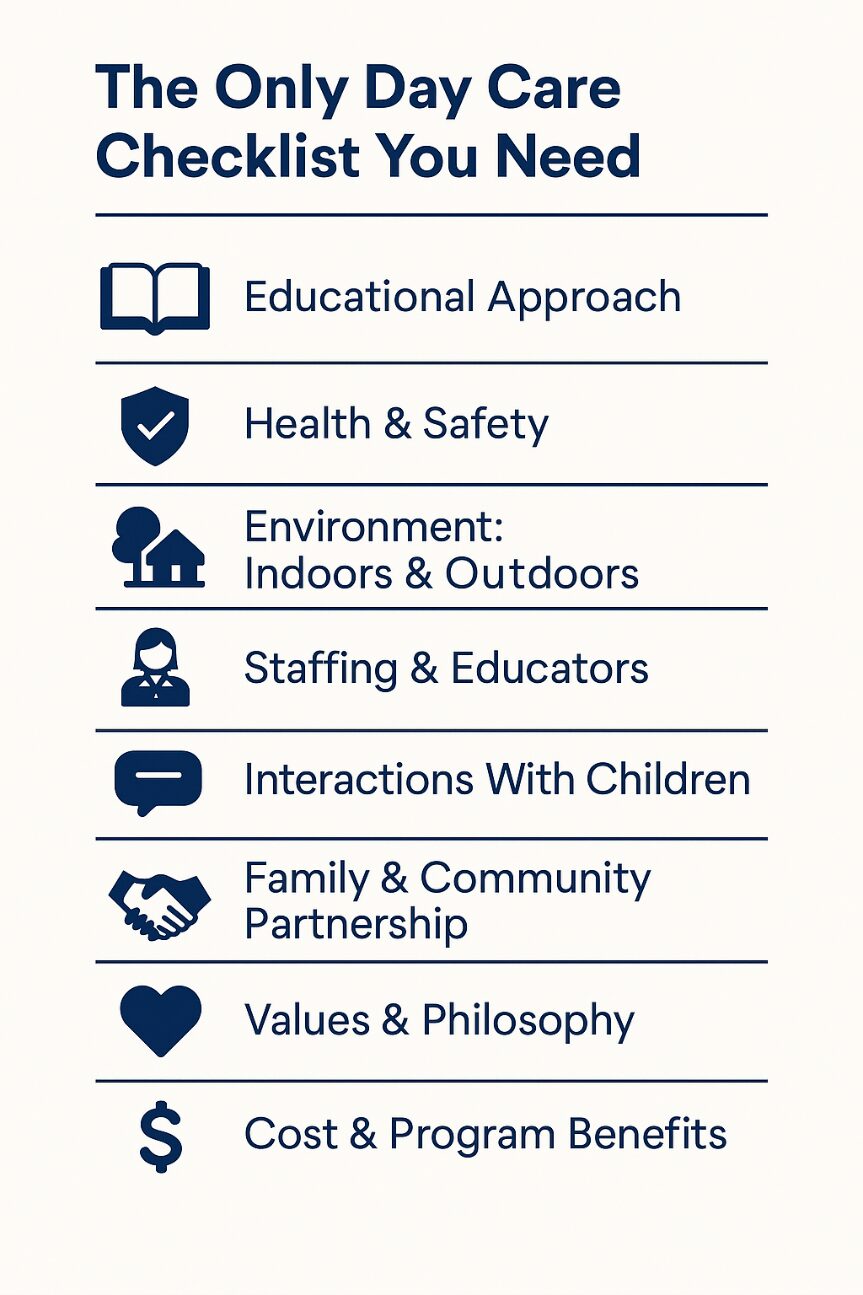
Searching for day care in Baltimore, MD, especially around Canton, can feel like a major undertaking. Families want a place that feels both nurturing and dependable—a center where children feel safe, supported, and excited to learn each day. With so many options nearby, knowing what to look for on a tour can bring clarity and confidence to your decision.
This day care checklist in Baltimore, MD, is designed to help you understand what matters most as you visit programs throughout Canton and surrounding neighborhoods. Use it as your guide to compare learning approaches, safety practices, environments, and communication styles.
- Educational Approach
Why it matters: A strong foundation in early learning helps children build confidence, curiosity, and essential skills for the years ahead.
Questions to Ask
- What curriculum shapes the daily experience?
- How do teachers plan lessons for different age groups?
- How is developmental progress documented and shared with families?
- What programs are available from infancy through preschool?
- How does play support early math, literacy, and social-emotional learning?
What to Observe
- Learning centers set up for exploration and discovery
- Children immersed in hands-on, meaningful activities
- Teachers helping children think through ideas instead of giving quick answers
- Health & Safety
Why it matters: Families need to know their child’s well-being is the highest priority—every day, without exception.
Questions to Ask
- How is access to the building monitored?
- What is the process for visitor check-in?
- How does the program handle allergies and dietary needs?
- What is the illness and exclusion policy?
- Who holds CPR and first aid certification?
- How are emergency drills practiced and communicated?
What to Observe
- Clean, well-maintained classrooms and hallways
- A calm, structured check-in routine
- Staff who appear prepared, attentive, and confident in safety procedures
- Environment: Indoors & Outdoors
Why it matters: Children learn best in environments that inspire curiosity, independence, and comfort.
Questions to Ask
- Are materials accessible for independent exploration?
- How often do children spend time outdoors?
- Is the playground shaded, clean, and age-appropriate?
- Do indoor spaces support creativity and movement?
What to Observe
- Defined learning spaces for different types of play
- Cozy areas for quiet time or reading
- Outdoor spaces designed for movement, imagination, and discovery
- Staffing & Educators
Why it matters: Teachers bring the classroom to life, shaping each child’s emotional and learning experience.
Questions to Ask
- What is the child-to-teacher ratio?
- What training do teachers complete before entering the classroom?
- Is ongoing professional development encouraged?
- How does the center maintain consistent staffing?
What to Observe
- Teachers interacting warmly at children’s eye level
- Respectful, patient communication
- A supportive, calm classroom atmosphere
- Interactions With Children
Why it matters: Meaningful relationships help children feel safe, understood, and ready to explore.
Questions to Ask
- How do teachers build trust with children?
- How is independence encouraged in daily routines?
- How are conflicts handled?
- What strategies support emotional learning and self-regulation?
What to Observe
- Children approaching teachers with ease
- Encouraging language used throughout the day
- Gentle, thoughtful guidance during challenging moments
- Family & Community Partnership
Why it matters: Strong communication builds trust, consistency, and a sense of connection for families.
Questions to Ask
- How are daily updates shared with families?
- Are parent-teacher conferences offered?
- How is developmental progress communicated?
- What does the enrollment process include?
- How are families invited into the school community?
What to Observe
- Communication boards or digital tools
- Staff who take time to answer questions and build relationships
- Values & Philosophy
Why it matters: A program’s values influence classroom culture, expectations, and the way learning unfolds each day.
- Questions to Ask
- What philosophy guides the early learning experience?
- How is inclusion represented in classroom materials?
- How does the program balance structure with child-led exploration?
- What values guide teacher-child interactions?
What to Observe
- Diverse and inclusive books and materials
- Comforting areas for emotional support
- Teachers modeling kindness, patience, and empathy
- Cost & Program Benefits
Why it matters: Clear, upfront information helps families compare programs confidently and understand the full value of what’s offered.
Questions to Ask
- What is the tuition for each program?
- What does tuition include?
- Are meals, supplies, or enrichment activities part of the cost?
- Are any additional fees required?
- Are sibling discounts available?
- What sets this program apart from other options in Baltimore, MD?
What to Observe
- Transparency about tuition and included services
- A level of quality and care that aligns with the investment
How to Use This Day Care Checklist During a Tour
- Bring it with you—printed or saved on your phone
- Ask the questions that matter most to your family
- Jot down quick notes after each visit
- Watch how your child responds to the environment and the educators
A day care that feels warm, calm, and aligned with your values is always worth deeper consideration.
A Final Word of Encouragement
Choosing day care is an important step for your family, but having a clear checklist makes the process much easier. As you explore programs in Canton and the surrounding Baltimore, MD, area, use this guide to compare options thoughtfully and find the place where your child will feel safe, supported, and excited to grow.
Whenever you’re ready, Celebree School of Canton would be happy to walk through your checklist with you during a tour.