
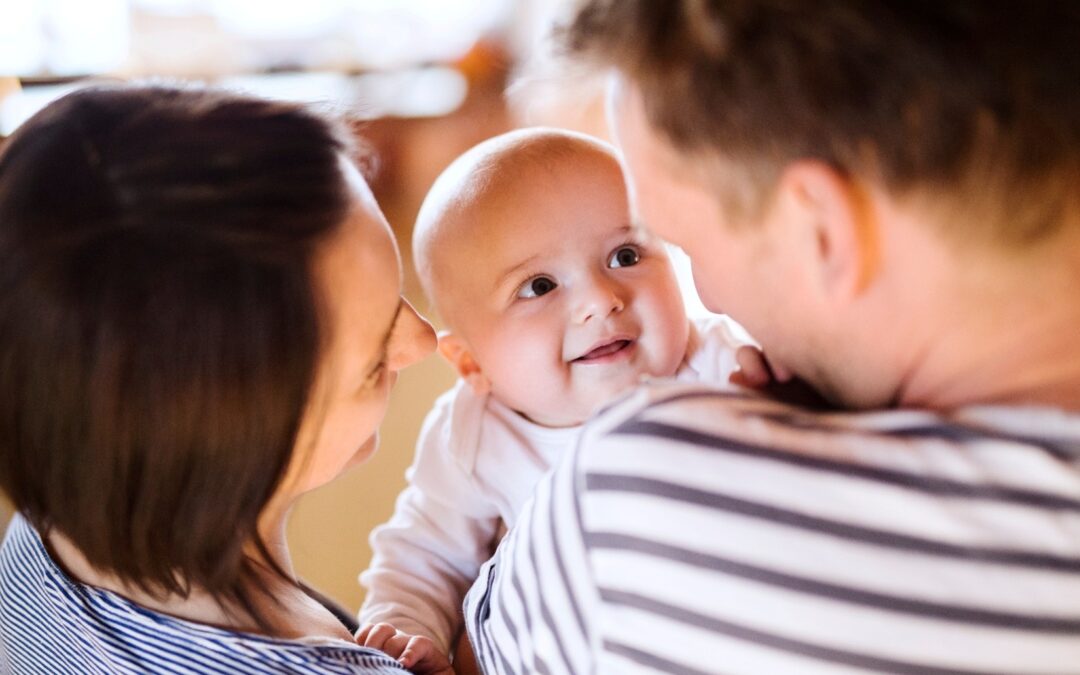
In the earliest weeks, your baby may spend long stretches simply studying the face in front of them. A few months later, they may smile when you enter the room. Later still, they may turn when you call their name or wave as someone leaves.
That growing awareness of people is one part of baby milestones during the first year. It develops alongside movement, communication, and early thinking, with plenty of variation from one baby to another.
Faces and Voices Come First
Newborns are still adjusting to the sights, sounds, and sensations around them. Their responses may seem subtle at first.
You may notice your baby looking closely at a nearby face, reacting to a familiar voice, or settling when held and spoken to. As the first few months pass, alert periods often become longer and responses easier to notice.
By around 2 months, many babies begin smiling in response to another person. They may also make sounds besides crying, watch people move, react to loud noises, and briefly hold their head up during tummy time.
Around 3 months, head control may become steadier, cooing more frequent, and attention to faces and nearby activity more sustained.
When Do Babies Recognize Faces?
Babies are interested in faces very early, but recognition becomes more obvious over time.
At first, a baby may simply focus on a face nearby. Later, familiar people may bring a clearer response such as a smile, excited movement, or increased attention.
There is no single moment when every baby suddenly begins recognizing people. It usually becomes easier to see as social awareness develops.
Familiar People Get Easier to Recognize
Between roughly 4 and 6 months, babies often become more expressive around people they know.
A familiar face may bring a smile or laugh. Your baby may respond with sounds when you talk, watch your expression closely, or become more animated during a favorite routine.
Physical development is changing too. Reaching becomes more purposeful, head control improves, rolling may begin, and sitting with support gives babies a new view of what is happening around them.
By about 6 months, many babies recognize familiar people, laugh, reach toward things they want, and take turns making sounds.
These responses may seem small, but they show that your baby is paying closer attention to both people and surroundings.
Your Baby Starts Showing What They Know
Later in the first year, recognition often becomes easier to see through behavior.
A baby may turn toward a familiar voice from across the room, brighten when a caregiver appears, or pause when someone they know leaves.
Babbling also becomes more varied. Repeated sounds such as “bababa” or “mamama” may show up during play and interaction.
By about 9 months, many babies:
- Look when their name is called
- Babble with repeated sounds
- Sit without support
- Move objects from one hand to the other
- Look for something that disappears from view
- React when a familiar person leaves or returns
Mobility may also begin changing quickly. Some babies roll, scoot, creep, crawl, or use another way to move toward something interesting.
When Do Babies Respond to Their Name?
Responding to a name often becomes more noticeable during the later part of the first year.
At first, your baby may turn only occasionally. Distractions, mood, and what else is happening in the room all matter.
Over time, the response may become more consistent. As with other milestones, it is better to look at the broader pattern of communication and interaction than one isolated moment.
Gestures Add Another Way to Respond
Before babies have many words, gestures give them another way to participate.
Toward the end of the first year, you may notice your baby waving, reaching toward something they want, copying an action, or pointing toward an interesting object.
These gestures reflect several areas of development working together. A wave requires physical control, but it also carries social meaning. Pointing involves coordination while beginning to direct someone else’s attention.
Your baby is moving beyond simply noticing what happens around them and finding new ways to respond.
What the First Birthday May Look Like
By around 12 months, babies often have a much wider range of ways to interact, explore, and communicate.
Common milestones include:
- Waving goodbye
- Playing simple interactive games
- Understanding “no”
- Looking for hidden objects
- Putting objects into containers
- Pulling to stand
- Cruising while holding furniture
- Picking up small objects with greater precision
Independent walking is not required by the first birthday. Some babies take their first steps earlier, while others reach that milestone later.
The same is true of gestures and social responses. One baby may wave constantly while another is more focused on movement, sounds, or exploring objects.
Recognition Is Only One Part of Development
Recognizing and responding to people does not develop separately from everything else your baby is learning.
Better head control helps a baby turn toward a voice. Sitting makes it easier to look around and interact. More precise hand movements eventually support gestures such as pointing and waving. Babbling adds new ways to join a conversation before words arrive.
That is why baby milestones are most useful when viewed as a broad picture rather than separate skills to check off one by one.
Familiarity Comes From Everyday Life
Babies spend a lot of time experiencing the same voices, faces, songs, and routines.
Talking during feeding, reading the same book, singing familiar songs, or greeting your baby by name all create recurring moments of connection. These do not need to become formal milestone activities.
Simple repetition is part of everyday life with a baby. Over time, you may notice your child reacting more clearly to the people and routines they know well.
Familiar Caregivers in Daycare
Regular caregivers also become part of a baby’s familiar world.
At Celebree School of Canton, infant care centers on gentle, responsive attention, familiar routines, and a calm environment where babies feel secure as they explore. In daycare in Canton, MD, babies spend their days with caregivers who get to know their cues, routines, and individual ways of interacting.
Recognition may show up in quiet ways at first: watching a caregiver approach, smiling during a familiar routine, or turning toward a voice they hear often.
Those everyday responses are part of the broader developmental changes unfolding throughout the first year.
When to Bring Up a Concern
Babies develop on different timelines, but questions are always worth discussing.
Talk with your child’s pediatrician if your baby is not meeting expected milestones, loses a skill they previously had, or if you have concerns about how they respond, communicate, move, or interact.
From an early interest in faces to a wave across the room, the first year brings many new ways for your baby to notice and respond to the people around them.