
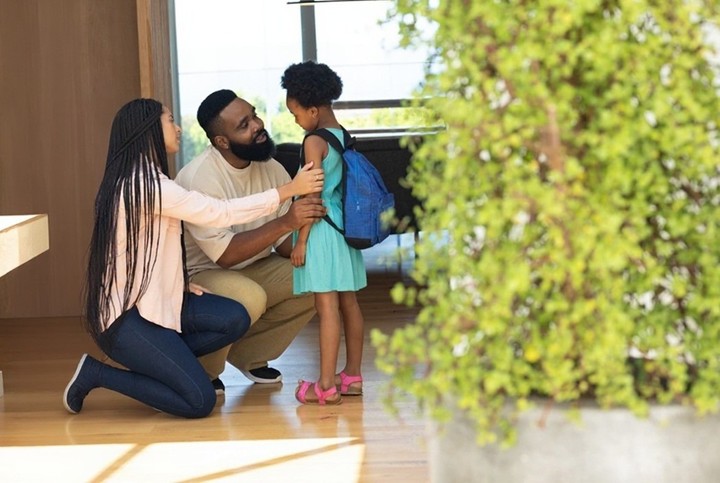
One child cries on the first day of daycare and is happily playing by the end of the morning.
Another child walks into the classroom without hesitation, then spends the next week asking questions about when Mom or Dad will return.
If there’s one thing parents quickly learn, it’s that children don’t always react to big milestones the way we expect.
That’s especially true when it comes to daycare.
Many families begin their search hoping to identify the perfect age to start. They want to avoid unnecessary challenges and help their child transition as smoothly as possible.
The reality is a little more complicated, and a lot more reassuring.
There isn’t one age that is consistently the hardest for every child.
Instead, each stage of early childhood comes with its own opportunities, strengths, and adjustments.
Why Expectations and Reality Don’t Always Match
Parents often picture daycare transitions in one of two ways:
1. Either their child will love it immediately.
2. Or it will be a struggle from day one.
In practice, most experiences fall somewhere in the middle.
Children are constantly growing and changing. The same child who embraces a new playground without hesitation may feel uncertain about a new classroom. Another child who seems cautious at first may become completely comfortable once they understand the routine.
Adjustment isn’t always predictable. That’s because children are responding to much more than age. They’re responding to relationships, environment, routine, and their own unique personality.
Babies Are Learning About Trust
When infants begin daycare, they’re not evaluating whether they like school. They’re learning something much more basic.
Who takes care of me?
Who responds when I need comfort?
Who helps me feel safe?
For babies, those relationships form the foundation of the daycare experience.
Consistent caregivers, predictable routines, and nurturing interactions help create a sense of security that allows infants to explore their surroundings with confidence.
Parents often discover that while babies are learning to trust their teachers, they’re learning something too: how to trust the process.
That can take time, and that’s perfectly normal.
Toddlers Are Practicing Independence
The toddler years bring a unique set of challenges. Children this age are discovering their own preferences and beginning to test their independence. They want to make choices, explore their environment, and have a say in what happens around them.
At the same time, they still rely heavily on familiar adults for comfort and reassurance.
That combination can create some emotional moments. A toddler may feel excited about the classroom one day and frustrated by the morning routine the next.
This isn’t a sign that daycare isn’t working. It’s often a sign that your child is growing.
Learning to separate, adapt, and build new relationships requires practice, and toddlers are right in the middle of that developmental journey.
Preschoolers Are Often Focused on Relationships
As children get older, their attention frequently shifts away from the transition itself and toward the experiences happening inside the classroom.
Preschoolers tend to become increasingly interested in friendships, activities, and social interactions.
They may wonder who they’ll play with. They may be excited about art projects, story time, or building with blocks. They may also feel uncertain about joining a group if they don’t know anyone yet.
These feelings are all part of learning how to participate in a community.
A strong preschool program helps children build confidence by encouraging curiosity, communication, collaboration, and problem-solving through meaningful experiences.
Starting Daycare During the Pre-K Years
Not every child begins daycare early.
Some families choose to enroll closer to kindergarten because of changing schedules, evolving family needs, or a desire for additional social and learning opportunities.
Parents occasionally worry that starting later will make the transition more difficult. In many cases, older children bring advantages.
They can ask questions and communicate concerns. Plus, they often have a stronger understanding of routines and expectations.
That doesn’t eliminate every challenge, but it does give children additional tools for navigating change.
A quality pre-K program helps children strengthen their independence, confidence, and readiness for the next stage of their educational journey.
What Helps Children Feel Comfortable?
When educators talk about successful transitions, age is rarely the first thing they mention. Instead, they often focus on the conditions that help children feel secure.
Children benefit from:
Familiar Routines
Knowing what comes next can reduce uncertainty and help children feel more comfortable.
Caring Relationships
Strong connections with teachers provide reassurance and support throughout the day.
Consistency Between Home and School
When families and educators work together, children receive clear and predictable messages.
Time to Adjust
Not every child settles in on the same timeline, and that’s okay. The goal isn’t to rush the process. The goal is to support it.
What Parents Often Notice a Few Months Later
Something interesting happens once children have been in daycare for a while.
The questions parents ask begin to change. Instead of wondering whether their child will adjust, they’re talking about the new skills they’re seeing at home.
The focus shifts from the transition itself to the growth that’s happening because of it. That’s one reason many families look back and realize the hardest part wasn’t choosing the right age.
It was simply taking the first step.
The Right Support Matters More Than the Right Age
Children don’t all follow the same path. An infant’s experience looks different from a toddler’s. A preschooler’s experience looks different from a child preparing for kindergarten.
Each stage brings something unique to the table.
What remains consistent is the importance of feeling safe, supported, and connected.
At Celebree School of Bear, we create an environment where children can build relationships, develop confidence, and discover a love of learning through intentional experiences and caring guidance. Our goal isn’t simply to help children adjust to daycare. It’s to help them thrive.
If you’re exploring daycare in Bear, DE, we’d love to show you how our programs support children through every stage of early childhood.