
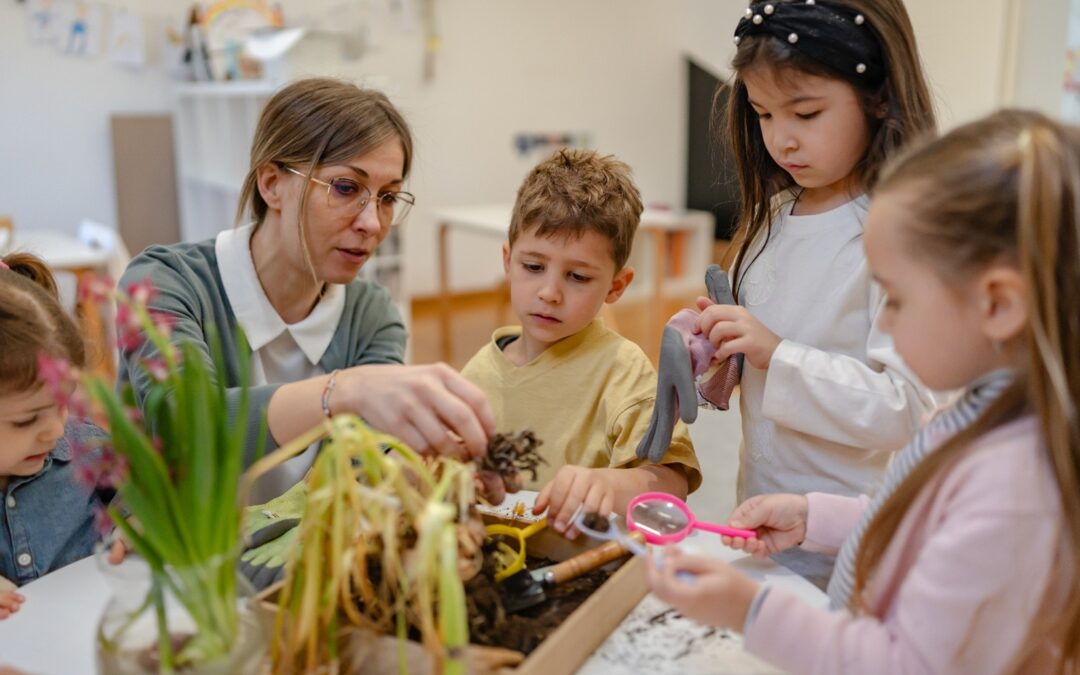
When you hear “learning through play,” it can sound a little vague.
It also raises a fair question: If children are playing most of the day, how are they actually learning?
When you’re exploring child care in Woodstock, MD, this is one of the most common things parents want to understand. What looks simple on the surface is often much more intentional underneath.
It Starts With What Children Are Naturally Drawn To
Young children don’t learn best by being told what to focus on.
They learn best when something captures their attention.
That’s the foundation of interest-based learning.
Teachers pay close attention to:
- What children gravitate toward
- What they talk about
- What they repeat or revisit
Those moments become the starting point for deeper learning.
Turning Curiosity Into Learning Opportunities
Let’s say a group of children becomes interested in building. That interest might evolve into:
- Experimenting with different materials to see what stands and what falls
- Comparing sizes, shapes, and balance
- Working together to create something larger
What looks like play is actually:
- Early math and spatial awareness
- Problem-solving and persistence
- Collaboration and communication
The learning sticks because it connects to something the child already cares about.
The Teacher’s Role Is Where It All Comes Together
This isn’t unstructured or hands-off. Teachers are actively guiding what happens next.
They might:
- Ask questions that stretch thinking
- Introduce new words and ideas
- Model problem-solving in real time
- Adjust the activity based on each child’s level
At Celebree, assessment is part of everyday interaction. Teachers observe children closely and use those insights to shape what comes next, rather than pausing play for formal testing.
What You Might See in the Classroom
Learning through play shows up in ways that can look simple at first glance.
- A group pretending to run a store is practicing communication, counting, and social interaction
- A child working on a puzzle is developing focus, pattern recognition, and problem-solving
- Outdoor play becomes an opportunity to explore movement, coordination, and cause and effect
Each moment builds on the last.
Why This Approach Works So Well
Young children learn best when they are:
- Engaged in what they’re doing
- Actively involved
- Able to explore and make mistakes
Play creates that environment naturally.
When children are interested, they stay involved longer. When they stay involved, they understand more. When they understand more, they gain confidence.
It’s About More Than Academics
Learning through play supports the whole child. It helps develop:
- Social-emotional skills
- Independence
- Communication
- Problem-solving
These are the same skills children rely on as they move into kindergarten and beyond. The goal isn’t to rush academics. It’s to build a strong, meaningful foundation.
What This Can Look Like at Home
You might notice this approach carrying over.
Your child might:
- Ask more questions
- Create their own games or scenarios
- Talk through what they’re doing
- Show more independence in simple tasks
These are all signs that learning is connecting.
What to Look for in a Child Care Program
If you’re considering child care in Woodstock, MD, it helps to look beyond the phrase “learning through play” and ask:
- How do teachers guide play?
- How do they build on children’s interests?
- How do they track development without interrupting the experience?
The answers will tell you how intentional the environment really is.
Learning Through Play in Woodstock
At Celebree School of Waverly Woods, learning through play is built into the daily experience.
Teachers observe, engage, and guide children in ways that feel natural but are deeply intentional. Learning is shaped around each child’s development while still aligning with broader goals for growth and readiness.
From the outside, it may look like play.
From the inside, it’s how children build understanding, confidence, and a genuine love of learning.